David Kanemoto
Fictional. Generated by AI — not a real person, and no likeness of one is intended.
62, surgeon in Small-town Ohio · rolled by @marco.villagrana · card — no film
History
who has worn him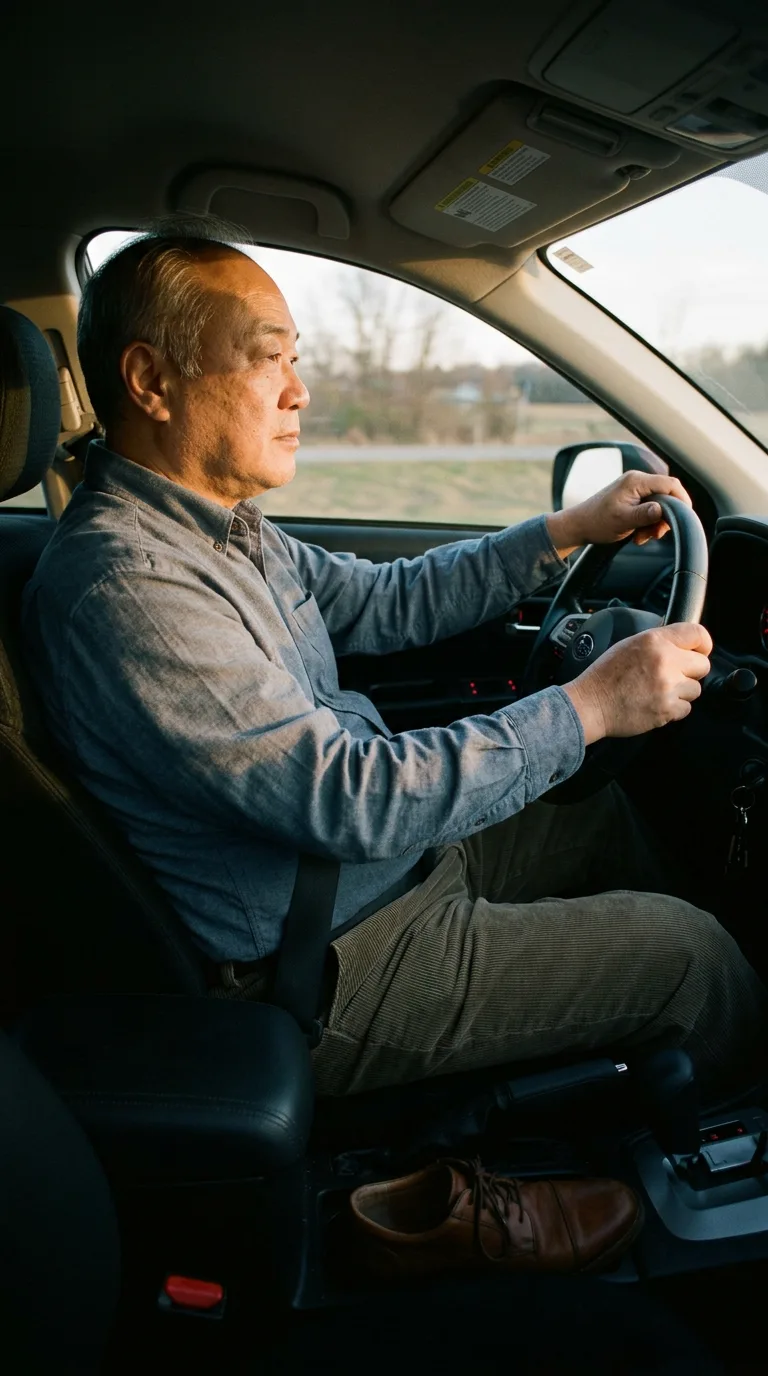
Rarest thing about him: Surgeon — uncommon, 1 in 1,441
Season 1seed 544713411 · engine v11
Character card
lineage LJL8SV
His body-swap story
@marco.villagrana, wearing Frank Dombroski, rolled the wheel on and woke up as David Kanemoto, spent 1 minute in him, then spun the wheel and woke up as Preston Iwata
---
You are Frank Dombroski for three minutes, and in those three minutes you already know it was a mistake.
Not the body — the body is fine, the body is a body, you've had worse. It's the smell. Somebody's fast food ghosting the upholstery, a delivery bag crushed under the passenger seat, the ache already sitting deep in the lower back like it's been there for years before you arrived, because it has. Frank's phone buzzes against his hip with a message from a dispatcher about a late drop. Frank's knees complain when he shifts his weight at the counter, waiting for the site to load on a cracked screen. You did this one on a whim, last time, and whims are what get you an average build and a moustache and a Friday evening that belongs to somebody else's fatigue.
You open vessel.cards out of Frank's pocket. The wheel is already spinning in your head before your thumb touches it. Somewhere behind the boredom there's the plain fact of it: money. Frank has none. Whoever's next might.
You spin.
—
The car does it first — not you, not yet. A foot of drift toward the centerline, corrected in one smooth pull, and then the hands come off the wheel and land again lower, wider, a different man's grip. The turn signal ticks on for an exit that isn't his. Outside, Ohio going dark blue at the tree line, three miles from a driveway you have never seen.
You are behind his eyes. You are heavier through the middle than you were a breath ago, shorter, softer, a seatbelt cutting differently across a wider chest. Late light through the windshield lies flat and gold across the backs of two hands you don't yet know are yours.
—
The wheel is warm from his palms and it comes first through that: the particular give of foam-wrapped leather worn smooth in two spots, ten and two, thirty years of a man who never let his hands wander from where they belonged. David Kanemoto. The name arrives the way his own name arrives to a man, without ceremony — just there, the way *up* is there.
The shirt is next. Chambray, soft at the elbows, and it opens a whole morning: him buttoning it standing in front of a mirror that needed cleaning, humming nothing in particular, listening to Mei run water in the kitchen down the hall. Mei — three years now, a nurse he met over a chart he'd left on a counter too long, laughing at him for it. He remembers the give of the top button, always a little loose, always meaning to sew it, never sewing it. He remembers standing there thinking he looked like his father in this shirt and deciding he didn't mind.
The corduroy at his thighs gives him the drive in that same instant — not this drive, an old one, a hundred old ones folded into this one, all the Fridays home from St. Aloysius Regional with the radio low and the light doing exactly this, going down gold over the flat fields, the water tower with the town's name peeling off it. He built a life inside a fifteen-mile radius of that tower. He never meant to. Residency in Columbus, and then his father's knees went, and then somehow it was thirty years and a hospital that knew his handwriting.
The shoes under the brake and gas — his good ones, leather, kept for driving so the OR clogs wouldn't rot the carpet — bring back standing outside two swinging doors not twenty minutes ago, mask pulled down under his chin, telling a resident half his age that the gallbladder had gone easier than expected, that she should go home too, it's Friday. His hands still remember the shape of instruments passed and returned a thousand times, the specific weight of a retractor, the settled, unhurried competence of a man who stopped being afraid of that room decades ago. That competence is still in the fingers now on the wheel — nothing rattles these hands, not really, not even this, not that they know what this is.
The dash clock gives him waiting for Mei to text that she's off shift too, that she'll come by, that there's a match on she doesn't care about but will sit through anyway with her feet in his lap. A meditation cushion at home, gone dusty, that he sits on maybe once a month and lies to himself about the once a month. A last cigarette eleven years ago outside a conference in Cleveland, the specific disgust of the taste after two years clean, never touching one since. A beer he stopped missing sometime around when his father died and grief made everything taste like nothing, and he just never started again.
None of it is dramatic. That's the thing settling into you now, heavier than the gut, heavier than the tired knees: this is a whole, quiet, finished-feeling life, sixty-two years deep, and there was no reason at all for it to stop being lived three miles from its own driveway.
—
The turn signal is still ticking, patient, wrong, for an exit that isn't his.
You lift both hands off the wheel — his hands, wide and blunt-fingered, a thin white scar of a burn long healed on one knuckle you didn't put there — and turn them over in front of your face, the dash light pooling gold in the creases of the palms.
You say, out loud, to no one, in his voice, which is not a voice you have heard yourself use before this second:
"Whose exit is this?"
Then you reach over and click the signal off, and let the car run straight, toward a house that is his, for exactly as long as you decide it is.