Peter Sasaki
Fictional. Generated by AI — not a real person, and no likeness of one is intended.
58, trucker in New York · rolled by @colin.hasbrook · card — no film
History
who has worn him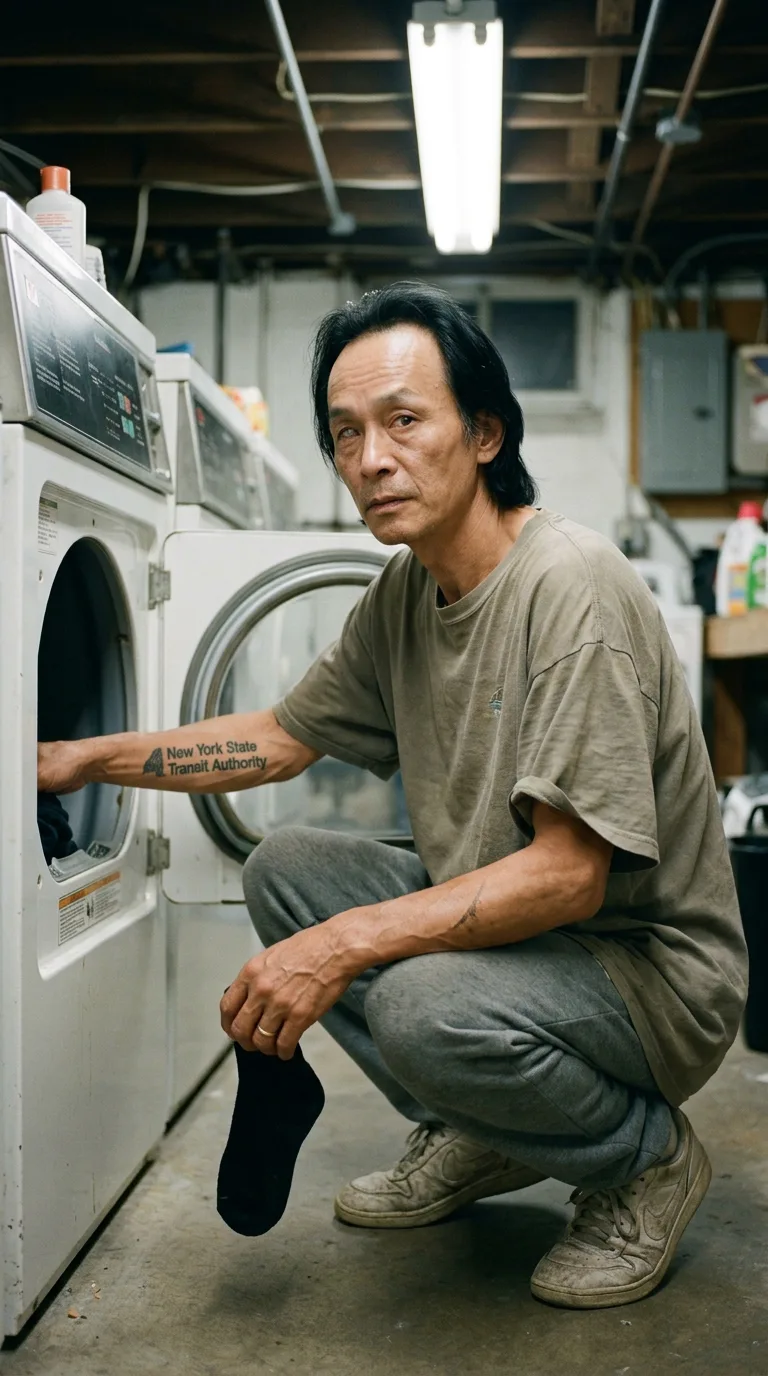
Rarest thing about him: Prosthetic eye — epic, 1 in 251
Season 0seed 408694772 · engine v10
Character card
lineage 2NZHHJ
His body-swap story
@colin.hasbrook, wearing Barry Feldstein, rolled the wheel on and woke up as Peter Sasaki, spent under a minute in him, then spun the wheel and woke up as Deshawn Okafor
Barry Feldstein's whistle is already going down the hallway of the wrestling room before you've finished deciding, mats squeaking under kids' shoes, and it is that sound — that stupid, cheerful, doomed sound — that does it. Barry's knees ache walking to his own truck. Barry's ex-wife texts him about the boys' weekends in a tone you have learned to dread the buzz of. Barry, forty-five, bald by choice and not by God, has a body that works fine and a life that fits like a shirt one size too honest. Twenty-eight men and you have never once finished the coffee. You are standing at half-court with a clipboard you don't remember picking up, and you think: not this one, not today, and your thumb is already moving toward the phone before the thought is finished. It isn't hatred. It's just Tuesday-in-March boredom wearing a whistle. You spin because you can.
The wheel turns and there is a fluorescent hum instead of a gymnasium, and cold concrete instead of rubber mat, and you are crouched, and there is warm fabric in your hand.
You are holding a sock. Black, damp-warm, ordinary. Your knees — his knees — are folded up under you at an angle that would have hurt Barry and doesn't hurt this one, not exactly, though there's a deep, low ache along the outside of both hips that reads as furniture, not injury, something worn down evenly over decades of getting in and out of a cab. The dryer door hangs open in front of you, throwing dry heat against your forearm. A tattoo there, faded blue-black: NEW YORK STATE TRANSIT AUTHORITY, though the arm under it does not belong to any bus he ever drove — this is older than that, from before, from someone he used to be for a summer. The light overhead is the ugly kind, tube-flicker cheap, and something in the chest you're wearing responds to that light specifically, some old worn groove of *not this again*, before you even know why.
Then the load comes out warm into the basket, and your hands start folding, and that is when he arrives.
Not gently. His hands know this motion better than his memory does, and both come at once — the fold, and behind it, the year he learned it. Boot camp, decades gone, a drill instructor's voice still living somewhere in the wrist: corners squared, no wasted motion, a man screaming about hospital corners at eighteen-year-old Peter Sasaki like it was the only lesson that would ever matter. It was, it turns out. Forty years of long-haul nights and it is still the thing his hands do without asking him.
The shirt against your back — a gray tee, soft from a hundred washes — gives you the morning he put it on, hours ago by his clock, though the clock in the body you left is still climbing toward noon somewhere in a desert you no longer are. He'd dressed in the dark of the bedroom so as not to wake Linh, sleeve by sleeve, the plaid flannel over it because the warehouse dock is always colder than the forecast says, the cap because his hairline embarrasses him more than the dye job that sits on top of it too black, too flat, like a toupee that came free with the bottle. He does not think of himself as vain. He thinks of the eye. The left one, glass, doesn't track right, drifts a half-second behind the real one whenever he turns his head fast, and he has spent thirty years watching people's faces do the polite thing around it, the not-quite-look, and married a woman who never once did that, and that, more than anything, is why the wedding band on this hand has never once come off, not at the belt sander, not in the ocean, not asleep.
There is an ex before her. Younger version of this same face, twenty-six years old, sitting on the hood of a Malibu in a summer that this body still keeps somewhere warm and separate from the marriage — no guilt in it, just weather, just a girl named Denise who is fifty-eight now too, somewhere, and whom he thinks about maybe twice a year without telling anyone, least of all Linh. Three kids since her. Four, if you count the one who doesn't call, and some nights, drink number two in hand on the stoop, he does count her, quietly, to himself, in a way nobody else would recognize as grief.
The rig waits eight hours from now at a truck stop he hasn't reached yet in this telling, but his hands already know its wheel the way they know this basket — twenty years of long silences on I-80, a vape pen worn smooth in the cupholder, the low hum of dispatch radio instead of a wife's voice, the particular ache of a spine that has sat too long in a seat built for someone smaller. He carries something else too, something with a name he only started saying out loud five years ago to a doctor in Bay Ridge — a low static under everything, medicated down to a hum most days, the kind of thing that makes a man fold a basket of laundry into perfect corners at two in the afternoon because it is one of the only rooms in his life he can make exactly right.
You are still crouched. The last shirt goes into the basket, corner to corner, and your fingers — his fingers — start drumming once, twice, against the rim of the basket, unbidden, the tic underneath everything else, the thing his hands do when there's nothing to hold.
You look down at them. Thin, veined, a plain gold band catching the fluorescent light, a faded transit tattoo going soft blue at the edges. Not your hands. Never your hands. You turn them over anyway, the way you always do, the way you did in the gym light and the boxing ring light and every light before this one.
You look up into the dryer's dead round window like it's a lens, and you say, quiet, to no one:
"Twenty-nine."