Barry Feldstein
Fictional. Generated by AI — not a real person, and no likeness of one is intended.
45, wrestling coach in High-desert Nevada · rolled by @colin.hasbrook · card — no film
History
who has worn him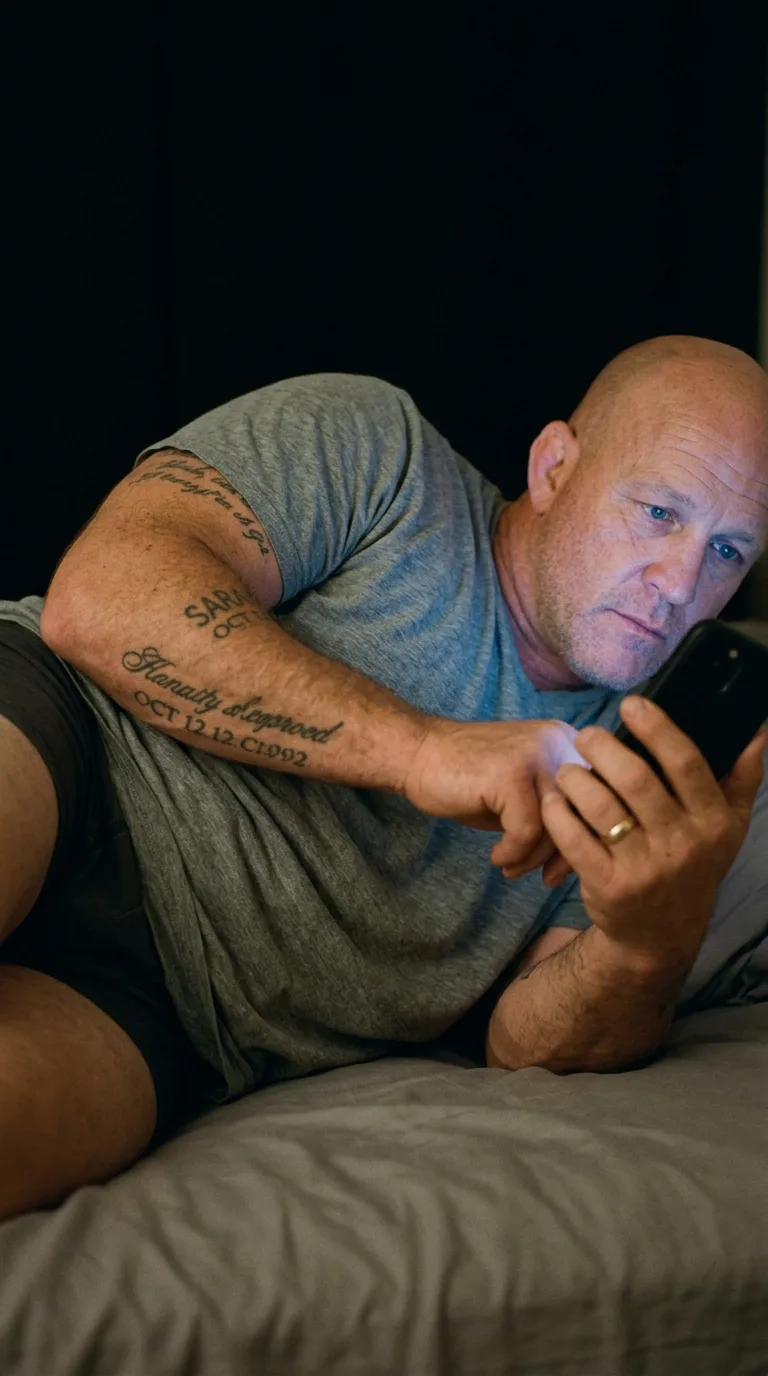
Rarest thing about him: A lazy eye — rare, 1 in 66
Season 0seed 661134957 · engine v10
Character card
lineage 2NZHHJ
His body-swap story
@colin.hasbrook, wearing Russell Dunmore, rolled the wheel on and woke up as Barry Feldstein, spent 1 minute in him, then spun the wheel and woke up as Peter Sasaki
Russell Dunmore's knees ache getting up off the truck's running board, and that's the whole problem right there: two minutes into being him and already you know every mile of it, the cartilage gone soft, the lower back that complains when he twists to grab a package off the passenger seat. Sixty-three years of a body doing exactly what sixty-three-year-old bodies do, and you've had him less than a minute and you're already tired of the arithmetic of him — the diabetes he doesn't know he has yet, the divorce he mentions to nobody, the unibrow he trims once a month in a gas station bathroom mirror like it's a secret. You spun for the delivery route, for the sun on Ohio blacktop, and it turns out a body can be fine and still be a coat that doesn't fit, and you are standing at the back of the truck at two in the afternoon on a Monday not delivering anything, phone out, thumb already moving toward the site before you've decided to let it.
It isn't boredom exactly. It's the specific itch of a good day with nothing in it — no ex who matters, no one waiting on the porch, just a man whose knees hurt and whose calendar is empty enough that even he would understand why you left.
You spin. The wheel takes the half-second it always takes, an eternity dressed as nothing, and then —
Your thumb is already moving. Faster than it was a heartbeat ago, flicking through a feed you don't recognize with a rhythm that isn't your own, and the light of the phone is lying blue and flat across a cheek that has gone still in a way faces don't go still on their own. You are on your side in a bed that smells like someone else's sheets, one arm dead-weighted under a pillow, the other holding a phone six inches off your nose, and the room around you is dark in the particular way rooms are dark when it is morning outside and the blackout curtain is doing its one job well.
The shirt is against your back first — thin gray cotton, a size too broad in the shoulder because he bought it years ago before he'd lost some of himself to age — and it gives you a Tuesday in August, hanging it on the doorknob after a two-a-day, sweat gone stiff in the fabric, too tired to walk it to the hamper. Then the waistband of the shorts, elastic gone soft from washing, and that gives you the smell of the gym mat, rubber and old sweat and the specific ammonia bite of a boys' locker room in June. Your hand — his hand — finds the phone's case, ridged where the plastic has worn smooth at the corner from years in a gym bag pocket, and that gives you nothing at first except the muscle memory of thumbing it awake one-handed in a truck cab, in a bleacher seat, in this exact bed at this exact hour after a night shift that has rearranged what morning even means for him.
Because that's the oddity sitting right there in your chest before you even have words for it: it's the middle of the morning and he is lying down, and that isn't a lazy man's hour, that's a man who worked until four and got in at five and is trying, badly, to let his brain climb down off itself before sleep will take. The wrestling room. Not a meet — an early open mat, kids coming in before school does, and somebody's father wanting extra hands on the JV bracket, and him saying yes to all of it the way he always says yes, and driving home with the sun already too high and too white through the windshield, high-desert light that doesn't apologize for anything, and getting into bed still faintly smelling like the mat.
The wedding band gives you the most, because it's metal and it's always touching him, and it never really stops. Sarah. Not tonight's Sarah, married Sarah — the tattoo on the other arm is a different Sarah, no, wait, it's the same, script and a date, and under your ribs something turns over that isn't yours: the day, the dress, her laughing at the rabbi because he'd tripped over the chuppah pole, the two of them dancing badly on purpose because dancing well felt like a lie. Twenty-some years folded into a few inches of gold gone thin at the band from work and from time. There are two kids in this life somewhere, a boy and a girl, teenagers now, and a specific ache that isn't the knees or the back — pride, worn smooth, for a daughter who pins boys twice her size at practice because her father taught her the same low single he's taught six hundred other kids in a gym that smells exactly like the shorts you're wearing.
The vape is on the nightstand, you can feel its shape without touching it yet, a small hard rectangle that is a habit and not a pleasure anymore, the last of the vices he let himself keep after he put the drinking down for good — a decision, not a disease, made in a kitchen at 2 a.m. a decade ago with Sarah's hand on his back and nobody's permission needed. The whistle isn't around his neck right now but you can feel the ghost weight of the cord anyway, years of it, the exact tension against the back of his neck when he blows it and thirty boys freeze on a mat like they've been shot.
The eye. You notice it the way he never has to — his left eye drifting a half degree off true, the way kids used to ask about it in the parking lot before matches and he'd just say "wandering eye, wandering mind," and laugh, and mean it as a joke that was also, a little, not one.
Your thumb keeps moving. Somewhere behind the motion is the last thing his mind was doing before you arrived — a video of some other coach's takedown drill, half-watched, half a decision to try it Thursday — and it goes on scrolling without him now, steady, untroubled, nobody home to stop at anything.
You stop it yourself. Set the phone down on the mattress, screen still lit, and bring your hand — his hand, blunt-fingered, a callus at the base of each palm that decades of grip fighting put there — up in front of your face in the dark. Turn it over once. The ring catches no light because there isn't any to catch.
"Okay," you say, to the dark, to the shape of him you're still finding the edges of. "Okay, big guy."
You don't know yet if it's four minutes or four years. You lie there in his sixty pounds of extra weight and his good, tired arms, feeling how the mattress holds a body that fights for a living even when it's forty-five and soft in the middle, and you let the not-knowing sit there with you, comfortable as anything.