Peter Galuszka
Fictional. Generated by AI — not a real person, and no likeness of one is intended.
40, court reporter in New York · rolled by @colin.hasbrook · card — no film
History
who has worn him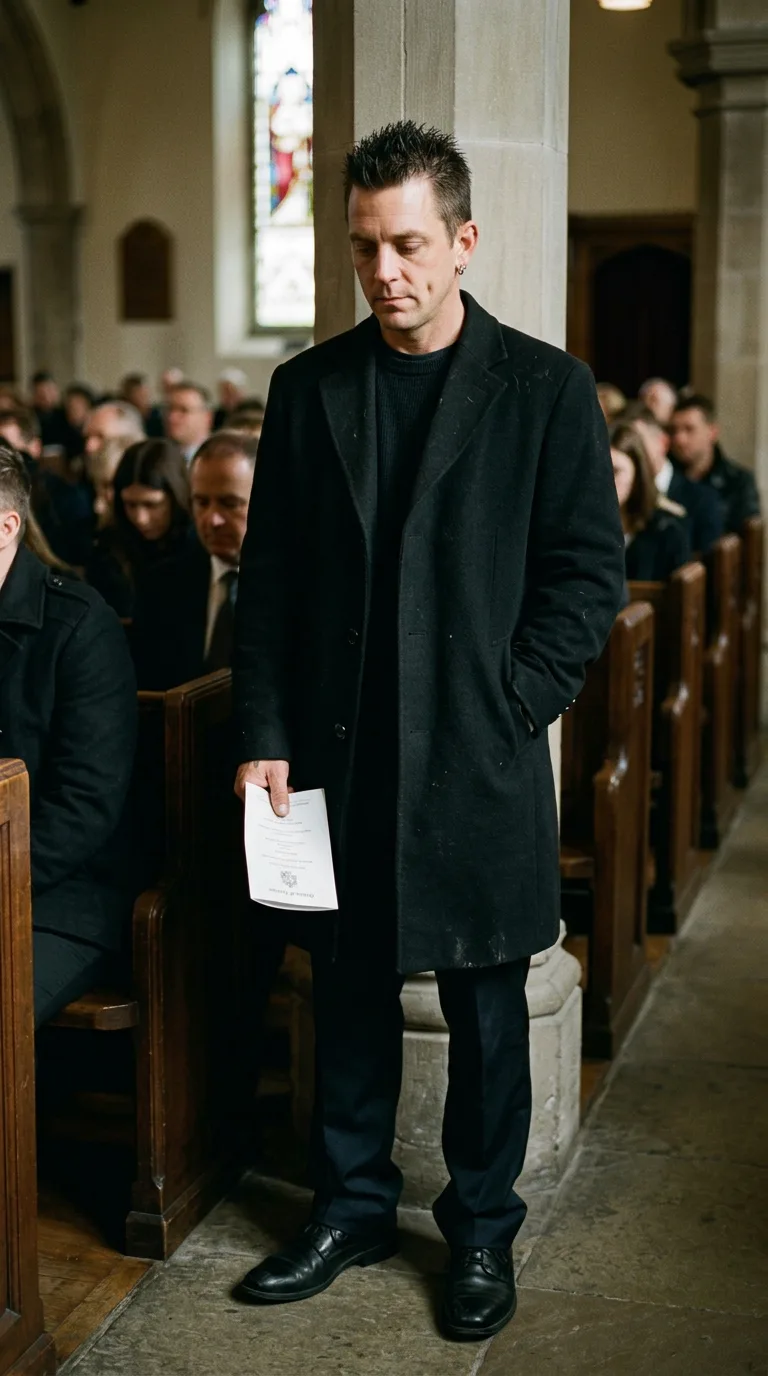
Rarest thing about him: One earlobe — epic, 1 in 28
Season 0seed 1785646424 · engine v10
Character card
lineage 2NZHHJ
His body-swap story
@colin.hasbrook, wearing Daniel Katsuyama, rolled the wheel on and woke up as Peter Galuszka, spent under a minute in him, then spun the wheel and woke up as Colin Bratcher
The wrist braces are the first thing you notice, because Daniel Katsuyama's fingers keep going to them, worrying the Velcro like a man checking a wound is still there. Eleven in the morning in Phoenix, sun coming flat and mean through blinds he never opens all the way, and you are sitting on the edge of his bed in his good navy suit — worn for the audition he blew forty minutes ago, the one his hands blew for him, both of them going in the middle of the second piece, shaking so hard the pick skittered off the low E and the two men behind the folding table didn't even let him start over. Six-hundred-and-nine bodies deep and you picked the one guitarist in Phoenix whose hands don't work right anymore, and you didn't know that when you spun, and now you're stuck inside a minute you didn't cause and can't fix, sitting on his bed listening to his own regret rattling around like a coin in a dryer. It isn't yours. You didn't earn it. That's reason enough. You open the laptop still on his nightstand, log back into the page with the wheel on it, and you don't think about him again.
The organ stops.
The room stands, a soft collective creak of pews, and you come up a half-beat behind everyone else, already on your feet in a body an inch and a half shorter, heavier through the shoulders, the borrowed weight of a black wool coat settling wrong across a back that isn't used to carrying anything. A folded order of service is in your left hand, damp at the crease. Your right hand finds the coat's front button on its own, smoothing down fabric, and it takes a full second before you understand the hand did that without you, that it already knows this coat.
The paper is what opens first. Order of worship, a name in serif type you don't try to read yet, and under your fingers the paper turns into every order of service Peter Galuszka has ever folded into a coat pocket at the back of a church — dozens of them, weddings and funerals both, because that's where a man who marries himself to the back pew ends up standing his whole life, halfway to the door, watching. This one is somebody from the courthouse. A judge's clerk, forty years on the bench's shadow, dead of something quiet. Peter came because you go, because forty years in a Brooklyn courtroom teaches you that showing up is the whole religion left to you once the other one thinned out. He hasn't been to church on a Sunday that wasn't somebody's funeral in six years. He still believes, technically. He just believes the way you hold a phone number for someone you'll never call — there, real, unused.
The coat gives you more: not his, borrowed off a hook in his own front hall from a friend's husband because his good black coat is at the cleaner's, and he'd noticed the sleeves were a half-inch long all morning and hadn't cared. Under it, the suit is his — the same navy suit, weekday twin to a black one, and dressing in it this morning comes back to you in his hands, buttoning a shirt with fingers that wanted to shake and didn't quite, the wrist braces velcroed on out of habit though there's no keyboard to protect today, just a day off from the job that pays for them. Below the bench, chorded steno keys under his knees, six, seven hours a day, twenty years of it, carpal tunnel in both wrists now, a tremor that shows up when he's not asking his hands to do anything in particular — steadies, always, the second real work is in front of them. Court reporters don't get to shake. The job trained the shake out of the only hours that mattered and left it everywhere else: holding a coffee cup, unbuttoning a coat, holding a folded paper at the back of a chapel.
The small silver hoop in his ear is cold when the air off the tall windows crosses it, and it brings back a night twenty-two years gone, a girl who is his ex-wife now dared him to get it before he ever set foot in a courtroom, laughing at him in a mirror in some apartment neither of them has anymore. No kids came of that marriage, and the absence of that fact sits in him the way an empty chord sits in a room — not painful exactly, just permanent, a note that never got played. The tattoo under his left sleeve, cross and praying hands, was hers idea too, done the same week, penance and defiance both, half-hidden ever since under courtroom sleeves because a robe-and-gavel room doesn't care for ink but nobody ever told him to lose it.
He is average in every measurement anybody would put on a form — five-six, ordinary weight, brown eyes, a face that women have told him is nice in a way that surprised him each time — except for the dimples, which show even now, even at a funeral, even doing absolutely nothing, an accident of muscle that makes him look like he's about to smile at the worst possible moments of his life. He hasn't had a drink in nine years. Never smoked. He carries nothing he'd bring up if you asked him what's in his pockets or what's on his mind, and that, too, is a kind of practiced stillness — a man who spent two decades transcribing other people's worst days verbatim, never his own, never allowed an opinion on the record.
You look down. The hand holding the order of service is doing the tremor now, faint, now that there's nothing asked of it, and you watch it the way he must have watched it a thousand times in the back of that courtroom, waiting for the next witness, waiting for his hands to be needed again.
"Sorry," you say, low, to no one, to the woman half-turning at the sound near her shoulder, and the dimples show even saying it.