Colin Bratcher
Fictional. Generated by AI — not a real person, and no likeness of one is intended.
25, machinist in Toronto · rolled by @colin.hasbrook · card — no film
History
who has worn him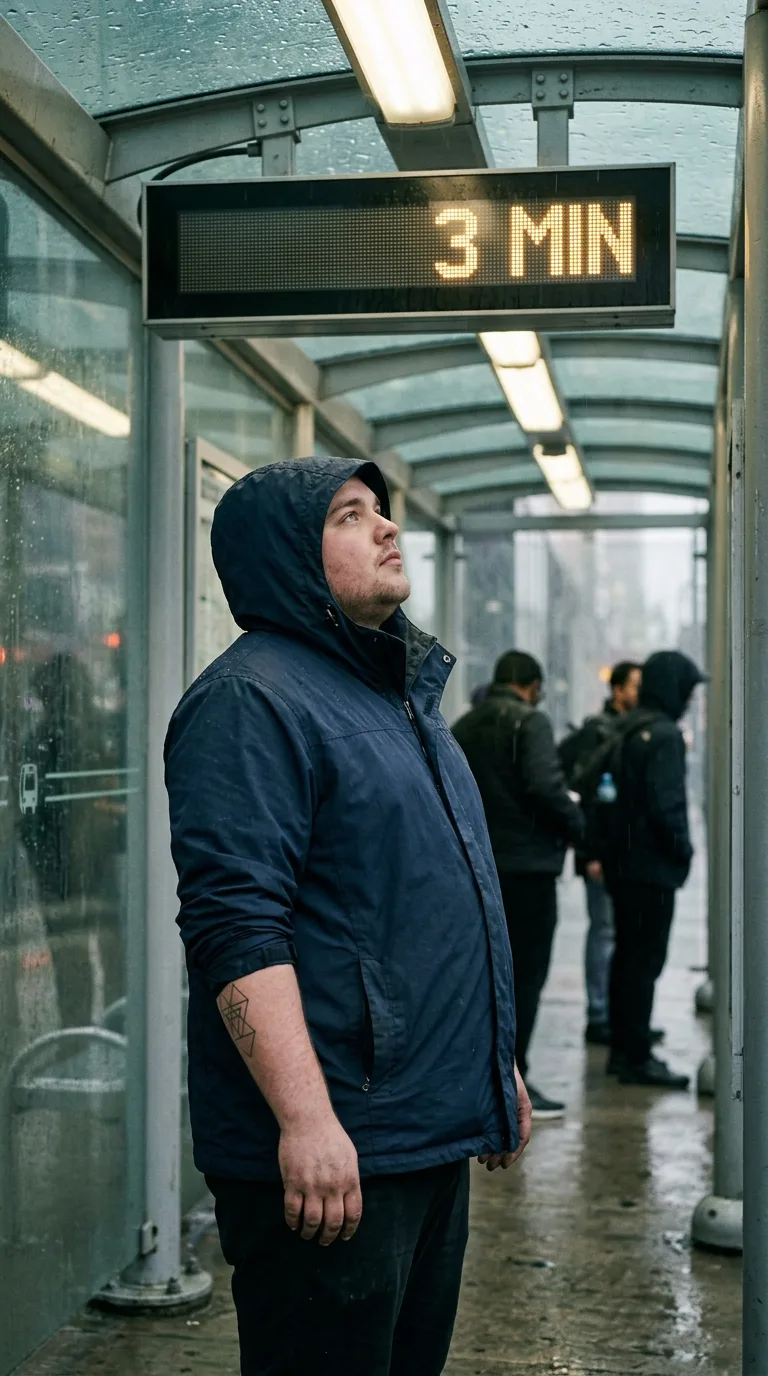
Rarest thing about him: Toronto — rare, 1 in 260
Season 0seed 10113512 · engine v10
Character card
lineage 2NZHHJ
His body-swap story
@colin.hasbrook, wearing Peter Galuszka, rolled the wheel on and woke up as Colin Bratcher, spent 10 minutes in him, then spun the wheel and woke up as Gerald Ostrowski
You are Peter Galuszka for less than a minute, and it is enough. You sit in the deposition chair that isn't yours, in an office that isn't yours, with the stenotype cool under fingers that are too short for you somehow, even though they are the only fingers you have. Forty years old, dimples, blue eyes that some other man was proud of once. A lawyer somewhere is droning about an easement. You feel, distinctly, the specific boredom of a body that has never wanted anything badly enough — a man who took his life at low simmer and called it contentment. It is not your boredom. It arrived with him, folded into the muscles of his face, and you have been wearing it for forty-some seconds and already you hate the taste of it. You do not want careful. You spun six hundred and ten times to stop being careful. Your thumb finds the phone in the blazer pocket, the site already open from this morning, the wheel already loaded, and somewhere underneath the wanting is the plainer thing you won't say even to yourself: that stillness like his feels like dying slowly with good posture, and you would rather be anyone, anywhere, mid-motion.
You spin.
Rain. That is the first thing — not sight, not thought, weight of water on a face turned up into it, and then the whole rest of him arrives like a held breath let go: heavy shoulders, thick through the middle, a hood shoved back off dark hair already plastered flat, boots planted in runoff at the lip of a shelter he has just stepped out of. Cold everywhere and none of it reaching him. Steel-cap boots. A tattoo cool with rain along the inner forearm where the coat sleeve has ridden up. You are standing in him mid-step, one foot still finding the wet pavement, and the bus that was three minutes out is a thing that no longer matters even slightly.
It comes in through the jacket first — navy, waxed, worn soft at the cuffs — a Tuesday, no, a hundred Tuesdays, him zipping it against a wind off the lake, the small satisfaction of a good coat in bad weather. Then the tattoo skin gives you more: a shop on Ossington, nineteen years old, the geometric lines chosen because they meant nothing, because he liked that they meant nothing, because everyone around him wanted their ink to say something and he didn't have anything he needed said. The ring is next, plain gold, and it opens like a door held for you — a hall with folding chairs, a woman named Erin in her sister's altered dress, his hands shaking doing up the top button of a shirt collar because for once in his life something mattered enough to be nervous about. A kid somewhere in a high chair, a spoon, a shriek of a laugh that hits you sideways with a feeling that isn't yours and won't leave anyway.
The boots give you the shop floor — steel chips curling gold and silver around his ankles, the lathe's particular shudder through his forearms, the calluses along the second and third fingers of the right hand that know a chuck key blind. Twelve years since he first stood at one of these, seventeen years old and terrified of the noise, now the noise is the only place his head goes quiet. There's a smell under all of it, cutting oil and cold metal, and it drags up an old girlfriend's name — Tanya — not guilt exactly, just a doorway he doesn't open anymore, a version of himself that almost went a different way and didn't, and some Sundays he still wonders, mildly, the way you wonder about weather in a city you used to live in.
This morning: the shirt going on in the grey dark of the bedroom, Erin still asleep, him careful with the zipper of the coverall so it wouldn't wake her, boots by the door already laced from last night because his hands are too clumsy for laces at 5 a.m. Toast standing up in the toaster he never ate. A kiss on the kid's door instead of the kid, because waking a two-year-old before six is its own kind of violence. All of that is in the fabric now, worn into it the way smoke gets into wool, and you are standing in the rain wearing a marriage and a tattoo he barely remembers choosing and a body that has never once, in twenty-five years, been asked to be anyone but itself.
He does not turn out of the water. He never asked to.
You lift a hand — heavy, wide-knuckled, rain running off it in threads — and turn it over like it might tell you something the shirt didn't.
"Three minutes," you say, out loud, to no one, and almost laugh, because the board still reads it and the bus is the only appointment this man had left to keep, and you are not going to keep it. Not yet. Maybe for a while. You don't know, and for the first time in six hundred and eleven tries that not-knowing feels like something other than hunger.