Gerald Ostrowski
Fictional. Generated by AI — not a real person, and no likeness of one is intended.
57, chimney sweep in Dallas · rolled by @colin.hasbrook · card — no film
History
who has worn him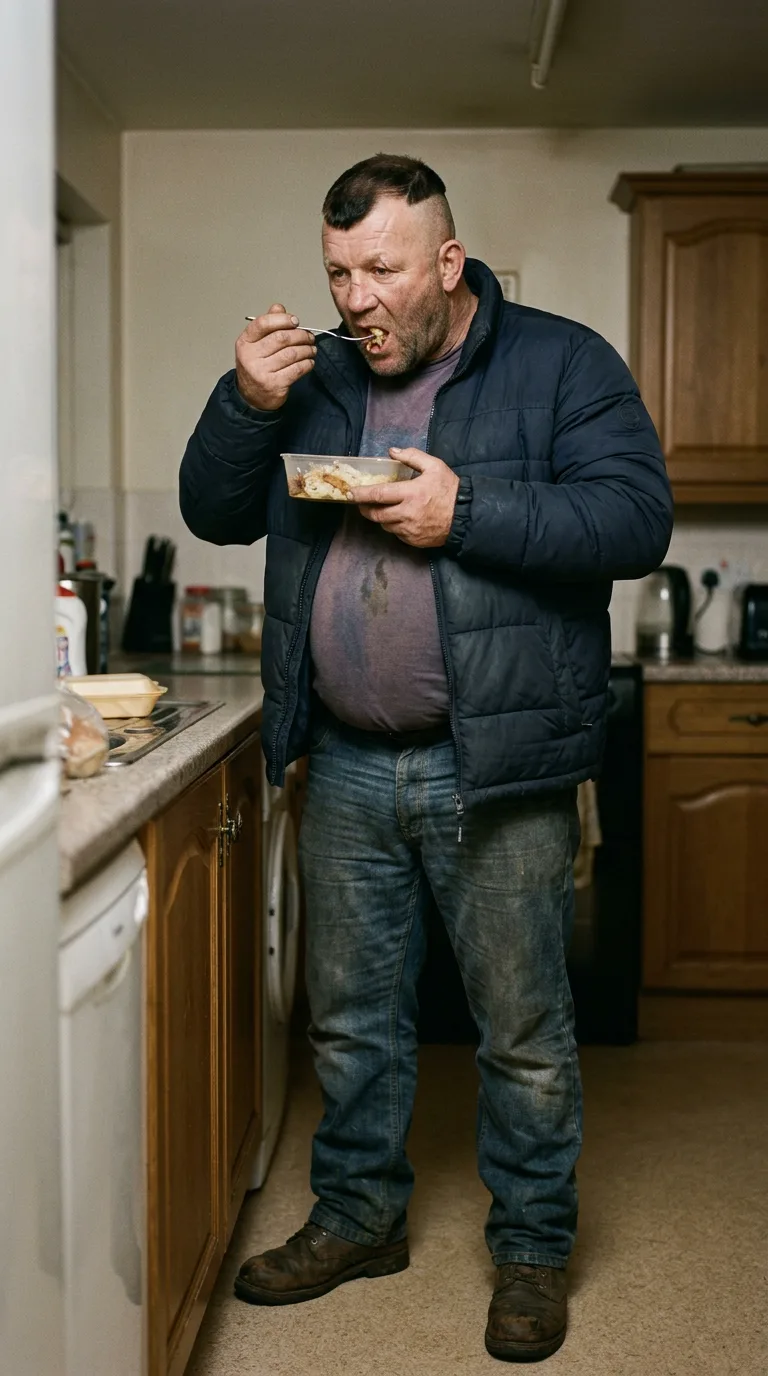
Rarest thing about him: Dyed black — epic, 1 in 60
Season 0seed 589743372 · engine v10
Character card
lineage 2NZHHJ
His body-swap story
@colin.hasbrook, wearing Colin Bratcher, rolled the wheel on and woke up as Gerald Ostrowski, spent 4 minutes in him, then spun the wheel and woke up as Warren Renshaw
You are Colin Bratcher for the ninth minute of your life as him, and already the itch has started under his skin like it always does, faster this time, faster than any of the six hundred and eleven before. The machinist's hands you're wearing are broad and scarred at the knuckle, good hands, competent hands, and that is exactly the problem — there's a lathe humming three feet away that he could run blind, that his muscle memory wants to run right now, and you don't want that, you never want the thing they're good at, you want the thing you haven't been. Toronto light comes flat through a warehouse skylight. Noon on a Monday, and Colin's foreman is somewhere behind you saying something about tolerances, and the boredom arrives the way it always does now: not slow, not creeping, but total, like a door shutting. Six hundred and eleven men and you can already feel this one closing over you like the others. You take out your phone with his thick fingers, the log-in already saved, and you open vessel.cards standing right there at the machine, and you spin.
The fork is halfway to your mouth and then it isn't yours anymore. It comes back down. It sets itself on the counter with a small definite click, decisive, not fumbling, and you feel the coat still on your shoulders, heavy, canvas-stiff, smelling of soot and cold morning air, and under it a gut that sits low and solid, a different weight than Colin's, older, softer at the same time as being harder somehow, muscled underneath the fat like there's a second man buried in this one. Your knee is already bouncing before you've decided anything. The kitchen window in front of you is dark — dark at what should be midmorning — and you understand distantly that this is wrong before you understand why, the way you always take a second to load into a place. Dallas. A subdivision. A man who works nights, apparently, eating breakfast at an hour that looks like dusk because for him it basically is. You shrug the coat off. It slides down arms that ache pleasantly, a workingman's ache, and you sit at a small table with a chair that creaks under real weight, and you finish the container in the same even mouthfuls he would have used, because the mouth still knows, even when nothing else does yet.
Then the touching starts doing its work.
The fork first — cheap, bent slightly at the tines — and it gives you nothing, just a flicker of a hundred identical mornings eating alone standing up because sitting down to eat alone felt like something worse than being alone. The coat, though, slung now over the chair back, gives you more: a February cold that isn't February here, a chimney in Plano with a bird's nest jammed a foot down the flue and the smell of old creosote so thick it stayed in his nose for two days, and a client's dog that liked him, actually liked him, put its head on his boot while he worked the rods, and how much that had mattered to him that day for reasons he didn't examine.
The shirt is the deep one. It comes back sleeve by sleeve, this morning, his hands — thicker than Colin's, older, a burn scar's worth of small callus across three fingers you don't have on this hand yet but the memory insists is there — pulling it over his head in a bedroom with a bare bulb, the closet door that doesn't shut all the way, a single bed though the house has two more rooms he doesn't use. He'd stood in front of the mirror a second too long, the way he does most mornings, looking at the eyebrow — the scar through it, an accident with a falling capping stone eleven years back, the one thing anybody ever comments on, *what happened there* — and thought, not for the first time, that Danny used to trace that scar with his thumb like it was something precious instead of a mistake healed over. Danny, the ex-husband. Nine years married, two years divorced, and the man still texts him on his birthday, still asks after the truck, still — this arrives whole, unbidden, sourceless — called him three weeks ago just to talk about nothing for forty minutes, and Gerald had sat in this same truck afterward and not started the engine for a long while.
The belt buckle. Cigars in the jacket pocket, two of them, the good ones he only smokes on Sundays. The leg bouncing under the table, always, since before anyone had a word for it, since a doctor at fifty-one finally gave it a word and he'd laughed out loud in the office, relieved and furious at once — *fifty-one years and nobody thought to check.* The rosary in the truck's cupholder, worn soft, his mother's, and Mass most Sundays though he goes alone and sits near the back and doesn't take communion as often as he used to, not since Danny, not since the questions that came with that. The rods and the brush, leaning by the door, the one thing in the house that looks cared for — oiled joints, brush bristles kept clean, a trade he's good at and doesn't hate, which is more than he can say for most of it.
Under all of it: the body. Fifty-seven and it tells you everywhere — the shoulders that carry the fat and the muscle both like a single tired argument, the knees that announce themselves on the stairs, the hands that know rope and rod and flue-brush the way Colin's hands knew a lathe, without asking permission. Nothing in the house worth five thousand dollars put together. Nobody waiting on him past whenever the next job calls. A whole clean stretch of nothing where a story continued past him.
You look down at his hand on the table, thick fingers, soot worked so far into the creases it will never fully wash out, and you turn it over once, like checking whether it's really there.
You look up into the dark window, which is as close to a mirror as the room gives you.
"There you are," you say, to no one who was ever going to answer.