Patrick Souza
Fictional. Generated by AI — not a real person, and no likeness of one is intended.
43, welder in San Francisco · rolled by @colin.hasbrook · card — no film
History
who has worn him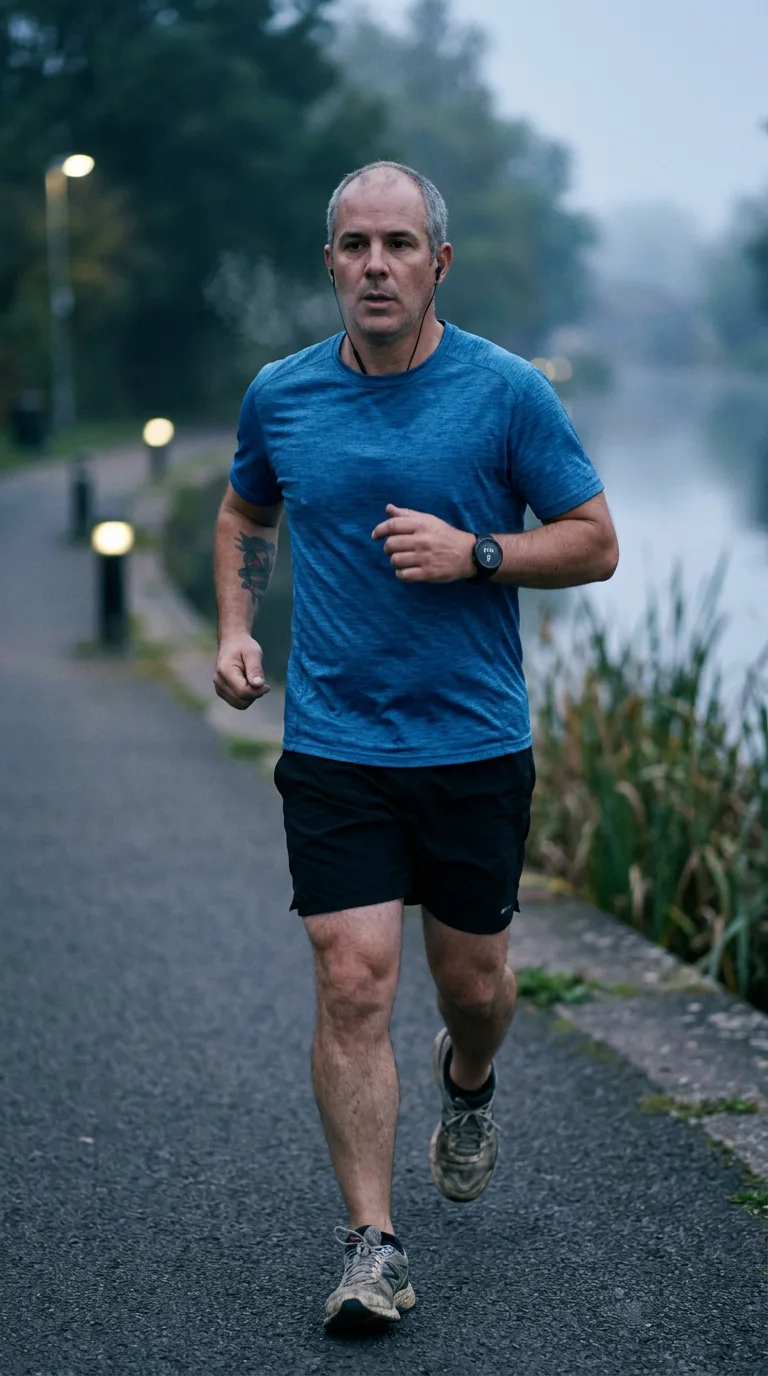
Rarest thing about him: Other Christian — epic, 1 in 132
Season 0seed 1733516507 · engine v10
Character card
lineage 2NZHHJ
His body-swap story
@colin.hasbrook, wearing Marcus Adeyemi, rolled the wheel on and woke up as Patrick Souza, spent 3 minutes in him, then spun the wheel and woke up as Marlon Kahale
---
The lockbox key is still warm from your hand when you decide you're done with him. Marcus Adeyemi, seven minutes old to you, standing in the front hall of a mid-century flip in Silver Lake he's supposed to be staging for a two o'clock showing, and already the wrongness of him is everywhere — the softness at his middle that his own memory keeps apologizing for, a knee that clicks on the stairs, a phone buzzing with a listing agent's name he doesn't feel like answering. It isn't unbearable. That's the trouble with him. Nothing about Marcus Adeyemi is unbearable, he is just thin soup, seven minutes of a life you didn't choose and don't want, and the wheel is right there in your pocket, on the phone, one tab still open from before. You don't decide so much as notice your thumb already moving. The card fee goes through before you've finished hating the taste of his mouth. The wheel spins under your thumb in the flip's front hall, mid-afternoon light coming in flat through a window someone forgot to stage, and it lands.
The break is two steps, no more — the gray gravel of a canal path shuddering under a stranger's shoe, a stumble that never quite happens, and then you are running.
Cold air first, off the water, going into lungs that pull harder and deeper than any lungs you've wanted lately. Legs shorter than you're braced for, turning over faster to cover the same ground, and a watch on the wrist buzzing once, insistently, a split time logged for a stride that was never run, not by him, not in this body's memory — the seam of you arriving showing up on his own wrist like a glitch he'll never see. Earbuds feeding some podcast into ears that aren't listening anymore. Dawn or dusk, hard to tell yet, gray light off canal water, and a chest that keeps running while you catch up to being in it.
The shirt is what opens first — not the running shirt, some other shirt, gone before you can hold it, replaced almost instantly by the wet-through blue one clinging between his shoulder blades right now, and through it comes a whole cold Tuesday morning, him standing in a garage under a bay window pulling this exact shirt over his head, the smell of the fabric softener his ex used to buy that he still buys because changing brands felt like one more decision he didn't have the attention for. Marie. Nine years gone as a couple, more than that as anything else, but she is in the shirt anyway, some contact-static of hers left in fabric that shouldn't still carry her and does.
His name comes to you off the watch face — *Patrick*, lit at mile four, a stupid vain habit of glancing down mid-stride just to see his own name stamped on the display like proof he's still doing the thing. Patrick Souza. Forty-three years old and every one of them sitting somewhere in this stride: the shop off Cesar Chavez where he's been welding eighteen years, the visor lifted onto his forehead, sparks going gray and dying on the concrete floor at the end of a shift, the particular ache low in his back that isn't there this morning because morning is when the body still trusts him. The tattoo comes alive on the inner forearm as the arm swings past his eyeline, American traditional, an eagle gone soft-edged and faded at the color, and with it a night at twenty-two he can still feel — vinyl chair, a shop on Geary, the specific stupid pride of finally having something permanent on him when so little else in his life had held still.
His son arrives through the watch too, obliquely, the way a man's whole tenderness sometimes lives in a device — a voice memo from a boy, eleven, that Patrick listens to on these runs sometimes, though not today, today it's a podcast about the Niners' offensive line, and there's a small guilt in that, in choosing football over the memo, filed and refiled a hundred mornings running.
The drink is in there too, wanting to be skipped past and not letting you: last night, three fingers more than he'd promised himself, the running this morning half penance, half the only thing that still works. AD/HD diagnosed at thirty-nine by a doctor he liked enormously and saw exactly four times, a bottle of Adderall he takes some days and white-knuckles through on others, this morning being an also-ran, which is why the podcast keeps losing him, why he's noticed the ache in his knee four separate times in four minutes and forgotten each one before the fifth. Money that isn't a worry — the shop pays, the flip he never made but the dot-com stock his brother-in-law talked him into decades back quietly did — but money was never the thing keeping him up.
Church on the Sundays he goes, an Orthodox parish two neighborhoods over, and something in that too, a candle, a smell of beeswax, a peace that doesn't touch the drinking and both of you already know it.
Your hands are his hands now, and you look at them running, mid-swing, faint burn-fleck scars across the knuckles, the eagle riding the left forearm, and the watch buzzes again against the wrist, confused by a stride with no history.
You bring him up short on the path, breath sawing, canal fog going gold at the edges where the sun's finally deciding to arrive, and you say, out loud, to no one, in a voice thick with a stranger's grief that isn't yours yet and is already, unmistakably, becoming yours —
"Not yet. Not this one yet."