Marcus Adeyemi
Fictional. Generated by AI — not a real person, and no likeness of one is intended.
34, real estate agent in Los Angeles · rolled by @colin.hasbrook · card — no film
History
who has worn him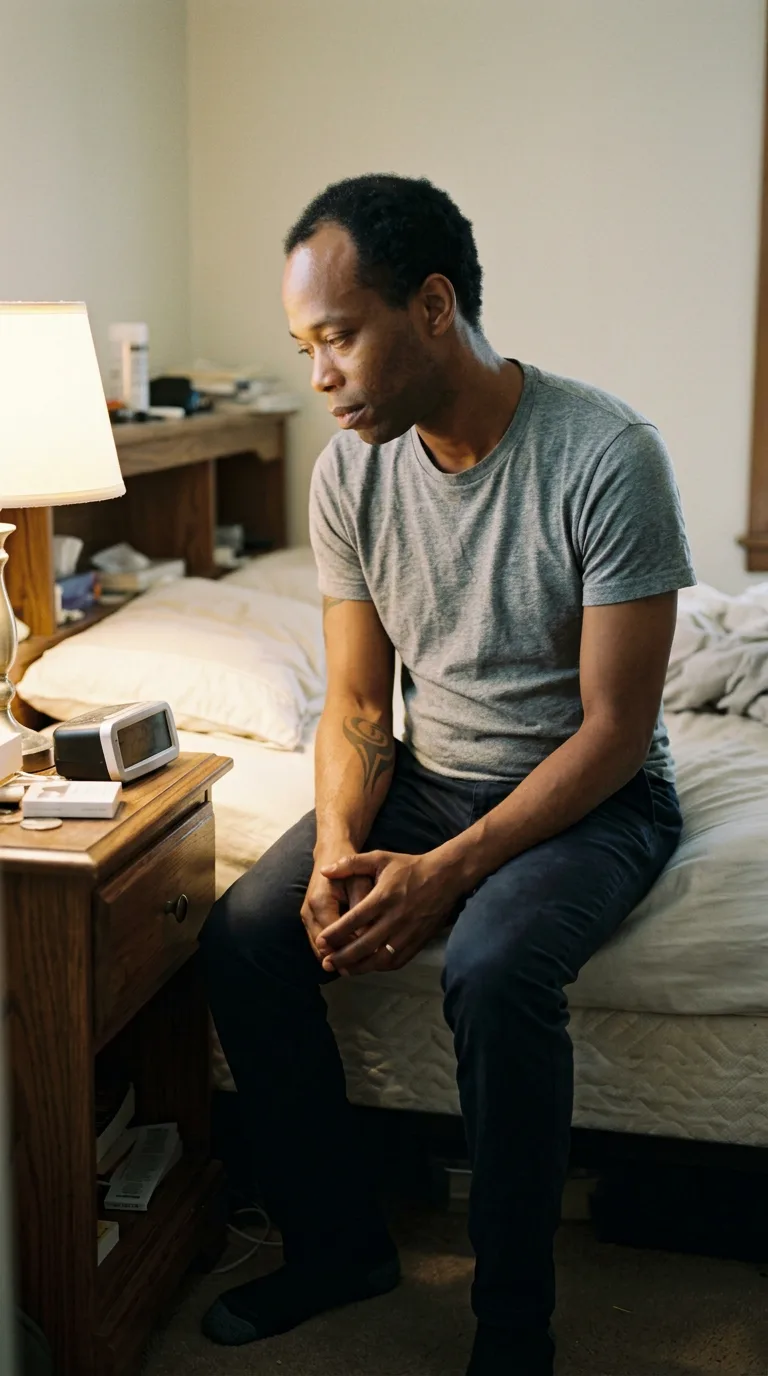
Rarest thing about him: ADHD, diagnosed as an adult — rare, 1 in 27
Season 0seed 356227484 · engine v10
Character card
lineage 2NZHHJ
His body-swap story
@colin.hasbrook, wearing Nadim Farhat, rolled the wheel on and woke up as Marcus Adeyemi, spent 8 minutes in him, then spun the wheel and woke up as Patrick Souza
---
Nadim's shop smells like steam and chalk, and his hands — your hands, six minutes now — already know the iron without being told, the way muscle remembers what a man never chose to learn. You stand behind the counter in his gray hair and his gap-toothed mouth, and you feel how content he is, actually content, some customer's trousers folded warm over your forearm, and that is exactly the problem. Six minutes in and there is nothing left to want here. No fear in him, no ache, nothing pulling. You have been careful men and cruel men and sad men three hundred and forty-six times over, and boredom, it turns out, is the one you can't sit inside of. You set the trousers down mid-fold. You go to the back room where his phone is charging, and on it, vessel.cards, already logged in from some version of you that came before this one. Monday afternoon here. You spin.
—
The room tips sideways and rights itself into gold late light, and your knees are already on carpet, coming down hard onto a bedspread that smells like fabric softener, and a laugh is dying in your throat — his laugh, cut off mid-breath — and your forehead drops onto the quilt because the legs under you have stopped listening. Somewhere behind your eyes a clock is glowing red on a nightstand and it says an hour that means nothing to you yet. Your hands are still loosely folded. You are on your knees in a stranger's bedroom in a body that was praying four seconds ago and has no idea it has stopped.
—
The bedspread under your forehead is cheap cotton, a little pilled, and touching it gives you a flash of a woman's hand smoothing this same corner this morning, humming, not looking at you — Renata, and the word wife arrives with her name already fastened to it, six years of it, a courthouse afternoon neither set of parents attended, her laugh through a phone speaker right now from a nail salon four miles away. You didn't call her back this morning. You meant to.
The t-shirt against your back is soft from washing, gray, and it gives you the closet it came from, the hanger it fell off, and underneath that, unbidden, another woman entirely — Priya, eight months gone now, the smell of her apartment's candle, the specific quiet of the last time you saw her, how you told yourself it was closed and how some nights it still doesn't feel closed. Marcus feels that the way you'd feel a bruise pressed by accident. You didn't ask for it. It came anyway, riding in on cotton.
Your knees know this carpet — they've knelt here most mornings for two years, ever since a counselor with a kind voice suggested structure, something to bookend the noise in his head, the diagnosis that came at thirty-one and explained a childhood of report cards that said bright but scattered. Praying doesn't fully work either. His mind wanders off it in nine seconds flat, most days, thinking about lockboxes and commission splits and whether the Fernwood listing photos came back yet. Today it wandered to Renata's voicemail, and then the amen came early and easy, a formality more than a plea, and he was already half up onto his feet, weight rocking forward onto skinny-fat thighs that ache faintly at the knee the way thirty-four starts to ache, when —
The wedding band on the left hand is warm from his own skin, and it gives you the whole day he bought it, nervous in a mall kiosk, Renata laughing at how long he took. The tattoo on his upper arm, tribal black, half under the sleeve now — that one comes from further back, nineteen and reckless in a shop that didn't ask for ID carefully enough, a design he doesn't love anymore but keeps because removing it feels like erasing the dumb kid he used to like better than the tired man he is now.
His jaw is already tight, clenched around nothing, a habit so old it doesn't register as tension anymore, just as his face's resting shape. Skinny fat, he calls himself, not cruelly — the soft middle under a shirt that still buttons fine, arms that used to play ball in high school and haven't since. Ex-smoker's small residual want, four years quit, flares faintly at the back of the throat with the stress of — of what, he doesn't know yet, kneeling here, a held breath, something wrong that hasn't announced itself.
The M of his hairline against your forehead where it meets the bedspread, receding fast at both temples the way his father's did, the way he checks in mirrors more than he'd admit to Renata. Sunday's — no, Monday's — clothes came off the hanger this morning without much thought: he's not showing a house until four, plenty of time, he told himself, kneeling instead of scrolling his phone for once, proud of that small discipline, wanting God or himself or somebody to notice he was trying.
—
You lift your forehead off the quilt. You look at your hands — his hands, dark-knuckled, the band catching the window's late gold — turning the left one over slow like you're checking it's attached.
"Renata," you say, to no one, to the empty room, his voice coming out of you rough with a laugh that isn't a laugh, "you would not believe the day I'm about to have."