Owen Takahashi
Fictional. Generated by AI — not a real person, and no likeness of one is intended.
35, water treatment operator in Coastal Maine · rolled by @colin.hasbrook · card — no film
History
who has worn him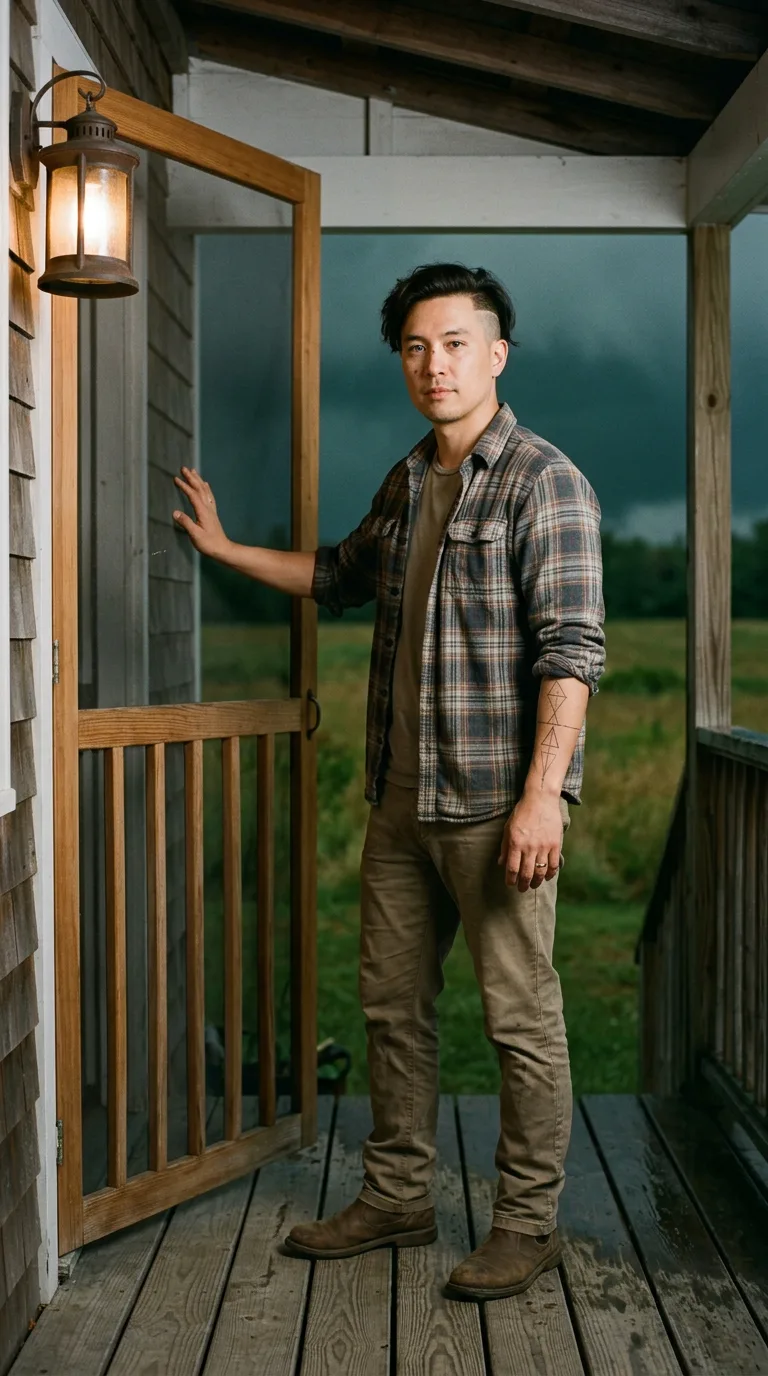
Rarest thing about him: Heterochromia — legendary, 1 in 200
Season 0seed 1107085062 · engine v10
Character card
lineage 2NZHHJ
His body-swap story
@colin.hasbrook, wearing Suresh Pillai, rolled the wheel on and woke up as Owen Takahashi, spent under a minute in him, then spun the wheel and woke up as Craig Buttermore
You are sixty-four seconds into being a mid-level manager in Houston, and you already hate it.
It is Monday, end of day, the light through the office blinds gone the color of weak tea, and Suresh Pillai's chair creaks under a weight you don't recognize as yours yet — soft where you don't want soft, a low ache already starting in the knees, a stack of unfinished performance reviews glowing on the monitor like a rebuke. Somewhere down the hall a phone rings twice and stops. You spun the wheel not four minutes ago and this is what it gave you: a man who worked twenty years to get a desk with a door, and you sat in his good chair for less than a minute and understood completely why the last thing he ever did in that body was want to be someone else. It isn't hatred exactly. It's the particular boredom of a life that fits fine and doesn't move. You open the site again on his monitor, the wheel already loading, spinning lazily even before you touch it, and you think: not this. Not tonight. Anything but the quiet math of somebody else's quarterly numbers.
You click. The office does not so much vanish as stop mattering.
—
The wind stops.
That's the thing you notice before you notice you're a different height, a different weight, before you notice the field — the wind simply quits, mid-gust, like a hand taken off your chest, and into that dead air you are already stepping off a porch, one boot finding wet grass, your body's momentum carrying you forward before whatever is left of you has caught up. Chin up. Hands loose at your sides. A green-black wall of cloud stacked over the treeline like something with intention, and behind you a screen door bangs once against its frame and goes still.
You are 5'10" now, not 5'7". The center of gravity is different, higher, the shoulders wider than the ones you left. There's a wedding band cold on your left hand that wasn't there a second ago. And the air smells like salt and cut grass and ozone, nothing like Houston, nothing like recycled office air — you are standing in Coastal Maine in a man's evening, though where you came from it was barely the end of afternoon, and some part of you notes that gap in the light without yet having the words for why it matters.
—
The flannel shirt is what gets you first — worn soft at the elbows, a shape memory in the fabric of arms that have crossed themselves against cold a thousand times — and through it comes a morning, sleeve by sleeve: him standing in a bedroom with low ceilings, pulling this exact shirt on over a plain gray tee, buttoning it one-handed while the other hand held a mug of black coffee he drank out of habit and not craving, because the coffee had replaced something else years back, something with a bottle, quietly, without a scene, without anyone outside the house ever being told. Grady's tape — no. Not Grady. Owen. The name arrives with the second button: Owen Takahashi, thirty-five, and the shirt remembers being pulled on for a shift that starts before dawn, and the shift remembers itself: the walkway over the aeration basin, the water underneath churning white with air like something boiling that isn't hot, the good clean ache of being the only one awake who understands what the numbers on the panel mean. He is good at that. He has always been good at that — the patient, unglamorous competence of keeping a town's water honest.
The tattoo on the inner forearm answers next, cool ink under your — his — fingers as the sleeve rides up: fine lines, triangles inside triangles, gotten in his twenties for a reason he no longer entirely remembers except that it felt permanent in a way he wanted something in his life to be. His leg is already bouncing, has been the whole time you've been standing here, a tremor at the knee that isn't nerves so much as a motor that never fully idles, something his wife teases him about at the dinner table, something that used to make his imam smile faintly during long sermons because he could see it two rows back.
The screen door against your shoulder blades, still faintly swinging — that gives you the house: shingles gone silver with salt, lobster traps stacked in the dooryard from a neighbor who still fishes even though Owen never learned to, a marriage nine years deep that still works because neither of them needed it to be more than what it is, a son upstairs right now, seven years old, asleep or pretending to be, a boy with his mother's chin and Owen's stubborn cowlick. There's a whole Tuesday in there — a fight about money that resolved itself with takeout and an early bedtime, a Friday at the mosque with his father-in-law who never fully approved and never fully didn't, a cigar on this same porch on a night much calmer than this one, smoke going up straight as a plumb line into still air.
His body under all of it: thirty-five and honest about it, a low ache in the lower back from bending over basin rails all day, forearms stronger than they look, hands that know valves and gauges and the particular give of a wrench that's about to strip a bolt, and don't know, yet, what you are going to ask of them. The storm light does something to the good eye and the brown one differently, some old habit of his own noticing that, checking his reflection in dark windows sometimes just to see the two colors argue.
The wind is still holding its breath. Lightning walks along the cloud wall without touching down.
—
You lift the hand with the ring on it — his hand, wide-knuckled, a callus at the base of the thumb from a wrench handle — and turn it over slowly, palm up, like something you found in a coat pocket.
Then you look up into the coming storm, and past it, toward wherever a lens might be, and you say, low, almost amused at yourself:
"Guess the porch didn't keep out everything."
The wind starts again behind you, all at once, and the field goes sideways with rain.