Owen Radzik
Fictional. Generated by AI — not a real person, and no likeness of one is intended.
39, film projectionist in Los Angeles · rolled by @julian.reyes · card — no film
History
who has worn him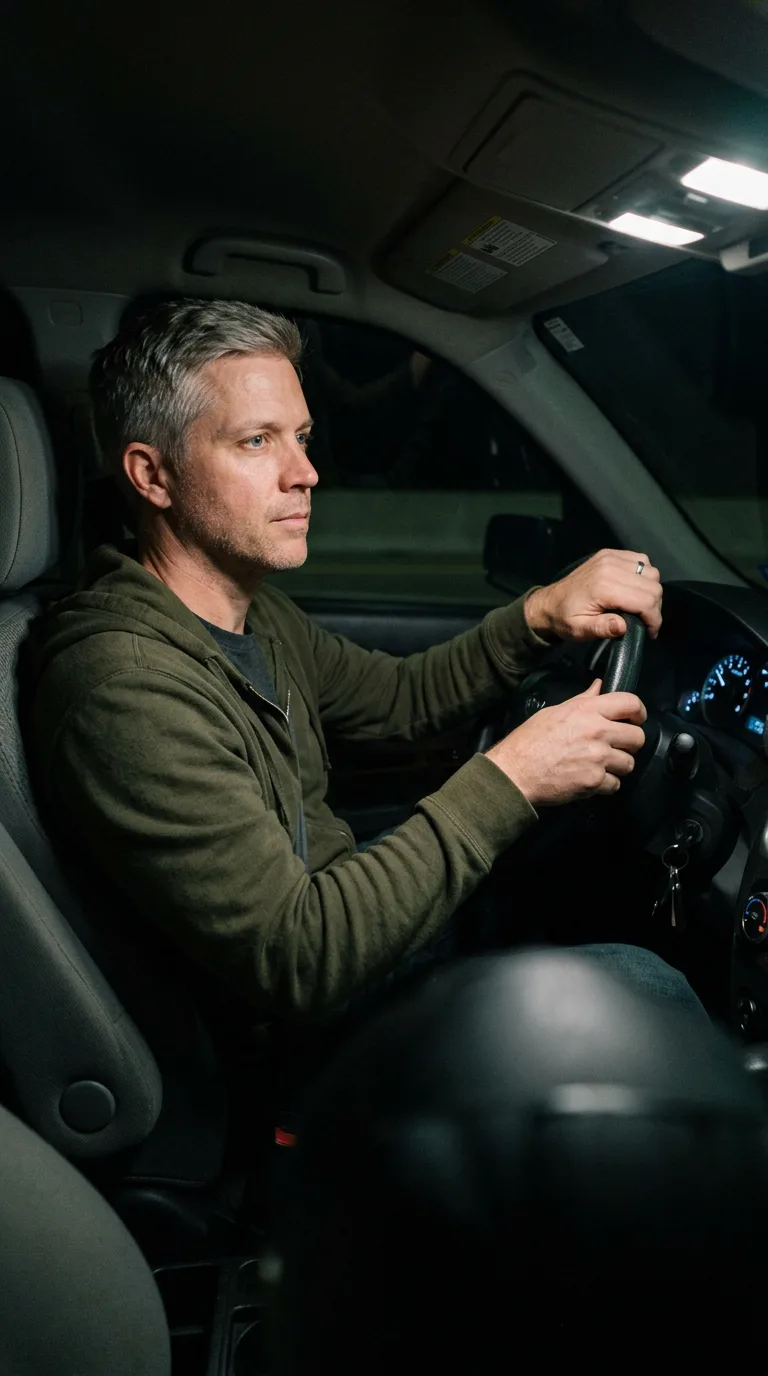
Rarest thing about him: Nicotine pouches — rare, 1 in 33
Season 0seed 1587240231 · engine v10
Character card
lineage PYNCV3
His body-swap story
@julian.reyes (admin), wearing Michael Adams, rolled the wheel on and woke up as Owen Radzik
Michael Adams's kitchen smells like somebody else's coffee, because it is somebody else's coffee, and you have been standing here for over a day now drinking it like it means something. The mug is stamped with a fishing lodge logo that isn't yours. His phone keeps lighting up on the counter with a name you don't answer to — a daughter, probably, checking on the man she thinks is still in there. The middle of the morning, gray light off the water through the window over the sink, and you feel it again: that itch under Michael's borrowed skin, the one that has nothing to do with him and everything to do with the fact that you know exactly how this feels now, the waiting, the wearing, the sameness of a life that isn't costing you anything and also isn't giving you anything either. Forty-six men behind you and this one's fine. Fine is the problem. You set the mug down still half full, open the laptop that isn't yours on the table that isn't yours, and go to the page with the wheel on it, because you always go back when a body stops being new, and this one stopped being new about an hour ago.
You pay. You spin.
You are three miles from a home you have never seen, going sixty on a dark highway, and your hands are not where they were half a second ago — they have dropped off the wheel and resettled lower and wider, and the car is already drifting back onto its line like it never left, like it did this on its own. The dash glow sits along the backs of two hands that are not yours yet, not really, not until you go looking. The turn signal is ticking for an exit that isn't his. Your body — this body — breathes on its own, deep and slow, a held-over rhythm from someone who was calm three seconds ago and has no idea he isn't calm anymore.
The steering wheel is worn smooth under your palms, foam gone thin over the seams, and it gives you the first flash: gripping it at ten and two the way a driving instructor taught him thirty years ago and never let go of, a habit his ex-wife used to tease him about, *you drive like you're taking a test, Owen*, and there she is, a name arriving with the memory rather than before it — Owen. His hands know this wheel the way they know a dozen other machines, and that's the thread the touch pulls on next: calluses along the pads of his fingers, not from anything rough, just from thirty years of small mechanical things — reels, gears, splice tape, a hot lamp housing he's been careful with maybe once out of a thousand times and paid for it once, a thin white scar along the left thumb that the facts didn't think worth mentioning and his body still remembers anyway when the thumb brushes cold metal. The ring on the left hand is warm from his skin. It slides a little when he — when you — flex the fingers, loose enough that he thinks about getting it resized every few months and never does, and that not-doing is its own small memory: his wife's voice, amused, not nagging, *just get it done, Owen*, and the particular tiredness of a marriage that has worn into something comfortable rather than something sharp. Two kids old enough now that the house is quieter than he expected it to be by this age, and some nights that quiet is a relief and some nights it isn't, and he has never said which out loud to anyone.
The flannel against your back gives you this morning — his morning, hours from now by the clock on this dash but already lived once, already folded into him: the closet light with the pull-string, the shirt off the hook where it's hung for two years, sleeve by sleeve, left arm first out of habit, the cuffs rolled twice because rolling them three times always slips by afternoon. Under it a plain gray tee gone soft at the collar. The jeans, broken in at the knees, a streak of white on the thigh from leaning on a painted rail at the multiplex loading dock. Boots that have stood eight-hour shifts in a booth the size of a closet, the heat off the lamp housing, the smell of hot dust and old film cement that never quite leaves his hands no matter how he scrubs them — that smell is in the car right now, faint, coming up off his own skin, and it opens a whole shift for you: threading a print in the dark by feel, the reel spinning down to nothing right as the credits hit, the small clean satisfaction of a changeover nobody in the audience even notices, which is the whole point of the job, invisible work done right. He liked that about it once. Some nights he still does. Other nights it's just a room with one door and thirty years of other people's Tuesday nights on the other side of a port glass, and he goes home to a wife who's asleep by the time he's parking.
The nicotine pouch tucked against his gum gives you almost nothing — just the tired, ordinary comfort of it, a habit he picked up late and doesn't examine. His pulse under your fingers where they've come to rest again near the bottom of the wheel is running a little high, the kind of high his doctor has mentioned twice now, the kind he waves off. Three miles from a house with a wife asleep in it and two kids who don't wake for anything anymore, on a night that is, for him, already almost over.
You look at your hands on the wheel — his hands, wide, ordinary, a plain band catching the dash light — and you turn the left one over slow, like you're checking it's really there.
"Okay," you say, to no one, to the windshield, to the exit sign sliding past that isn't the one he'd have taken. "Okay. Let's see what you've got."
The signal keeps ticking, patient, wrong, and you let it run.