Michael Adams
Fictional. Generated by AI — not a real person, and no likeness of one is intended.
51, sales rep in Coastal Maine · rolled by @julian.reyes · card — no film
History
who has worn him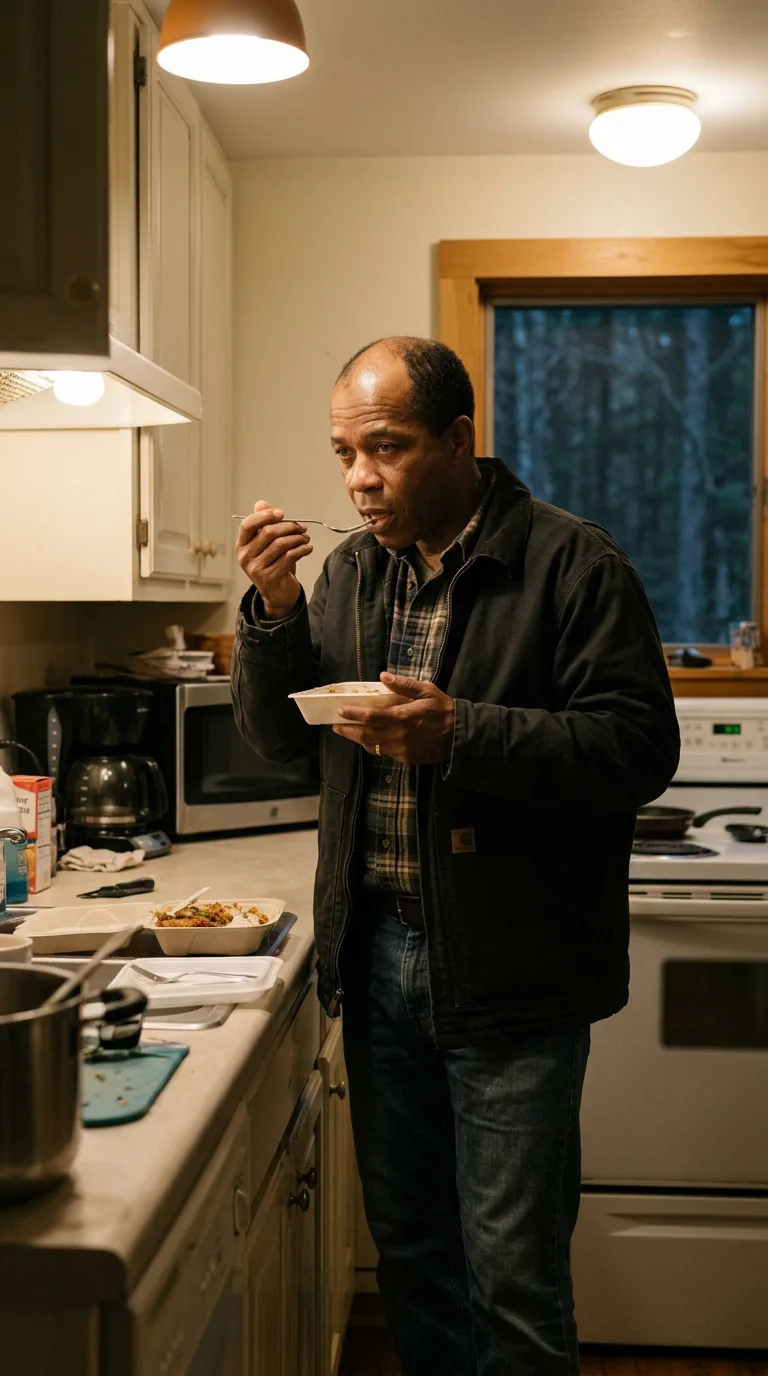
Rarest thing about him: Widowed — epic, 1 in 100
Season 0seed 859276582 · engine v10
Character card
lineage PYNCV3
His body-swap story
@julian.reyes (admin), wearing Wesley Blackhorse, rolled the wheel on and woke up as Michael Adams
---
Wesley's dorm room smells like instant noodles and the particular mildew of Rural Texas humidity that never quite leaves the drywall. You've been him for three hours and thirty-eight minutes, and that is already too long. The heterochromia eyes in the mirror don't bother you — you barely look anymore, forty-five bodies in and the mirror stopped being a novelty around body nine — but the hip does. Something in Wesley's left hip clicks when he sits cross-legged, and he sits cross-legged constantly, some study habit baked into him that you didn't choose and can't undo, and the clicking has needled at you for three hours straight. He's a skinny-fat twenty-two-year-old with a chemistry final in eleven days that you have no intention of taking. There's nothing wrong with him, exactly. He is simply not enough, tonight, for whatever this feeling is — an itch behind the sternum that fifty-one bucks and a wheel has always been able to reach. You open the laptop. The freckles on Wesley's knuckles move over the keys. vessel.cards loads slow on the dorm wifi. You pay. You spin.
The fork stops a half-inch from your mouth.
You feel it before you understand it — a stillness that isn't yours dropping into a body that already had one, like two silences meeting. The hand holding the fork is not skinny. It's a broad hand, dark-knuckled, a plain gold band snug on the fourth finger, and the fork it's holding is bent slightly at the tine from years of being someone's only fork. You set it down on the counter, not because you decided to but because the motion was already halfway complete and your first act in him is simply to finish something he started. Coat still on your shoulders. Kitchen dark except for the range light and the window in front of you, which is not a window right now so much as a black mirror holding a tired man's reflection back at him.
The coat is heavy canvas, and when you shrug it off — his shoulders doing it, an old motion, no thought in it — the lining drags across your forearms and that's the first door. A flash: this same coat, on a loading dock in Bangor, wind coming off the water like a slap, a younger version of these shoulders laughing at something a man named Ellis said, twenty years gone, Ellis dead now, you don't know how you know that, you just do, it arrives with the coat and leaves a taste like salt.
You sit at the little table because that's what he does after the coat comes off, and the sitting is where the rest of him starts coming in through the seat of the jeans, through the counter's edge still cold under your palm, through the flannel shirt against your back. The shirt gives you a morning — not this morning, some morning, but the same one repeated hundreds of times: the sleeve resistant at the elbow because his shoulder doesn't lift the way it used to, a grunt he makes without meaning to, low, private, the reach behind for the second sleeve costing something in the lower back that never fully leaves him. Fifty-one years old and every joint in him has an opinion about it. You feel where the pain lives — not sharp, just present, a hum along the spine and both knees, worse getting up than sitting down, the kind of ache a man stops mentioning to anyone including himself.
The fork again, back in your hand, and with it — Diane. Not a flash this time but a year, unspooling: her laugh in this kitchen when it had different curtains, her hand flat on his chest on a Tuesday that turned out to matter more than either of them knew at the time, the hospital in Bangor, the particular gray of March light through hospital blinds, and then no Diane, and the curtains changed, and he changed them himself, badly, alone. You feel the shape of that grief the way you'd feel a beam in a house you're walking through in the dark — you don't see it, you just know not to walk into it twice.
There's another woman under that one, older, brighter, unfinished — a name that surfaces as *Renee* and a decision he made at twenty-six that he has turned over maybe four thousand times since, some version of *what if* that never got old because he never let it. That one comes with no ache at all, which is its own kind of ache.
Two kids' voices, overlapping, a boy and a girl, both grown now and living somewhere south of here, phone calls that are warm and too short. A church basement, folding chairs, a hand on his shoulder from a man he trusts more than he trusts most blood relatives. A hotel lobby carpet patterned like a bad dream, a lanyard around his neck reading MICHAEL ADAMS in a font too small for the badge, the particular fluorescence of conference rooms in Portland and Bangor and once, memorably, Hartford, where he closed the largest account of his career and drove home that night instead of celebrating because there was no one to celebrate with.
A cigarette he hasn't had in fourteen years, the memory of wanting one arriving anyway, phantom, in the fingers.
The container in your other hand is warm. Chinese food, gone slightly soft, and his stomach — your stomach now — wants it plainly, hunger uncomplicated by any of the rest of it. You eat. The mouthfuls come even, unhurried, a habit worn smooth: eat what's in front of you, don't waste it, say the blessing in your head instead of out loud because there's no one here to hear it said aloud anymore. The window holds your reflection and gives nothing back. Somewhere behind these ribs a hand rises without being asked to and touches your own jaw, checking it, the way his hands have always found his face when his mind wanders — old tic, no origin story to it, just where his hands go.
The last bite. The container goes down on the counter next to the fork.
You look at your hands — his hands, wide, dark, a plain band on the left one that has outlived the marriage it marked — and you turn the right one over slowly under the range light like you're checking it for something that isn't there.
"Didn't feel a thing," you say, to the window, to no one, and you don't know yet if that's relief or the saddest sentence this kitchen has heard all year.