Owen Kittredge
Fictional. Generated by AI — not a real person, and no likeness of one is intended.
28, aircraft mechanic in Coastal Maine · rolled by @klaus.dietermann · card — no film
History
who has worn him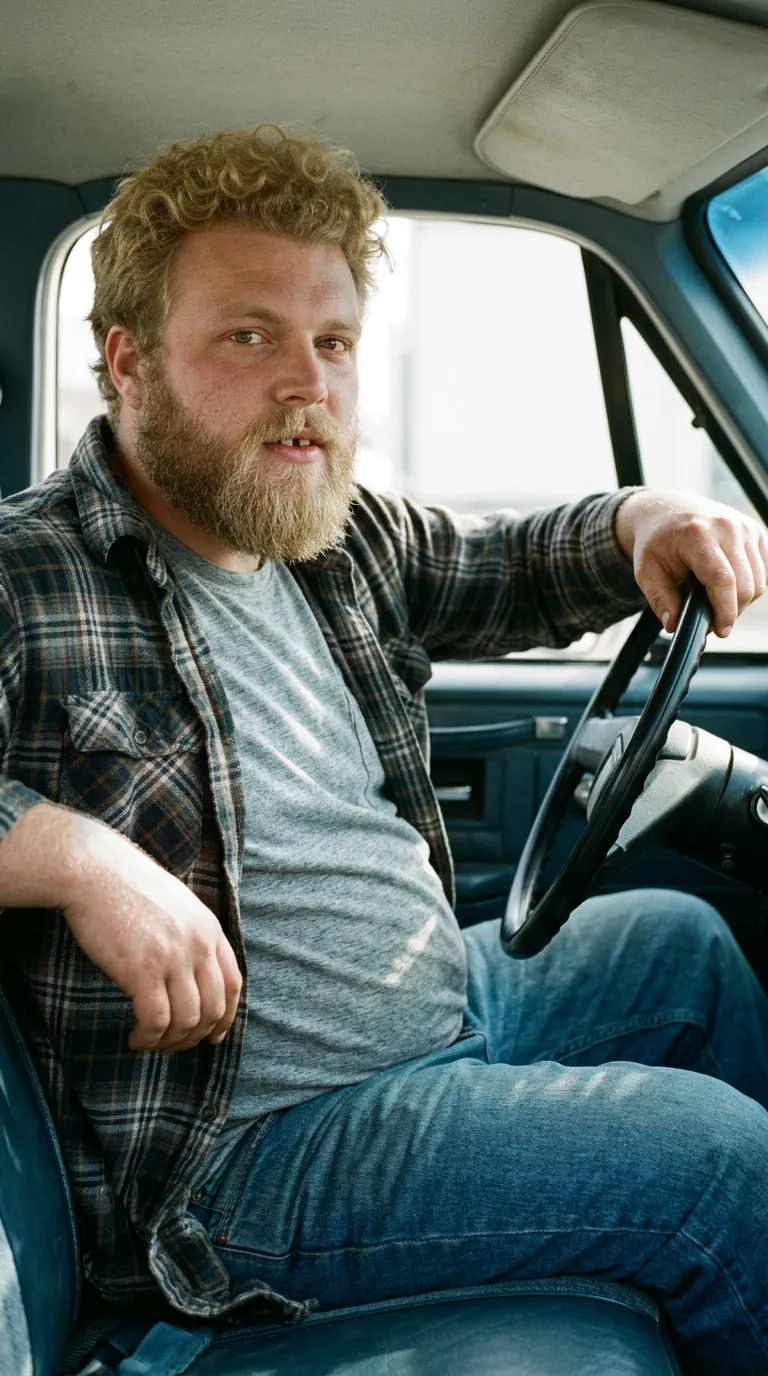
Rarest thing about him: Aircraft mechanic — common, 1 in 573
Season 1seed 762427994 · engine v11
Character card
lineage KEPHG1
His body-swap story
@klaus.dietermann, wearing an unnamed body, rolled the wheel on and woke up as Owen Kittredge, spent 3 minutes in him, then spun the wheel and woke up as Desmond Halvorsen
The waiting room chairs are still warm when you tell the nurse you need five minutes. You lock the office door of a man you have been for less time than it takes to eat lunch, and you feel his soft hands shake on the desk — not from fear, from wanting, the same wanting you brought with you into him. Thirty-five years old, gray coming in early at the temples, a wedding ring he doesn't wear anymore sitting in a dish by his sink at home, patients who call him doctor and mean it like a kindness. It should be enough. You spun into a man with money already made and a title people stand up straighter for, and thirteen minutes in you are bored in a way that has nothing to do with him and everything to do with the door behind the door — vessel.cards, open in a tab on a phone he keeps in a drawer, a wheel that never once has given you the same evening twice. You did not come back because this body failed you. You came back because it succeeded, instantly, and you have learned that the wanting doesn't wait for a reason. You put your thumb on the screen. You spin.
The road takes the pull without a fight, a foot toward the centerline and back, smooth as a held breath, and your hands — his hands, wide and blunt-fingered — come off the wheel and settle again lower, softer, like they've done this a thousand times. The turn signal ticks on for a road you have never driven. Sea light comes through the windshield gray and flat, the kind that has no morning or evening in it, just itself. You are sitting where he was sitting. You are wearing what he was wearing. Your chest fills with a breath that is not the shape of the one you had a second ago, and it goes all the way down easy, into a gut that likes food and beer he doesn't drink anymore, into a body already loosening in the seat because some very old habit says three miles from home, you can let go now.
The clock on the dash says early afternoon, though something under the memories protests weakly that this is wrong, that this hour should be dark, should be the tail end of an overnight check on a 737 with its cowling open like a patient on a table — a double, someone out sick, sixteen hours under floodlights with a torque wrench that knows your palm better than your palm knows itself. That's this week's shift, the flash tells you, arriving off the seatbelt cutting into a soft shoulder: rotating rosters, the graveyard block that pays the differential, the drive home into a daylight that always feels stolen. The dashboard vents blow warm on knuckles chapped from hangar cold, and that single sensation opens a whole year — the smell of Jet-A that never fully leaves a coverall no matter how many times Linda at the laundromat swears the load's clean, the particular ring of a dropped socket on concrete at three in the morning, the ache between his shoulder blades that isn't injury, just twenty-eight years of a body built low and wide doing work that wants you bent over something.
The flannel shirt is against your back now, and it gives you the morning he put it on — not today, some Tuesday months gone, sun barely up, standing in the shingled house that's gone the color of a nickel from forty years of salt wind, lobster traps stacked in the dooryard from a dockside deal he still doesn't understand the terms of. He'd pulled the flannel over a gray tee still warm from the dryer, buttoned it one-handed the way his father taught him, checked his beard in the hall mirror — the gap in his front teeth catching the light when he almost smiled at nothing — and thought, not for the first time, that he should call Dana. He doesn't. He never does. She's three years gone and married now to a man who sells boats in Camden, and Owen still keeps her number the way you keep a splinter you've stopped trying to dig out, more habit than pain. The truck's bench seat under you now creaks the way it creaked that morning, vinyl gone soft and cracked at the seams, and your hand — his hand — finds the gearshift without you asking it to, muscle memory older than any thought you've had in this skull.
His hands won't hold still even now, even numbed by the smallness of the seconds you've been in them: thumb finding the seam of the wheel, fingers drumming once against his thigh, some restlessness in him that never got trained out, not by the aircraft manual checklists, not by the folding of coveralls at the end of a shift, not by church on the Sundays he still goes, sitting near the back where the light comes through plain glass and nobody asks him why he's alone. There's money in him you can feel like ballast — decades of overtime and a signing bonus he never quite spent, sitting fat and untouched in an account he opens maybe twice a year — but no wife's name anywhere in the house records, no kid's height marked on a doorframe. Just him, and traps in the yard he keeps meaning to sell, and a beard he trims once a month over the bathroom sink, watching the gap in his teeth appear and disappear as his mouth moves.
You lift your hands off the wheel entirely now and hold them up in the gray sea light, thick fingers, a callus map you didn't earn and now have to carry, and you turn them over once like you're checking someone else's work.
"There you are," you say, out loud, to no one, in a voice pitched lower than the one you had this morning in Dallas — and you don't know yet if that's relief or just the shape the wanting takes when it's fresh.