Otis Marable
Fictional. Generated by AI — not a real person, and no likeness of one is intended.
63, construction laborer in El Paso · rolled by @colin.hasbrook · card — no film
History
who has worn him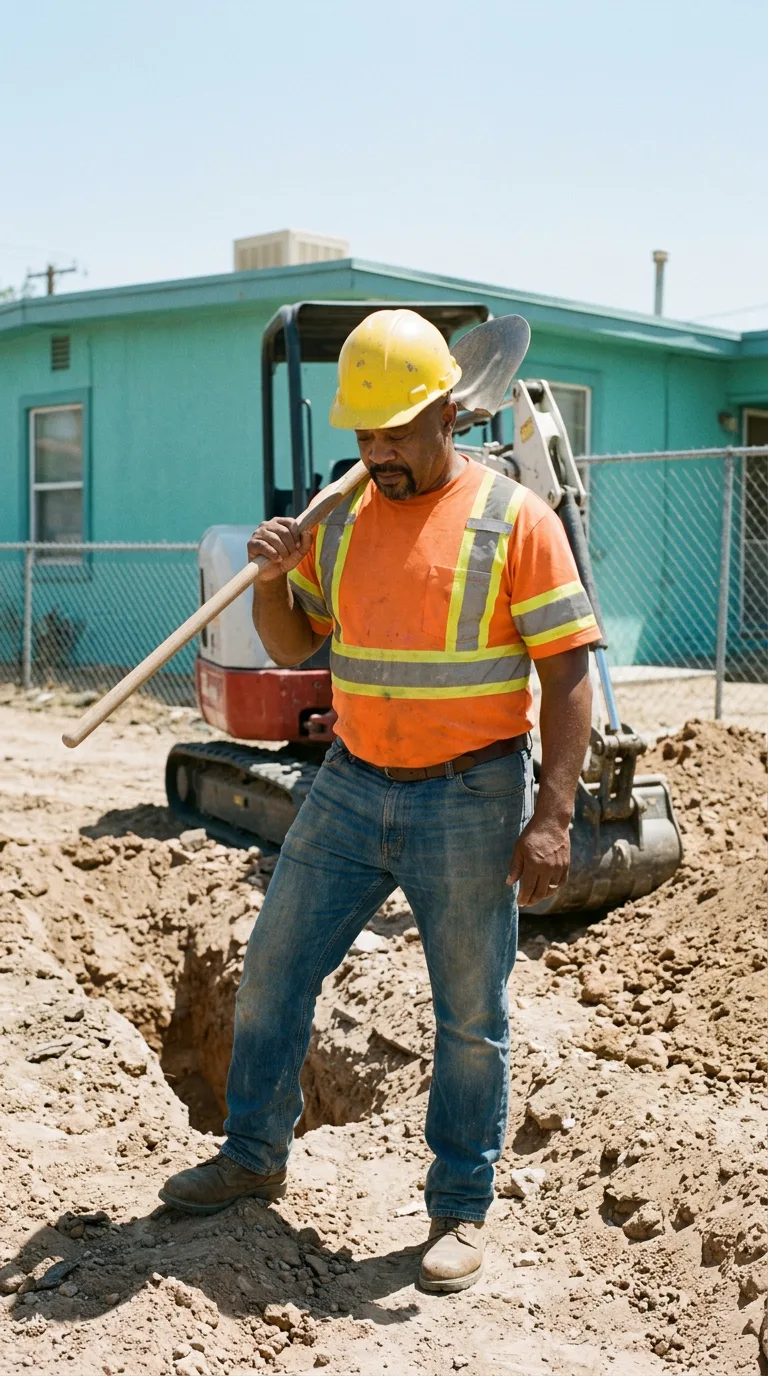
Rarest thing about him: Pulls at his beard — epic, 1 in 365
Season 1seed 1644298164 · engine v11
Character card
lineage 2NZHHJ
His body-swap story
@colin.hasbrook, wearing Gerald Truscott, rolled the wheel on and woke up as Otis Marable, spent under a minute in him, then spun the wheel and woke up as Sami Haddad-Younes
The line moves slow this morning, and that's the problem. Gerald Truscott's line, the one you're standing in with his skinny-fat body and his gray stubble and the gap where a front tooth should be — the belt's stopped twice in twenty minutes, a supervisor's voice crackling over the intercom about a sensor fault, and there's nothing to do with your hands but wait. Gerald's hands. You've had them less than a minute, in wheel-time, and already they're boring you. That's not fair to him, exactly, but fair was never the deal. You spun for Gerald because the card promised something and delivered a man who stands in one spot for eight hours and watches boxes go by. There's a particular flavor of restlessness that comes from being trapped in someone else's Thursday, and by eleven in the morning, Denver time, it has curdled all the way into want. You don't decide to go back to the wheel so much as notice your thumb is already on the screen.
The wheel spins the way it always does — no drumroll, no ceremony, just color blurring past a needle that was never going to land anywhere you chose — and it stops.
You are standing in a trench with a shovel on your shoulder.
The El Paso sun is a flat white weight on the back of your neck before you even know you have a neck like this one — thick, a little sunburned at the collar line, heat sitting in it the way it never sat in Gerald's. Your body — his body — is heavier through the middle than the one you left, planted wider, a low center of gravity that has clearly spent forty years learning not to fall over on uneven ground. There is a half-second where the shovel keeps rising on the old momentum, wrong, too fast, like a record skipping — and then it corrects, slows, sets down clean against packed dirt with a care that feels like someone else's habit wearing your arm. The next ten scoops come out deliberate. Measured. A rhythm that hasn't needed checking in years getting checked anyway, because you're checking it, because you don't yet know what these shoulders know.
The gloves are what open first. Leather gone soft and cracked at the knuckles, sweat-salted, molded to a grip — and there's a flash: the same gloves, six years newer, his son's hands on top of his showing him where to hold the handle so the blisters don't come. Marcus. The name arrives with the memory, unbidden, warm. Marcus at nine years old on this same kind of job, a Saturday, learning that work is a thing you do with your body and your father both.
The shirt — orange, damp already, a pocket that snags a thumb when you reach across — gives you the morning. Otis standing in front of the dresser in the turquoise house, the shirt coming off its hanger with the particular smell of a laundry soap his wife, Yolanda, has bought for thirty years without ever switching brands, and him pulling it over his head in the dark so as not to wake her, though she always wakes anyway, always says something from the bed — this morning it was *you eat something before you go* — and he always says *I will* and never quite does. The belt cinching at a notch worn shiny. The jeans, stiff at the knee from yesterday's dust, pulled on standing, one hand on the dresser for balance because the balance isn't what it was at forty.
The hard hat on his head gives you the site itself — this trench, this job, a sewer line replacement behind a row of flat-roof houses that all used to be one color before the sun took the color out of half of them. Twenty-two years doing this. A back that announces itself every morning before coffee and settles by nine. Knees that pop going down and don't much care coming up. Strong hands, the strongest thing about him, hands that have poured concrete and framed walls and once, memorably, pulled a neighbor's truck out of a flash-flooded arroyo with a chain and pure stubbornness. He does not smoke anymore — quit the year the third child was born, cold, on a bet with himself he never told anyone he'd made — and he drinks maybe four times a year, a beer at a cousin's wedding, nothing that costs him the next morning.
The wedding band on the left hand is the deepest one. Thirty-one years. Yolanda at twenty-six in a church dress the color of a peach, and him sweating through his one good suit in August heat, and the sureness of it that never once, in three decades and three children and a mortgage paid off two years ago, needed re-deciding. Historically Black Protestant, a church two miles from here, a pew his family has occupied since before he was born into occupying it. He is a man who tithes without complaint and prays mostly in the truck, alone, before a shift, and doesn't tell his wife that's where he does it.
Your — his — hand drifts up off the shovel without your telling it to and finds the beard, tugs at it once, twice, an old unconscious thing his fingers know how to do better than you know how to stop them.
You look down at that hand. Thick fingers, a nail split and healed crooked on the middle one, the ring catching sun.
You look up, past the chain-link, at the turquoise house shimmering a little in the heat, and you say, out loud, to no one working near enough to hear it:
"Alright. Let's see what the rest of the day wants."