Nick Sorrentino
Fictional. Generated by AI — not a real person, and no likeness of one is intended.
30, personal trainer in Chicago · rolled by @colin.hasbrook · card — no film
History
who has worn him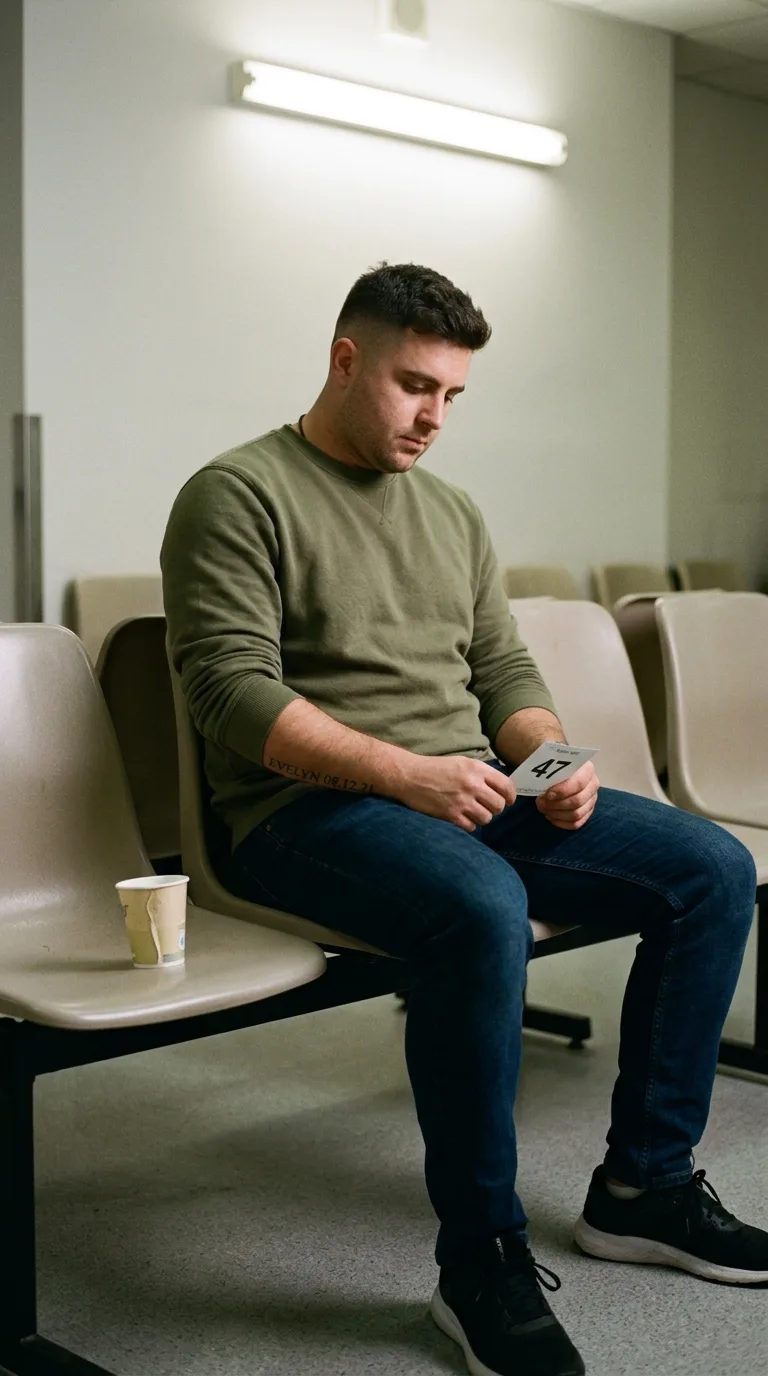
Rarest thing about him: A pack a day — rare, 1 in 17
Season 0seed 544111052 · engine v10
Character card
lineage 2NZHHJ
His body-swap story
@colin.hasbrook, wearing Suresh Rajagopal, rolled the wheel on and woke up as Nick Sorrentino, spent under a minute in him, then spun the wheel and woke up as Marco Tapia
You are standing in a corridor at the Suffolk County facility, and Suresh Rajagopal's knees ache the way they always do after the walk from the yard, that deep bone-tired throb that belongs to a fifty-nine-year-old man who has spent thirty years on concrete floors. You have been him for less than a minute. That is the whole problem. There was a moment, right when you landed — his radio crackling, the smell of bleach and other men's sweat, an inmate mouthing something at you from behind a grate — where you felt the whole rest of this life laid out ahead of you like a hallway with no windows, and you thought: no. Not this one. Not a shift that hasn't even started yet. You feel bad about it for exactly as long as it takes to get your phone out of your pocket, thumb still remembering the code even though it isn't your thumb, really, and open the site, and the wheel is already loading before the guilt finishes its sentence.
It lands on him mid-spin the way it always does — no travel, no warning, just gone from one weight into another.
You are sitting down. That's the first thing, the wrongness of it, after a body that was standing in a corridor: a chair under you, cheap and slightly too narrow, your knee going up and down on some rhythm that isn't yours yet but is already stopping, because the number board across the room clicks from 47 to 48 on the same beat your knee stops on, like the two things agreed on it together. There's a paper cup in your hand, water gone flat and lukewarm, and you set it down on the seat beside you, careful, square, the way a man sets down something he doesn't especially want but also doesn't want to spill. Your hands fold in your lap. Somewhere a name gets called — not a name you know yet — and you don't look up.
The sweatshirt is the first thing that talks to you. Olive green, worn soft at the cuffs, and touching the hem of it where it's tucked funny against your hip gives you a flash of a mirror this morning — no, not this morning, an evening, a Chicago winter evening with the radiator hissing — pulling this exact sweatshirt over a gray tee still damp from the shower after the last client, smelling of chalk and rubber flooring, Nick Sorrentino tugging the collar straight and thinking, absently, that he should really replace this one, it's got a client's chalk handprint ghosted into the shoulder that won't wash out. The jeans against your legs bring the rest: the drive over, deciding against shorts because this appointment felt like it should be dressed for, some superstition about doctor's offices and dressing like you take care of yourself, even though you always take care of yourself, that's the whole job.
The tattoo is what does the real work. It sits on the inner forearm, and when your other hand brushes it settling into your lap, it opens like a door: EVELYN, 08.12.21, and it isn't a daughter, isn't anybody's birthday but hers — a black lab, thirteen years old when she went, the only thing that never once in his life made him feel like he was performing being fine. He'd cried getting the tattoo done more than he cried the day she died, and the artist had pretended not to notice, and Nick had tipped him forty percent for that.
The gym comes in through his own hands, unbidden, muscle memory surfacing without an object to trigger it: the whistle weight around a neck that isn't around this neck right now, the particular grip of a kettlebell handle, spotting a client on a bench press and saying easy, easy, I got you, in a voice that is warm without being soft. He likes the work. He likes it in the unglamorous way of someone who found the one thing he's good at early and has never once resented it, six a.m. sessions and old guys with bad backs and twenty-two-year-olds crying about their macros, all of it. He clicks a pen without a pen in his hand, the ghost of the motion in his thumb, a habit from doing intake forms for a decade.
The girlfriend arrives sideways, through nothing he's touching, just there in the ambient hum of him — an apartment under the tracks, a woman's laugh from the kitchen, an argument about grout that wasn't really about grout, the ordinary weather of a life he built without noticing he was building it. He goes to church on Sundays and means it, mostly, in the plain unbothered way of a man raised in it who never had cause to leave. He smokes a pack a day and has decided, seventeen separate times, that this is the year he quits, and is not thinking about that today, not with 47 still glowing red across the room and his name not yet called.
Nothing hurts particularly. The dad-bod softness sits easy on him, a body that works hard and eats like it doesn't have to, and there's a low, comfortable, unbothered strength underneath it, the kind that doesn't need to prove anything in a mirror. It's a good body to be in. It is not a body with anything wrong that he'd tell you about.
You look down at your hands, folded there in your lap where he left them, and turn one of them over slowly, like you're checking it's still attached.
Then you look up, past the empty seat, straight into the light over the door, and say, quiet, mostly to yourself:
"Forty-eight."
Somewhere behind that number, unspoken, is the only question that ever survives the landing: how long this one gets to keep you.