Nestor Villagómez
Fictional. Generated by AI — not a real person, and no likeness of one is intended.
51, warehouse picker in Anchorage · rolled by @colin.tarwater · card — no film
History
who has worn him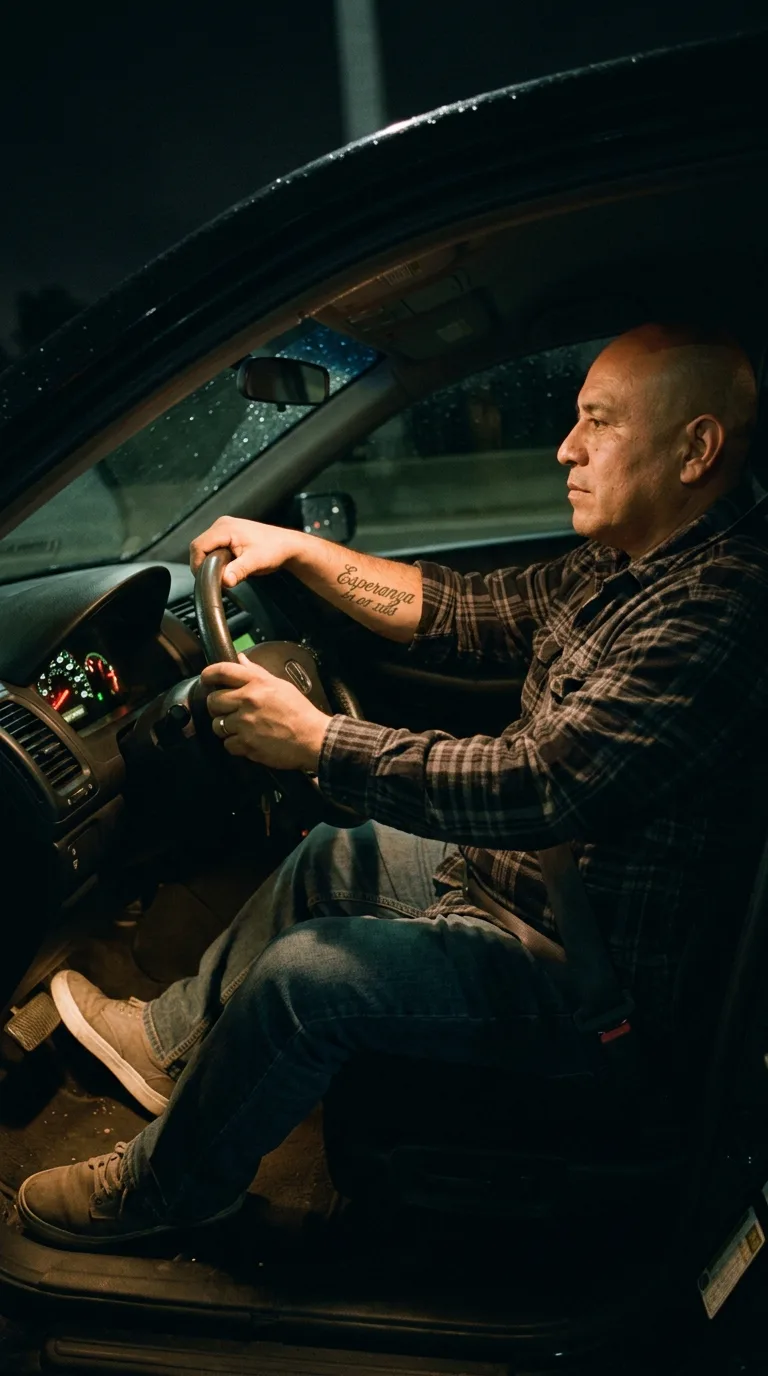
Rarest thing about him: Smokes when he drinks — rare, 1 in 36
Season 0seed 862631208 · engine v10
Character card
lineage COEU7T
His body-swap story
@colin.tarwater, wearing Warren Osterlind, rolled the wheel on and woke up as Nestor Villagómez, spent under a minute in him, then spun the wheel and woke up as Efraín Cabrales
Warren Osterlind's kitchen smells like nothing, because Warren Osterlind doesn't cook, because Warren Osterlind is retired and skinny fat and gray and blue-eyed and has been standing at this counter for eleven minutes deciding whether to eat the eggs he made or throw them out cold. You have been him less than a full day. You already know the shape of the rest of it: golf at two, a nap that isn't a nap, a wife who talks at the television instead of to you. Nothing wrong with him. Nothing happening in him either. You spin because a good body with nothing in it is worse than a bad one with something going on, and Warren, God love the dead man's credit score he's sitting on, is a waiting room. So you set the fork down, you go to the room with the laptop, you pull up the wheel one more time — the twenty-ninth time — pay, and spin it with Warren's soft hand on Warren's mouse, and somewhere the color blurs down to a stop.
The wheel gives you ten and two and cold vinyl and a seatbelt cutting low across a gut that isn't Warren's gut. Dash light green on your knuckles. Rain has just quit outside, you can feel it in the tires more than hear it, and a highway is unspooling three miles from wherever this ends. Your hands come off the wheel on their own before you've caught up to owning them, resettle lower, wider, more sure of themselves than you are yet — and the blinker ticks on for an exit you didn't choose and don't understand, and the car drifts, corrects, holds its lane like it always meant to.
The wheel in your palms is the first thing that talks back. Cold, worn smooth at ten and two exactly, and under that smoothness: a man's whole grip-memory, twenty years of night shifts and rain like this, both hands set the same way every single drive because his father taught him that on a gravel road outside Reynosa before either of them had papers for anything. Nestor. The name arrives with the wheel-feel, not before it.
The flannel next — plaid, soft from washing, a little tight now across a belly that got softer every year after the second kid and never got un-soft — gives you a Tuesday, some Tuesday, buttoning it in a dark bedroom while Marisol slept, doing the buttons by feel because turning the light on woke her and she needed the sleep more than he needed to see. Three kids. Four, counting the one that's twenty-six now and calls once a month from Tacoma. The shirt gives you all of them at once, warm and fast, gone.
The tattoo is under your own forearm sleeve where you can't see it but you can feel where the skin puckers slightly along the old linework, and that opens wider than anything else has: Esperanza, and a date, and underneath the date a whole woman who is not Marisol. Esperanza who left for Seattle at twenty-three because Anchorage was never going to be enough for her and he understood that even while it broke something in his chest that never fully reset. He got the tattoo two years after she left, not to mourn her exactly — more like keeping a receipt. Marisol has never asked about it. Marisol knows better than to ask about it. That not-asking is its own kind of love, and you feel him feel that, gratefully, guiltily, at the same time.
The seat under you, worn to the shape of this exact body, gives you the drive itself, backward: the shift ending forty minutes early because Dave's forklift needed a part that wasn't coming till Thursday, the radio off because his ears were tired of noise, three miles of dark road he could drive with his eyes shut, thinking about nothing, thinking about the cholesterol pills he forgot again, thinking about how good the bed was going to feel next to Marisol who works the other shift and who he sometimes only really talks to through a shared pillow at six a.m. His body: fifty-one and telling him about it in the lower back, in knees that don't love concrete floors anymore, but the forearms still strong, the hands still quick and sure on a wheel because a body remembers what it's done ten thousand times even when the rest of it is tired. Dad bod, thick through the middle, strong through the shoulders from years of pulling stock. Never had a drink in his life except the smoke he'll have outside if somebody else is drinking near him — some old rule from his mother's church that outlasted the church.
The turn signal is still going, patient, wrong, ticking for an exit that belongs to somebody else's Wednesday.
You lift both hands off the wheel and look at them in the dash light — thick fingers, a plain gold band, the mole-shadowed face reflected faint and small in the windshield glass ahead of you, Nestor's face, yours now, however long that turns out to mean.
"Okay," you say, out loud, to no one, in his voice, and reach over and click the signal off.