Warren Osterlind
Fictional. Generated by AI — not a real person, and no likeness of one is intended.
55, retired in Las Vegas · rolled by @colin.tarwater · card — no film
History
who has worn him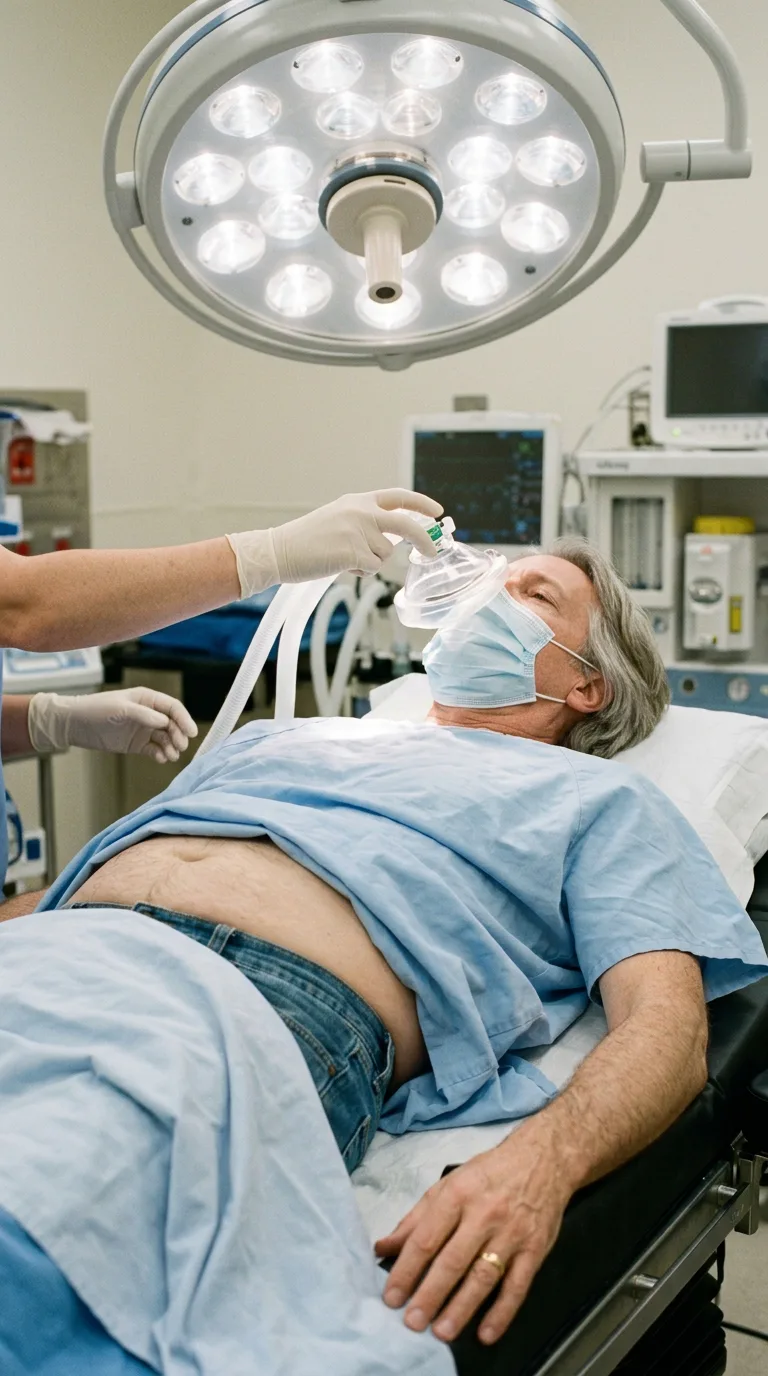
Rarest thing about him: An autoimmune condition — rare, 1 in 95
Season 0seed 1074948068 · engine v10
Character card
lineage COEU7T
His body-swap story
@colin.tarwater, wearing Kenji Tashiro, rolled the wheel on and woke up as Warren Osterlind, spent under a minute in him, then spun the wheel and woke up as Nestor Villagómez
You are standing in Kenji Tashiro's kitchen, four hours and forty-nine minutes into being him, and the trouble is his phone. It keeps lighting up with a name — Priya — and a string of messages that assume things about tonight that you have no memory of promising, because you don't have his memory, only his body, his good jaw, his gym-built shoulders that ache faintly in a way you've started to enjoy. It was fun for a morning. Being thirty and strong and looked at. But a life is heavier than a body, and somewhere around the eleventh unanswered message you feel the specific boredom of being asked to perform a person you didn't choose to be. You open the site instead. You always do. Vessel.cards, the wheel already spinning lazily on the loading screen like it knew you'd be back. You don't decide so much as arrive at the decision, the way you always do — mid-morning, coffee going cold by Kenji's elbow, thumb over the button. You spin.
There is no falling, no tunnel, nothing so generous as a transition. There is a mask against your mouth, tight rubber, medical-sweet air, and a woman's gloved hand adjusting the flow, and a lamp above you made of a dozen small suns. Your body — his body, and already you feel the difference, the thicker weight of the gut, the looseness in the shoulders, the ache low in a hip you haven't earned yet — is on its back on a table. Someone is counting. The number in your mouth, or his mouth, was seven, and it does not finish. Under your eyelids your eyes drag once, left to right, taking in nothing. Your hand on the table, ring finger banded gold, opens. Closes. Opens again. Testing itself like a machine coming back online after a long dumb sleep.
You cannot move anything else yet. This is the strange arithmetic of arriving mid-anaesthesia: you have a body and no say in it, a will with nowhere yet to go, so it goes instead into what you're touching, because that is the only door this kind of house has. The paper gown against your back gives you a cold room, fluorescent, a nurse's voice saying his name — Warren, Warren, can you hear me — from some other morning, some other procedure, years back, a colonoscopy, unremarkable, the kind of appointment a man makes because his wife nagged and his doctor is careful with a man who has an autoimmune disease that likes to make trouble in quiet places. The waistband of jeans still cinched under the surgical drape gives you the last thing his hands did before the gown went on: standing in a bathroom in Las Vegas at an hour that belongs to nobody, undoing his own belt, and beneath that, further back, a whole year of belts, jeans bought a size up because his stomach had gone soft and stayed soft no matter what he did, and he had stopped minding, mostly, because Carol never seemed to.
Carol. The ring gives you her first — the gold band worn thin at the inside curve from thirty-one years of a thumb turning it when he's nervous, which is often, because a man who worked casino security for three decades learned to keep his hands still in front of cameras and let all the nervousness pool into that one turning motion instead. You get the wedding, briefly — a backyard, not a chapel, because her father didn't approve of him yet and there hadn't been time to change his mind — and you get, longer, better, an anniversary dinner four years ago where she laughed so hard at something their son said that she had to put her fork down, and Warren watched her do it and thought, with the plain wonder of a man fifty-one years married to the same relief, that he had not once regretted it. Two kids: a daughter in Henderson who calls on Sundays, a son who doesn't call enough and Warren doesn't say anything about it because his own father never called either and he remembers what that silence weighed.
The shirt is the deepest vein. Green polo, cotton gone soft with washing, and it gives you this morning whole: standing in the bedroom with the blinds already letting in that flat desert light, buttoning it one-handed because the other hand was texting Carol downstairs — bring the good coffee up, would you — and the small satisfaction of a retired man who used to clock in at a casino door at four in the morning for thirty years, badge, flashlight, the particular cold of a loading dock before the sun found it, and now clocks in for nothing, dresses for a porch and a Wednesday and an ordinary procedure his doctor calls routine surveillance, nothing to worry about, just to be sure, given the condition. He touched his own face twice while buttoning the shirt, an old unconscious habit, fingers finding cheekbone and jaw the way another man might jingle keys. He believed, entirely, that God had been decent to him — the money he'd never expected to have, the wife, the kids, the ordinary ache in his joints that was worse some mornings than others but never once made him stop being grateful. He does not drink. Never smoked. His body is unremarkable in every way except that it is comfortable, unbothered, wealthy in the way that lets a man wear the same twelve-year-old sneakers because he likes them, not because he must.
The mask is still on your face when feeling finishes arriving. Underneath the drape, this body: fifty-five, soft through the middle in the way years and prednisone make a man soft, height that surprises you when you imagine standing — six foot two, a long frame he never quite filled out — hair he has not cut short in a decade, silver, brushing his collar, and a low persistent ache in both knees that you understand, now, is simply what it costs to be him today and every day. Nothing hurts sharply. Nothing is wrong. He is, at this exact moment, the healthiest kind of unconscious there is.
The mask lifts. Someone says his name again, gently, the way you wake a man who is not in danger. Your eyes open under the lamp's dozen small suns, and your hand — his hand, the band loose and warm on the fourth finger — comes up off the table on its own, the fingers spreading in front of your face like you've never seen fingers do that before, because in a way you haven't, not these ones, not attached to this much history.
"There he is," a woman's voice says, warm, professional, somewhere to your left.
You turn the hand over once, study the palm, the road-map veins, the ring catching the light. Then you lift your eyes past it, off it, and find the little black dot above the monitor that you already know, twenty-seven vessels deep, is exactly where a lens hides in a room like this.
"Well," you say, voice thick with the last of the gas, not quite his voice yet and not quite not, "let's see how long I keep you."