Neil Okafor-Whitmore
Fictional. Generated by AI — not a real person, and no likeness of one is intended.
47, paramedic in Houston · rolled by @colby.nash · card — no film
History
who has worn him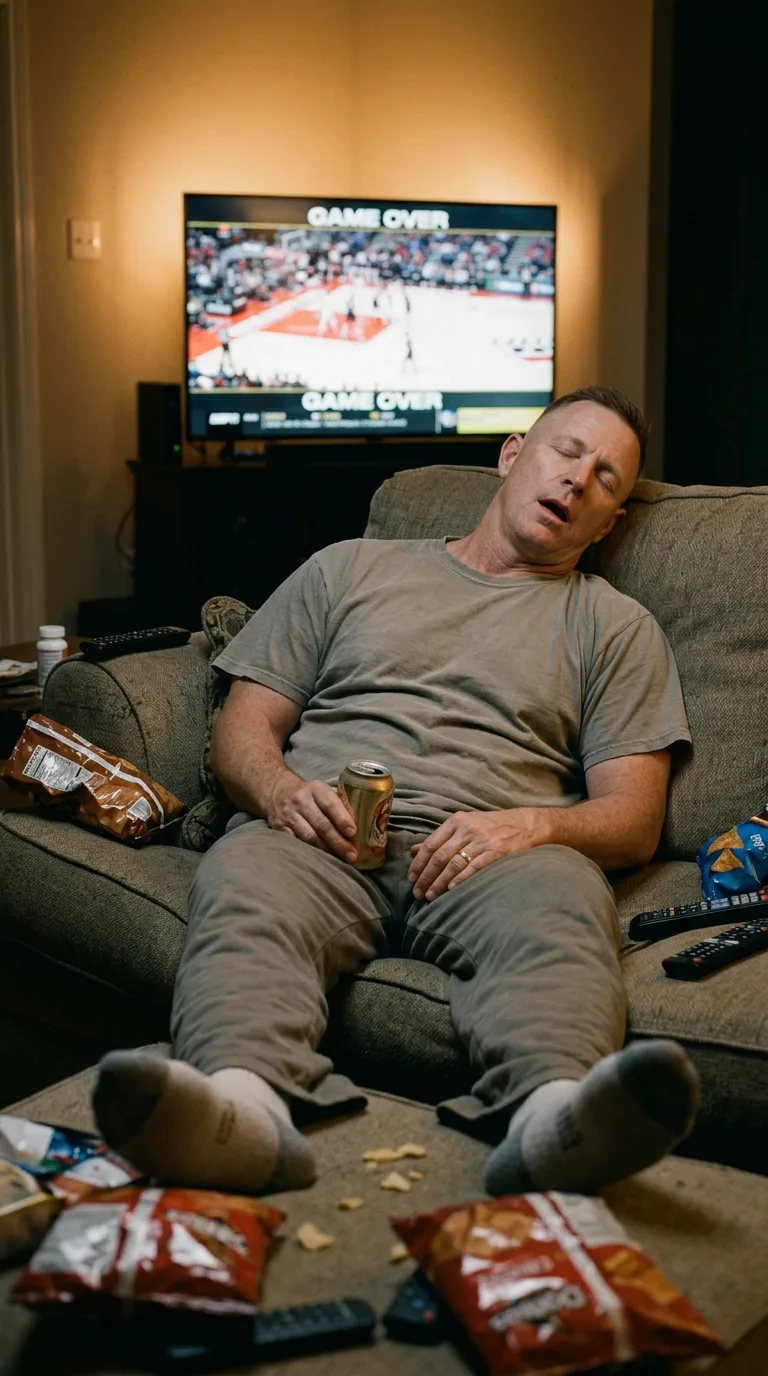
Rarest thing about him: Mixed — rare, 1 in 26
Season 0seed 265670357 · engine v10
Character card
lineage E1W54H
His body-swap story
@colby.nash, wearing Peter Vallo, rolled the wheel on and woke up as Neil Okafor-Whitmore, spent 5 minutes in him, then spun the wheel and woke up as Marco Belletire
The lobby is empty except for the security desk lamp and the hum of the elevator bank, and you are standing behind it in Peter Vallo's body, two days and one hour into him, and you are bored out of your skull. The radio on his belt crackles with nothing. His feet ache in a way that is not yours but that you have inherited anyway, the particular flatness of a man who stands for a living. You have already learned Peter's coffee order, his ex-wife's name, the way he checks the door at 2 a.m. like it owes him something. It is enough. It was always going to be enough for about two days. Somewhere behind his sternum there is a low, chemical itch that isn't his and is entirely yours, and you have learned by now not to fight it. You take out your phone, thumb it to vessel.cards, and spin — because you can, because Boston is dead at this hour and somewhere in the world it is always somebody's evening.
The wheel lands and the lobby is gone.
You are sitting forward on a couch that smells like corn chips, a can gone warm in your hand, and the room is dim except for the television, which is showing a replay of a shot that already went in once. Your thumb is already moving to the volume before you've decided to move it, some old reflex of the hand you're wearing, dialing the announcer's voice down two clicks like it's a vital sign. Your mouth was open a second ago; you can still feel the shape of the yawn you didn't finish. A bag of chips has slid off your knee onto the carpet.
The shirt is not on you yet — it's a T-shirt, worn thin at the collar, and under it his shoulders are heavier through the chest than Peter's were, softer at the middle, a body that runs on shift work and gas station coffee and not much walking that isn't from a rig to a stretcher. The can in your hand is a small anchor and it opens first: a flash of a cooler in a garage, a case of it bought on the way home because the shift ran long and ran ugly, a call that ended with a kid and did not end well, and this man — Neil — standing in his own driveway for four full minutes before he could make himself go inside and be a father instead of whatever he'd just been. That one comes and goes fast, the way the bad ones do, like his memory doesn't want to hold it either.
The couch cushion under you gives up more, softer things. Saturday mornings with two kids stacked on his chest watching cartoons he'd long since stopped following. His wife's laugh from the kitchen, half a joke he never catches the front half of. Twenty-some years of a marriage that isn't dramatic, that doesn't need to be, that just sits there working the way a marriage is supposed to. The ring is on the hand holding the can — his left hand — and it gives up its own small history: a courthouse, not a church, because neither of their families cared much either way, and a reception in somebody's backyard with a rented speaker system that kept cutting out.
His socks are on his feet, worn thin at the heel, and the memory that comes up through them is duller and truer than any of the others — the mile of tile floor at the station, the smell of a rig after a call, disinfectant and something under it you never quite get out. His hands remember it too: how to find a vein without looking, how to talk in the flat, calm voice that isn't calm at all, how to keep his face still while somebody's mother screams. Forty-seven years old and his knees know it, his lower back knows it, there's a click in his left shoulder from lifting stretchers wrong for two decades that no amount of stretching has fixed. He is not an unhappy man. He is a tired one, which is a different thing, and the difference is why he's asleep at whatever hour this actually is instead of doing anything else with it — a night off that landed in the middle of his body's confusion about what night is even for anymore, three overnights this week and a fourth tomorrow, the game just something to keep the room from being silent.
This morning — his morning, which was somebody else's afternoon — the shirt went on sleeve first, right arm through, the automatic economy of a man who's dressed for shift work ten thousand times, patch on the shoulder settling into a groove worn into the fabric. He remembers, distantly and without malice, that he did not want to go in today. He went in anyway. That's most of what there is to know about him, maybe: he goes in anyway.
You look down. The can is still in the hand, sweating onto your fingers, and the fingers start up on their own before you tell them to, a soft drumming against the aluminum, some rhythm his body keeps without asking him. You watch it happen like it's someone else's hand, because for exactly one more second it still is.
Then you lift your eyes to the dark television glass, where the shape of a face is looking back at you instead of a stranger's, and you say, quiet, mostly to yourself, "Whose shift is this."