Peter Vallo
Fictional. Generated by AI — not a real person, and no likeness of one is intended.
40, security guard in Boston · rolled by @colby.nash · card — no film
History
who has worn him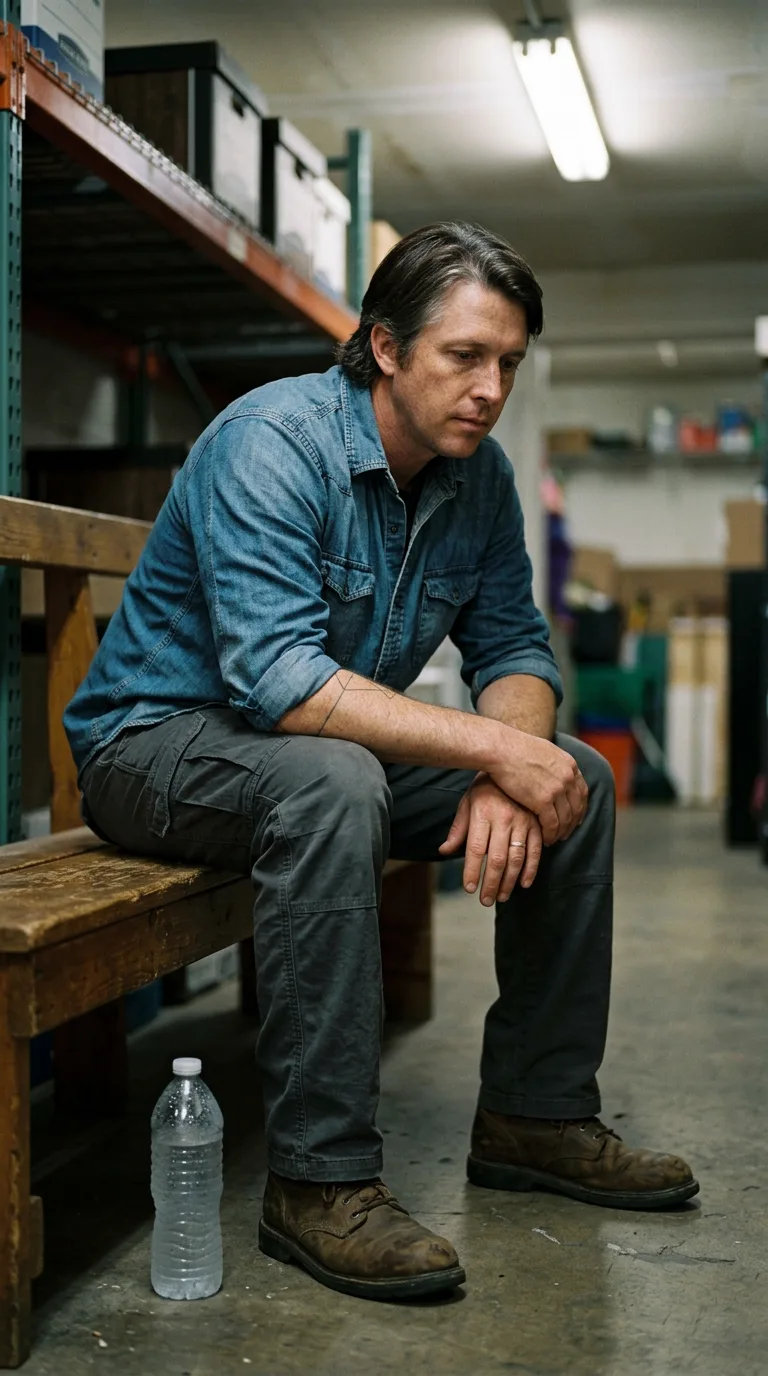
Rarest thing about him: Covers the gray — epic, 1 in 50
Season 0seed 2084746349 · engine v10
Character card
lineage E1W54H
His body-swap story
@colby.nash, wearing Colby Nash, rolled the wheel on and woke up as Peter Vallo
Colby Nash's apartment has good light and a bad silence, and three days in it was long enough to learn both. You stand at the window with his camera bag still zipped, the gallery show he was supposed to shoot tomorrow already a thing you have decided not to attend. He was good — better than good, there's a whole hard drive of proof — but good was never the appetite. Three days of being wanted, of women at a bar looking twice, of a jaw that photographs well, and the itch is already back, the one the wheel feeds and never satisfies, so you open the laptop, you find the page with the wheel on it, and you pay before you can talk yourself into gratitude for what you have.
It spins. It lands.
You come up mid-breath through his teeth, air hissing out a full second before it should have stopped, and your hands are already wrong on the bar — set two inches wider than muscle memory wants them — and the weight comes down on your chest like a decision somebody else made. Fluorescent light. A rubber floor smell. Your legs drive the bar up and it is not your fight, it is his, an old one, going on without either of you having agreed to it. The rep finishes. The face underneath does none of what a last rep does — no grimace, no relief — because the man in charge of the face was never told this was the last one.
The knurling bites into your palms and that's the first door: calluses, a grip that knows this bar's exact roughness better than it knows almost anything else in this life. A flash — him at twenty-six, some other gym, another city, benching with a buddy who doesn't talk to him anymore for reasons that were never really about the gym. Then the bar's back in the rack and your arms are shaking in a way that isn't unpleasant, and you sit, and the water bottle against your foot when you reach for it is sweating exactly the way it was in the picture that will end up as his card, and touching the cold plastic gives you the rest of that same year all at once — him icing a shoulder after a double shift, him alone on Thanksgiving with a game on, him signing paperwork at a lawyer's office while a woman across the table wouldn't look at him, sliding a ring off after, the tan line under it never quite fading no matter how many summers came after.
The shirt is the loud one. It's not on you yet — it's folded on the bench, cotton gone soft with washing, and when your hand lands on it to pull it toward you, it opens up a whole morning: him standing in a triple-decker's slanted bedroom light, storm door banging somewhere below, dressing slow because there was nowhere he needed to be for hours yet, the gray at his temples caught in a bathroom mirror he'd stopped really looking into. Buttoning it one-handed, half-asleep, muscle doing what mind wouldn't. He thought about coloring the roots again and didn't. He thought, briefly and without weight, about her — the ex, not with longing exactly, more the way you'd touch a bruise to see if it's still there — and then he was in his boots and out the door and the thought was gone, the way it always went, the way fifteen years of night shifts had taught him to let a thought go.
His body under your hands now: forty, and it tells you plainly — a low ache low in the back that the bench never quite fixes, forearms wiry and sure of themselves, a knee that clicks on the way down and doesn't on the way up. He is stronger than he looks, in the unglamorous way of a man who lifts because three a.m. behind a lobby desk otherwise eats a person alive. Freckles under your fingers when you touch your own face without thinking — nose, cheekbones, a scatter he stopped noticing around age nine. A leg that starts bouncing the second you stop moving it on purpose, an old motor idling. He doesn't drink, never smoked, said a prayer some Sundays out of habit more than certainty, kept a little money put by that nobody at the desk would ever guess he had. Nothing he carries that he'd bring up. A man built entirely out of things he doesn't mention.
It's the middle of his night and he should be at a desk, not a bench — some trade with a coworker, a shift moved for reasons already fading out of reach, the gym open all hours for men like him who sleep on the wrong clock. Nobody in the building even knows he's here.
Your hands — his hands — come up in front of your face, and you turn them over slow, knuckles, the pale groove where a ring isn't, the fine geometric ink on the inner forearm that some other year's version of him picked out for reasons the memory won't quite hand over. Freckles catching the gym's flat light. Not your hands. Never were.
You say it to the empty rack, to nobody, voice rough with a stranger's disuse: "Two more."
And you rack the bar again like you mean it.