Nathan Zaccardi
Fictional. Generated by AI — not a real person, and no likeness of one is intended.
52, tailor in San Francisco · rolled by @colin.hasbrook · card — no film
History
who has worn him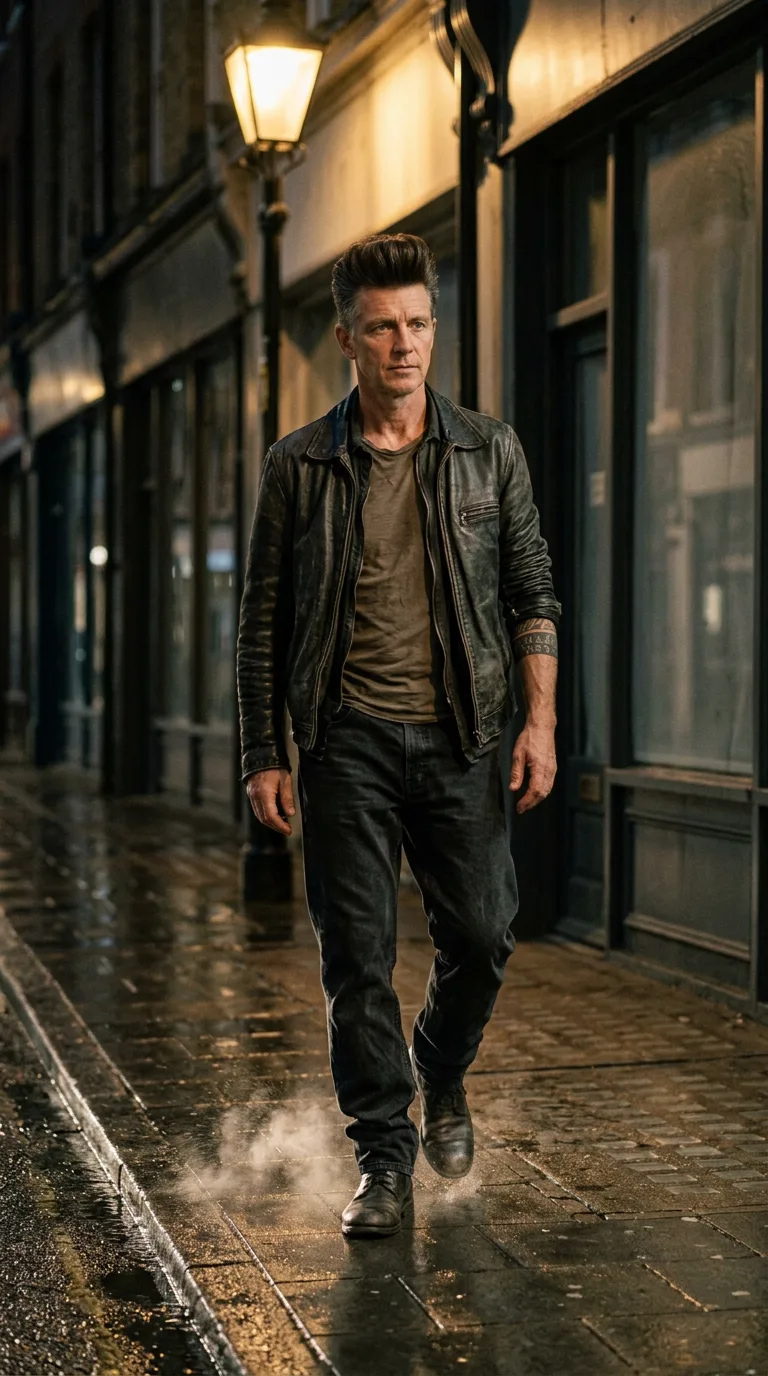
Rarest thing about him: Dating — rare, 1 in 14
Season 0seed 1314584115 · engine v10
Character card
lineage 2NZHHJ
His body-swap story
@colin.hasbrook, wearing Wendell Argenbright, rolled the wheel on and woke up as Nathan Zaccardi, spent under a minute in him, then spun the wheel and woke up as Terrence Oduya
The bar's gone quiet enough that Wendell can hear the ice machine cycling in the back, that long mechanical sigh, and his knees ache the exact way they ache every night around this hour, the cartilage worn down from thirty years of standing on this same rubber mat. He wipes down a counter nobody's ordered from in twenty minutes. Somebody left a two-dollar tip on a six-dollar tab and he stares at it like it owes him an apology. This is the fortieth-something second he's been Wendell Argenbright, and already he knows the whole shape of the man's evening, tomorrow, the rest of the year — the same rag, the same regulars, the same recliner and the same ballgame muted low because his ears ring now. He puts the rag down. Reaches for the phone in his own borrowed pocket, thumbs already knowing vessel.cards without being told, like the wanting lives lower than thought.
The street tilts and then it doesn't. One boot skids on wet brick, a hand slaps flat against a cold fender, fingers spread — and the stumble simply stops, mid-motion, like film catching on a frame and holding. Legs that were about to fail find the ground instead, sure and quiet. Forty steps, even, unscuffed. At the corner the body turns left on its own certainty, though nothing in it has decided that yet. Somewhere above, a window is dark that should be lit.
The leather jacket is warm on the inside from a whole evening of him, and that's the first thing that comes — not a memory exactly, more a temperature, a smell of cigarette smoke that isn't his own because he doesn't smoke, that's someone else's bar, that's the friend from the fitting last week who still smells like a pack a day even after he quit clients who complain about it. The jacket remembers a bar stool, a fourth whiskey he shouldn't have ordered, a toast to nothing in particular. Under the jacket, the shirt: sleeve cuffs still faintly creased from an iron this morning, and that unlocks the whole scene of it, hanger tapping the closet door, the girlfriend — Renata — still asleep with one arm thrown over her eyes against the bay window light, and him dressing quiet so as not to wake her, one arm and then the other into sleeves he's put on ten thousand times, the practiced economy of a man who has dressed himself since he was six years old and dresses other men for a living. His hands know cloth. They know it better than they know most people. Thumb finds the second button without looking, top one deliberately open, the way he's worn shirts since some version of himself decided open collars looked less like trying.
The measuring tape is still around his neck, he realizes now, weight of it against his collarbones, brass ends cool, and it brings the shop with it in one long unspooling: the cutting table under the window, gray flannel half-basted on the dummy for a groom's wedding party, three more suits to finish by Thursday. He loves the shop the way he loves almost nothing else cleanly — no argument in it, no old wound. Thirty-one years of it. His father's hands were smaller than his but did the same motions, and some Sundays he still reaches for a pattern weight and feels his father's grip ghost under his own.
The tattoo on his forearm surfaces last, faint under the jacket sleeve, ink he got the year everything with Diane fell apart — Diane, who he still thinks of on certain kinds of rain, who left for reasons he understood even while it broke something structural in him, who he has never once mentioned to Renata and never will. Two kids from that marriage, half-grown now, texting him more than calling, which is its own quiet grief he doesn't examine on weekdays. Renata is easier. Renata does not remind him of anything. He is fifty-two years old and he has built a life that mostly works and he clenches his jaw sometimes for no reason he'd admit to a priest, though he goes, most Sundays, out of habit more than conviction.
Two at night. He should not be two miles from a shop he wasn't at, should not have had that fourth whiskey, should not be walking a route his feet know is wrong even as they commit to it.
He stops under a streetlamp and looks down at his own hand — the calluses along the first two fingers where the shears live, the faint permanent groove a thimble has worn into one knuckle over three decades — and turns it over like he's checking it for damage, or checking that it's still attached.
"Well," he says, to the empty street, in a voice that isn't quite settled into the mouth yet. "Wrong way home."