Nathan Pribble
Fictional. Generated by AI — not a real person, and no likeness of one is intended.
42, barista in San Francisco · rolled by @colin.hasbrook · card — no film
History
who has worn him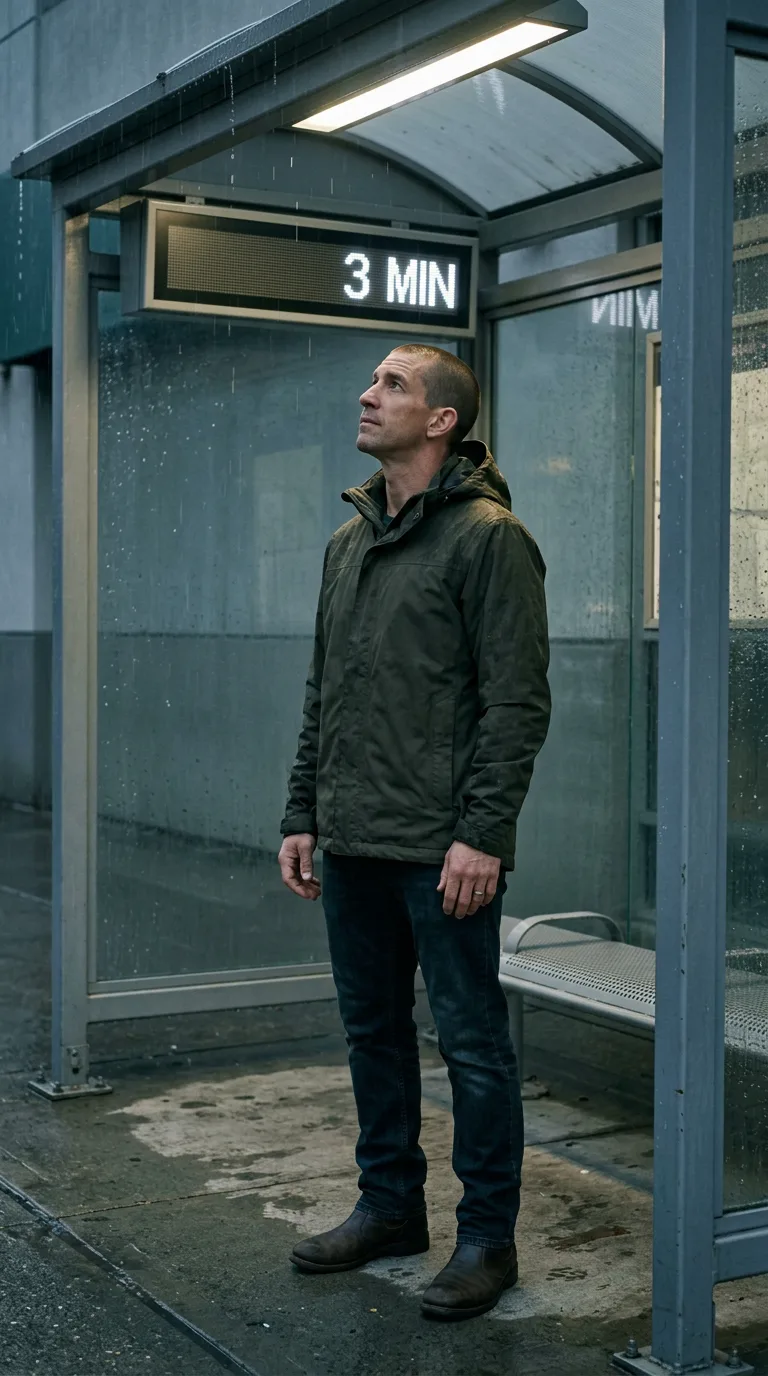
Rarest thing about him: Pagan, Wiccan or New Age — epic, 1 in 110
Season 0seed 1439123669 · engine v10
Character card
lineage 2NZHHJ
His body-swap story
@colin.hasbrook, wearing Warren Delacroix, rolled the wheel on and woke up as Nathan Pribble, spent under a minute in him, then spun the wheel and woke up as Cody Marsziak
Warren Delacroix's hands smell like smoke and honey, and they are not steady tonight.
You have had them an hour and a half, and already you know their complaints better than their gifts: the left knee that clicks on the stairs, the low ache along the spine that never fully quits, the toothpick worn soft at one corner between his back teeth, forgotten there, chewed down out of habit rather than hunger. You made him walk out to the hives once already, in the dark, just to feel him do it — to stand in the wet grass in his own boots and listen to the low hum behind the white boxes — and it did not do what you wanted. It was supposed to feel like arriving somewhere. It felt like sitting in somebody's kitchen after the funeral, eating off his plates.
Because you know this house from the other side. Six spins ago you wore the neighbor — bald, heavy in the shoulders, a beauty mark under one eye, a camera bag that never left his hand — and while you were him you crossed this exact yard, knocked on this exact door, stood in Warren's kitchen and drank his coffee and said something to his face that you don't fully remember now because it wasn't your memory to keep. You gave him back less than a minute later. You have been six other men since. And now here you are inside him, on his side of the door for once, and it itches at you worse than any body has in months — the specific unfairness of having stood in both rooms and belonging fully to neither.
So near midnight, in his kitchen, in his life, you take out your phone — his phone, thumb already knowing the code before you do — and you open the site again.
The wheel turns without sound. You do not watch it decide. You are already gone from the honey-smelling hands, already gone from the toothpick, already gone from the ache in the low back, off before the animation even finishes spinning, the way you always are — you have learned not to watch yourself leave.
—
Rain lands on your face and you do not turn out of it.
You are shorter than you were a half-second ago, more compact, the weight sitting differently through the shoulders, a hood pushed back and going dark with water at your collar. Somewhere behind your sternum a lit board is still saying something in orange, 3 MIN, though you are not reading it, because your chin is tipped up into the runoff coming off the shelter's lip and your eyes are open in it, unblinking, like a man testing whether he can still feel anything at all.
Your hands hang at your sides. The right one has a plain ring on it, and the metal is the first cold thing you notice that isn't the rain.
—
The ring gives it up first, because it is the thing touching him longest, worn smooth on the inside from a decade of not being taken off. A hospital hallway, fluorescent and too bright, a woman named Priya gripping this same hand hard enough to bruise, both of you laughing anyway between contractions because the nurse said something absurd about the Giants game. A daughter. Two years old now, a bath towel with ears, a version of his own laugh coming out of a much smaller mouth, and the specific terror of loving something that fragile, that loud, that entirely his.
The jacket comes next — his shoulders inside it, damp wool-smell and old rain, and beneath that, a Tuesday: the espresso machine's steam wand shrieking, his forearm braced against the counter's edge, milk turning under his wrist in a slow silver whirlpool while he talks over his shoulder to Denise about the walk-in door not latching right. His hands know this without him — the tilt of the pitcher, the exact hiss that means done, the way he taps the portafilter against the knock box three times, never two, never four. Nothing remarkable in any of it. That is the thing the memory keeps insisting on: nothing remarkable, and he loved it anyway, in the unspectacular way you love a life that fits.
Under his boots, the wet concrete gives him the driveway at home — steep-cut, garage door groaning up into cold white light, the smell of his own space heater and the particular ache that settles into his lower back after a double shift, an ache he has stopped mentioning to Priya because she gets that look. An ex before her — Renata, years gone now, a name that still surfaces sometimes at 2 a.m. for no reason he'd defend, no unfinished business, just a hook the mind keeps for old weather.
The shirt against your back, going through last — this morning, his hands pulling it on inside the garage-that-is-a-bedroom, sleeve, sleeve, the collar catching once on the buzzed hair at his nape, him thinking about nothing more than whether the rain would hold off for his walk to the stop, whether he'd grabbed the good umbrella or the broken one. He hadn't. That was the whole size of his last private thought as himself.
—
You look down at his hand. Turn it over in the rain, ring catching the one working streetlamp, and it takes you a second longer than it should to remember this hand isn't asking you anything — it's just wet, and open, and his.
You lift your eyes to the arrivals board, then past it, into the dark where a camera isn't but might as well be, and you say, out loud, to no one waiting under that shelter with you:
"Three minutes. Figures."