Cody Marsziak
Fictional. Generated by AI — not a real person, and no likeness of one is intended.
22, nurse in Pittsburgh · rolled by @colin.hasbrook · card — no film
History
who has worn him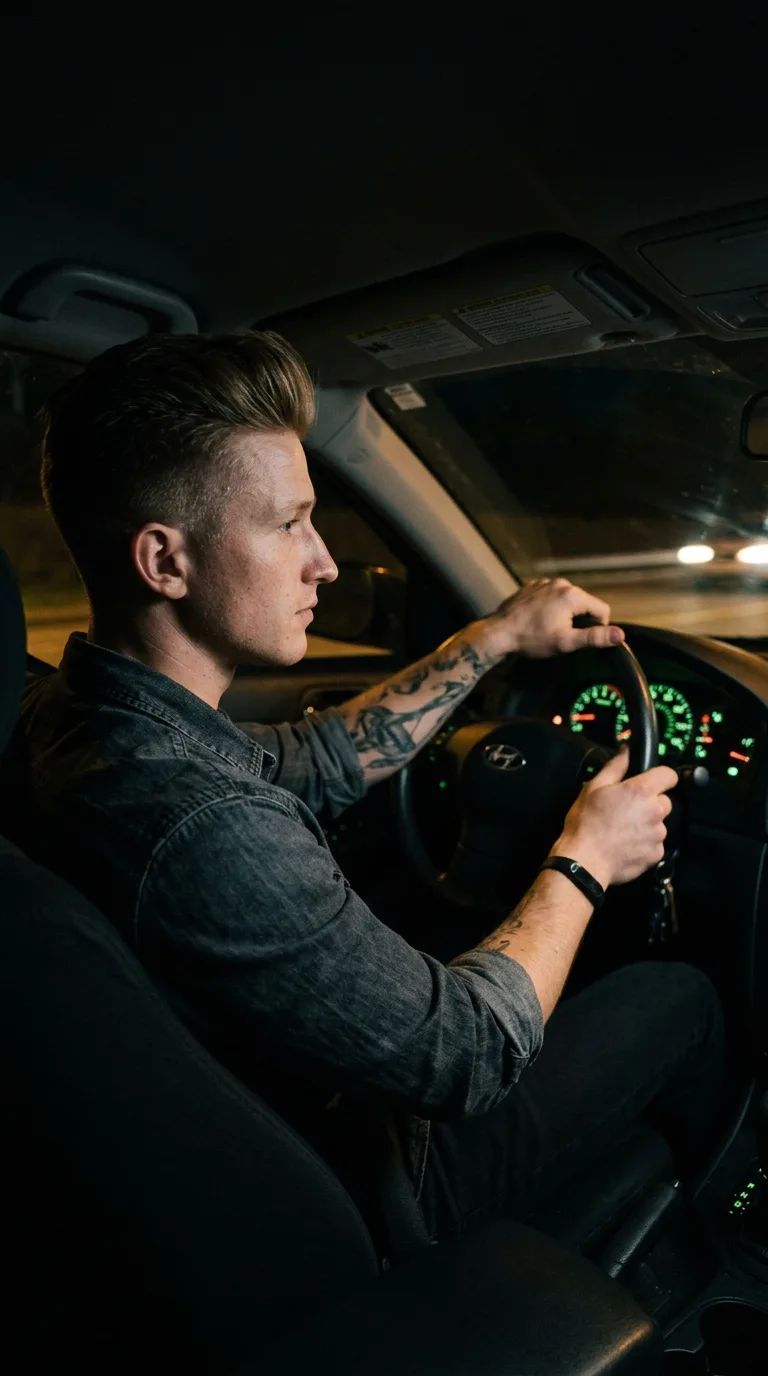
Rarest thing about him: Buddhist — rare, 1 in 55
Season 0seed 4060015 · engine v10
Character card
lineage 2NZHHJ
His body-swap story
@colin.hasbrook, wearing Nathan Pribble, rolled the wheel on and woke up as Cody Marsziak, spent 2 hours in him, then spun the wheel and woke up as Bryce Halloran
Nathan Pribble's forearms are tired in a way that has nothing to do with age and everything to do with the espresso machine's portafilter, forty pounds of tamping and twisting since three this afternoon, and you are standing behind the counter at close, wiping down the same six inches of steel for the third time, because the shop is empty and there is nothing left to want here. This body is comfortable. That's the problem. Comfortable is a Friday night with nowhere to be and no one waiting, forty-two years into a life that was never yours to begin with, and you have worn it long enough now to know its complaints — the low ache behind the left knee, the way the espresso steam fogs his glasses that aren't even his prescription anymore because you don't blink right for them. You didn't come back tonight because Nathan did anything wrong. You came back because he did everything fine, and fine, five hundred and twenty-four bodies deep, has started to feel like standing still. You lock the register, you pull out your phone in the back hallway that smells like burnt milk, and you open the page with the wheel on it, and you spin, already gone before it lands.
The wheel comes up on 2 a.m. in a Hyundai three miles from an apartment in Pittsburgh, and the hands you land in are already coming off ten-and-two, already dropping to rest low and wide on the bottom of the wheel, the way you'd hold it if you'd driven this stretch of road four hundred times and trusted your body to keep the rest of you alive. The dash light is green-gold across the knuckles. The turn signal clicks on for an exit that doesn't belong to this drive, and you feel it click before you understand you're the one who wanted it. Somewhere behind your sternum a heart that isn't used to being yours yet is going hard and steady at once, mid-shift-tired, awake past when awake should stop meaning anything.
The steering wheel gives you the first of it — not words, just grip, the muscle memory of hands that have done this a hundred nights running, night shift turning a man nocturnal in a way that has nothing to do with vampires and everything to do with a hospital that needs bodies awake when the rest of the city sleeps. Cody Marsziak. You get the name off a laminated badge clipped to a shirt you're not wearing yet in this memory, a memory that comes up through the seatbelt strap crossing his chest — a locker room, fluorescent hum, the particular ceremony of putting on scrubs at the start of a twelve-hour night: pants first, always pants first, waistband snug over hip bones that carry no fat to speak of, then the V-neck top pulled down over a chest built by three mornings a week in a gym that smells like rubber matting, shoulders that know how to lift a patient's weight without asking his back's permission. The badge clips to the pocket last, always last, a small ordinary ritual he doesn't think about until you're the one thinking about it.
The dashboard gives you the drive itself, dozens of them, this same stretch of dark road home from a hospital that eats sleep schedules whole — a nurses' station under lights that flatten every color to the same pale nothing, charts open on a monitor, the particular fatigue of 6 a.m. handoffs and the stranger fatigue of driving home when the sun should be coming up and instead it's still black outside because his body decided, somewhere in nursing school, that this was the shift he could stomach. He likes it, mostly. Likes the quiet hours, the version of the hospital that exists only at 3 a.m., a handful of people awake in a building built for thousands. There's a woman from six months ago he still thinks about sometimes, not with heartbreak, just with the plain unfinished feeling of a thing that didn't become anything — coffee twice, a text that trailed off. Nothing carried. Nothing owed.
The bracelet on the wrist — the plain black wristband — gives you almost nothing, just weather, just the feeling of it never coming off, in the shower, at the gym, on the good nights out with the guys from the unit twice a month where he drinks enough to feel it and never past that, because he's watched what past-that does to people who come through his ward, and some part of Buddhist practice he keeps mostly to himself, cushion in the corner of the apartment, ten quiet minutes some mornings before sleep and not every morning, tells him excess is just another kind of grabbing. His hands, when he's not steering or charting or checking a pulse, drum against whatever's nearest — steering wheel, counter, his own thigh — a small restless rhythm that isn't nerves, just a body needing something to do.
The seat under you gives you the shape of him entire: five-seven, which he minds a little around some of the taller nurses, athletic in a way that's useful more than decorative, hands calloused at the pads from gloves worn twelve hours at a stretch, gripping too many rails and pushing too many gurneys to stay soft. Twenty-two years old and still occasionally amazed he gets paid to be trusted with people at their worst hour. Nothing in his name worth counting. No one waiting up. The hair — you feel it without seeing it, the particular weightless height of it, a thing he checks in the rearview more than he'd admit, one small vanity in a life otherwise built out of scrubs and cheap black wristbands and a Hyundai with too many miles on it.
The signal keeps ticking, patient, for a turn three miles early, and nobody in the sleeping houses along this street knows anything has arrived.
You look down at the hands on the wheel — his hands, wide and sure and not yours, not yet, maybe not ever all the way — and you turn one over in the dash light like you're checking it for damage.
"Wrong exit," you say, to no one, and you leave the signal blinking.