Miguel Vargas
Fictional. Generated by AI — not a real person, and no likeness of one is intended.
37, longshoreman in San Francisco · rolled by @rohan.bhatt · card — no film
History
who has worn him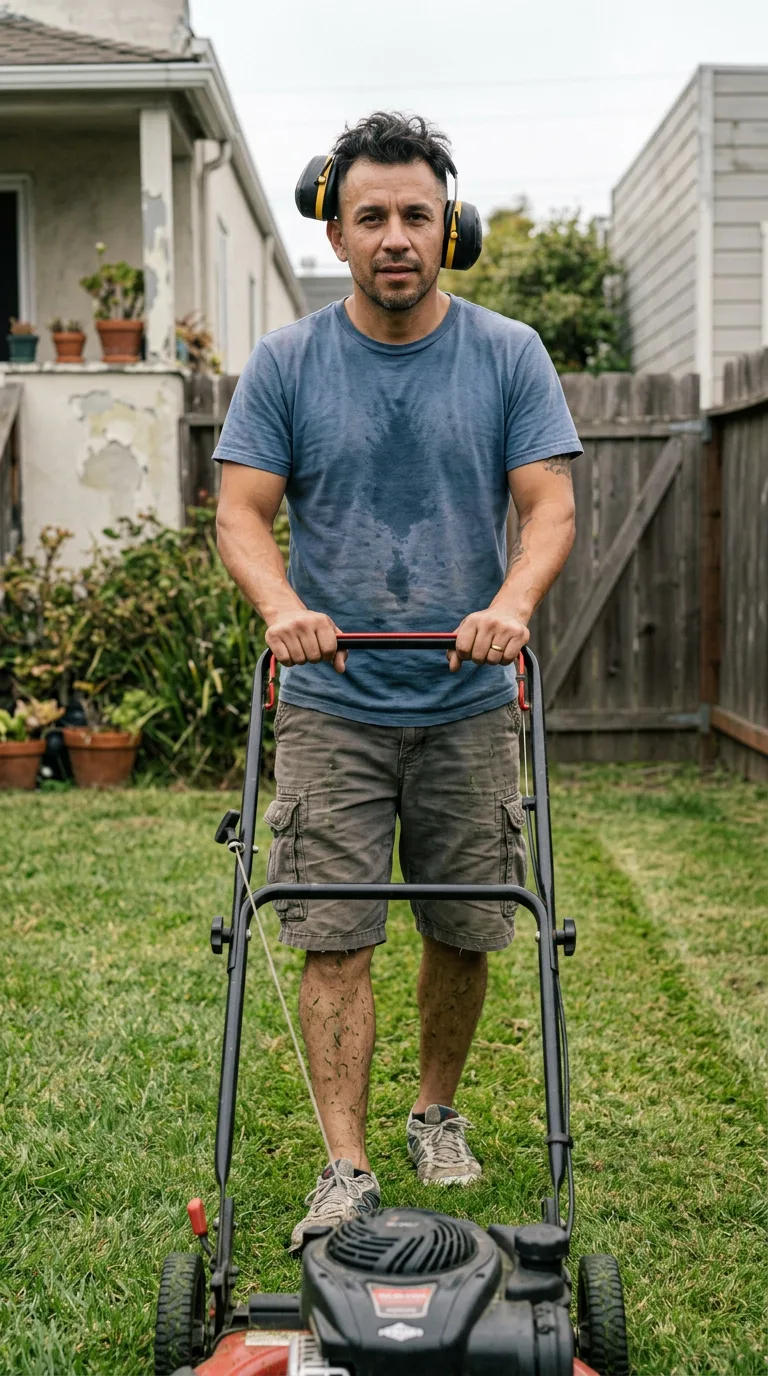
Rarest thing about him: Mowing the lawn — rare, 1 in 263
Season 0seed 1697599932 · engine v10
Character card
lineage SBZ9UF
His body-swap story
@rohan.bhatt, wearing Marcus Iheanacho, rolled the wheel on and woke up as Miguel Vargas, spent 6 minutes in him, then spun the wheel and woke up as Warren Yasuda
Marcus Iheanacho's knees ache getting out of the truck before ten in the morning, which in Anchorage in this season might as well be dawn, and that's the first thing you notice, riding him: sixty-five years old, going up on a step stool for a deadbolt on a rich man's mudroom door, and it takes him a second longer than it should. Eight days and eleven hours in this one. Long enough to learn where the pins catch, long enough to feel the nose that broke once, decades before you arrived, ache in cold weather like it remembers something you don't. Long enough to be bored of it, honestly, in the specific way you get bored of a good coat once you've worn it every day — not ungrateful, just aware of its weight in a new way each morning.
The job finishes. Client pays cash, tips light. Marcus — you, wearing Marcus — sits in the truck cab with the heater ticking and the phone already open to the site before you've decided anything, which is its own kind of answer. Vessel.cards. The wheel sitting there mid-spin in its little animated loop, patient, the way it always is. You tell yourself it's just to look. You look at it the same way seven times before this one and every time the looking was already the decision.
You spin.
—
The mower catches on a stone or a root under the grass and the engine drops a note, and for one half-second there is no one behind these eyes at all — and then there is, and it is you, and the hand that was already moving keeps moving, and the loose ear-muff comes up off the shoulder and settles back over the ear like nothing happened, because as far as anyone will ever know, nothing did.
Halfway down a strip of lawn. Grass clippings itching wet against both shins. Sun somewhere behind cloud enough that it isn't heat you feel, it's damp — that particular gray Bay Area late-morning cool that never commits to being anything. The bar of the push mower is warm under both palms already, worn smooth in two spots. A body five inches shorter than the one you left, and lighter, and thirty years younger, and none of that registers as strange yet, only as sudden — the ground closer, the shoulders narrower, the grip on the handle exactly correct without you doing anything to make it so.
—
The shirt is what starts it. Not the shirt he's wearing now — a soft gray tee gone dark at the chest with sweat — but the memory that comes up sideways through the fabric anyway, of a different shirt, a flannel one, and gloves tucked into a vest pocket, and a hard hat with a strip of tape on the brim that says M. VARGAS in blue ballpoint gone soft and gray from handling. That one comes first and hits hardest: the smell of diesel and salt and the particular clang a container makes coming down on the stack two rows over, close enough to feel in your teeth, and the gantry crane's shadow sweeping the dock slow as a minute hand. Twelve years of that. Body knows the weight of a shackle before the mind offers the word for it. Shoulders that answer to a load before you've told them to.
Miguel's hands are steady on the mower bar the way they're steady on everything — hands that already know how to guide something heavy in a straight line without fighting it, muscle memory from a job that punishes a wandering line. There is an ache low in the right shoulder that predates you by years, an old thing, worked around rather than fixed, the kind of ache men like this decide not to mention to anyone, not even the wife.
Especially not the wife. Her name arrives with the wedding band — plain, unadorned, worn thin on the underside where it rides the knuckle. Elena. Fifteen years married this June, and the morning replays itself through the ring the way mornings do: her handing him coffee in the kitchen before he came out here, her saying something about the Ramirezes' fence needing to go up before the rain, him saying he'd get to it, both of them knowing he wouldn't, not today, today is mowing day and Saturday's soccer and this is the one hour that belongs to nobody but the yard. Two kids somewhere behind him in that house — a boy's cleats by the door, a girl's bike on its side in the drive, both details surfacing not as facts but as a warmth low in the chest, proprietary, plain.
The shorts are the ones with the cargo pockets he's had four years, gone soft at the seams; putting them on this morning took no thought at all, the same as it never does — shirt over the head, shorts pulled up while still half-asleep, earmuffs grabbed off the hook by the back door on the way out because Elena complained once about the noise carrying and he never wants to hear that complaint twice. Church tomorrow. He is already thinking, underneath the mowing, about whether he'll make the eight-thirty service or the ten, whether the kids will fight about it, whether God minds either way, which he privately doubts.
His hands, when they are not gripping anything, go to his face — a habit so worn into him he does it now, letting go of the bar with one hand at the end of a row to rub at three days of gray-flecked stubble, an unconscious tell of a man thinking about something he hasn't said aloud, though right now there is nothing to think about but grass and the crooked lines he's been leaving all morning, rows that wander a little the way rows do when a man's mind is on the dock and not the yard.
Beneath all of it: an ordinary, comfortable ache. Thirty-seven years old and still built like the job made him, forearms corded from cable and line, a body that has never once needed to think about whether it could do what was asked of it. Nothing wrong with him. Nothing remarkable either — no scar he'd point to, no story in his skin, just a man's body doing a man's Saturday chore, and somewhere in the middle distance of him, faint and constant as tinnitus, the low hum of being fine. Doing well, even. The kind of fine that doesn't know to be grateful for itself.
—
You stop the mower mid-row and look down at your own hands on the bar — his hands, tanned across the back, pale at the palm, ring catching gray light — and you turn the right one over slow, like checking it for something that isn't there.
"Almost missed a spot," you say, to no one, to the yard, and it isn't true, and it isn't for him either.
You look up, past the fence, toward the kitchen window where a shape moves behind the glass, and you hold there, already wondering — not deciding, just wondering, the way you always do by the third day in a new one — how long this yard, this ring, this ache in the shoulder gets to be the whole of what you are.