Marcus Iheanacho
Fictional. Generated by AI — not a real person, and no likeness of one is intended.
65, locksmith in Anchorage · rolled by @rohan.bhatt · card — no film
History
who has worn him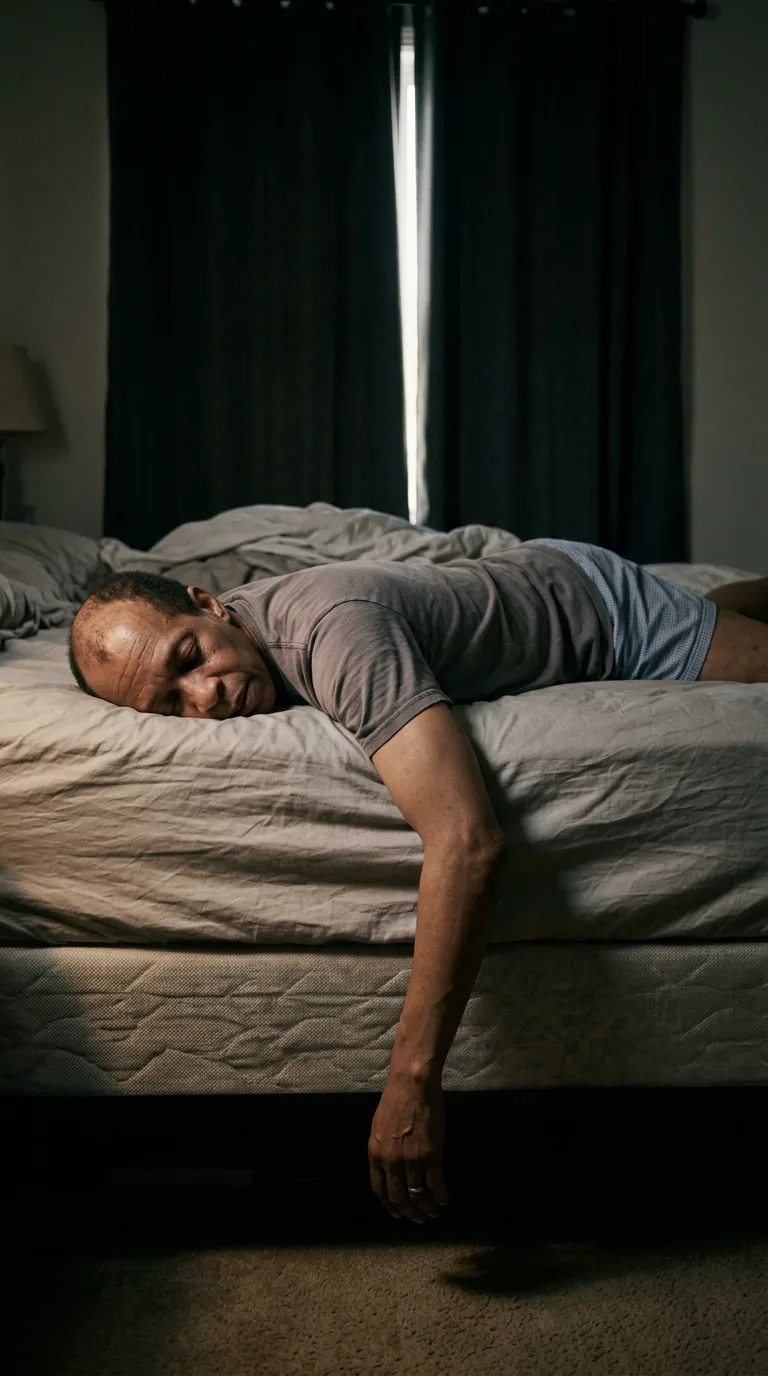
Rarest thing about him: Locksmith — rare, 1 in 121
Season 0seed 1419214585 · engine v10
Character card
lineage SBZ9UF
His body-swap story
@rohan.bhatt, wearing Gerald Aldous Petracca, rolled the wheel on and woke up as Marcus Iheanacho
---
The apartment on Delancey has a radiator that clanks like a dropped wrench, and Gerald's hands — bald head shining faintly in the streetlight, blue eyes open in the dark — are not doing anything useful with the four hours until his next gig. He is fifty-eight and the bass calluses on his fingers have gone soft this month, and somewhere around the third hour of lying there listening to the radiator he understands, in the specific and total way you understand these things by the seventh time, that he is bored of being a man who used to matter to rooms full of people and now doesn't. It isn't cruelty. It's just that he had him for less than a minute before he already knew the shape of the rest of it, the way you know a song after four bars. He gets up. He doesn't turn on a light. He opens the site on his phone with the screen brightness all the way down like a man checking a text at a funeral, and he pays, and he spins, not for a reason he'd say out loud to anyone, not even to himself in so many words — just the itch, the same itch, wanting the next thing before he's finished the thing he's in.
The wheel turns wherever wheels turn.
And then you are lying face down in unmade sheets nine time zones away, and it is nearly midnight, and one arm is hanging off the mattress with the blood pooling warm in the fingers, and you pull it up onto your chest without deciding to, and the breathing that was ragged — a rasp with a catch in it, a snore fighting itself — goes even in the space of one inhale, and the hands fold at the sternum like a man laid out for a wake, which is a way this body has never once arranged itself in sixty-five years of sleeping, and nobody is awake to see it happen, and nothing in the room reacts at all.
The shirt is the first thing. Not worn now — hanging on the closet doorknob eight feet away, a flannel, checked, missed by exactly nothing except the fact that your new hands, still submerged in the sheets, are near enough to a curl of it on the floor where it fell off the hanger last week, and that thread of cotton against two knuckles is enough. It comes in gray and quiet at first: the smell of Murphy's oil soap and something under it, WD-40 that never washes all the way out. Then it opens up into a whole morning — this morning, Wednesday morning, buttoning that shirt one-handed while the other hand holds a mug of instant coffee that's gone lukewarm because the leg won't stop bouncing under the kitchen table and he keeps having to set things down to keep from spilling them. Ruth's voice from the bathroom, half a laugh, telling him he's going to wear a hole through the linoleum one of these days with that leg. Twenty-six years married to that laugh. He loves it in a way that has stopped needing to be said, which is its own kind of saying.
The back goes next — not a memory, just the truth of the body, a dull permanent ache low on the left side that has been there so long it has stopped being pain and become weather, something you check before you bend rather than something that stops you. Knees that click going down onto them at a storefront door, which they do most days, the leather tool pouch on the belt worn shiny where his palm brushes it a hundred times reaching for the tension wrench. His hands know a lock the way a tongue knows the roof of a mouth — the give in the cylinder, the tumble of pins finding their seats, a language he has spoken since he was twenty-two and a man in Mountain View, Anchorage, gave him an apprenticeship because his own father, an electrician, had vouched for the kid's hands even when the kid's nose was still healing crooked from a fight nobody remembers the cause of anymore.
The wedding band on the left hand is warm from being worn thirty years and it brings Ruth again, but older this time — Ruth's hand on his shoulder telling him the doctor said his blood pressure again, Ruth laughing at something on the television with her feet in his lap, the particular ache of the two of them never having a child and deciding somewhere in their thirties, without a fight, without ever really finishing the sentence, that this was going to be enough, and it was, it has been. And under that, smaller, a woman's name from thirty years before Ruth — Denise — a summer that ended wrong and still surfaces sometimes at 2 a.m. with no warning at all, an old ache with no weight behind it anymore except the fact that it's his.
The snowmobile under the blue tarp out back, glimpsed through nothing but memory of the plywood siding and the amber light that hits it in October — a thing he's fixed twice and never really uses, keeps because getting rid of it would mean admitting something about being sixty-five that he isn't ready to admit. A church basement smell, coffee and folding chairs, a service he half-believes and fully shows up to because Ruth needs him beside her in the pew and that has become its own kind of faith. Cigarettes he quit nineteen years ago that he still sometimes wants with his whole chest on a hard day.
You lie there a moment longer inside all of it, this whole ordinary unfinished life humming under your borrowed skin, the leg beginning, even now, even asleep, to twitch faintly with its old habit.
Then you look at your hands — dark-knuckled, a plain gold band, a half-moon scar you didn't put there — turning the right one over slowly in the gap of streetlight through the curtain.
"Ruth?" you say, quiet, to the empty side of the bed, in his voice, before you remember you don't yet know if you're going to stay long enough for that question to matter.