Gerald Aldous Petracca
Fictional. Generated by AI — not a real person, and no likeness of one is intended.
58, musician in New York · rolled by @rohan.bhatt · card — no film
History
who has worn him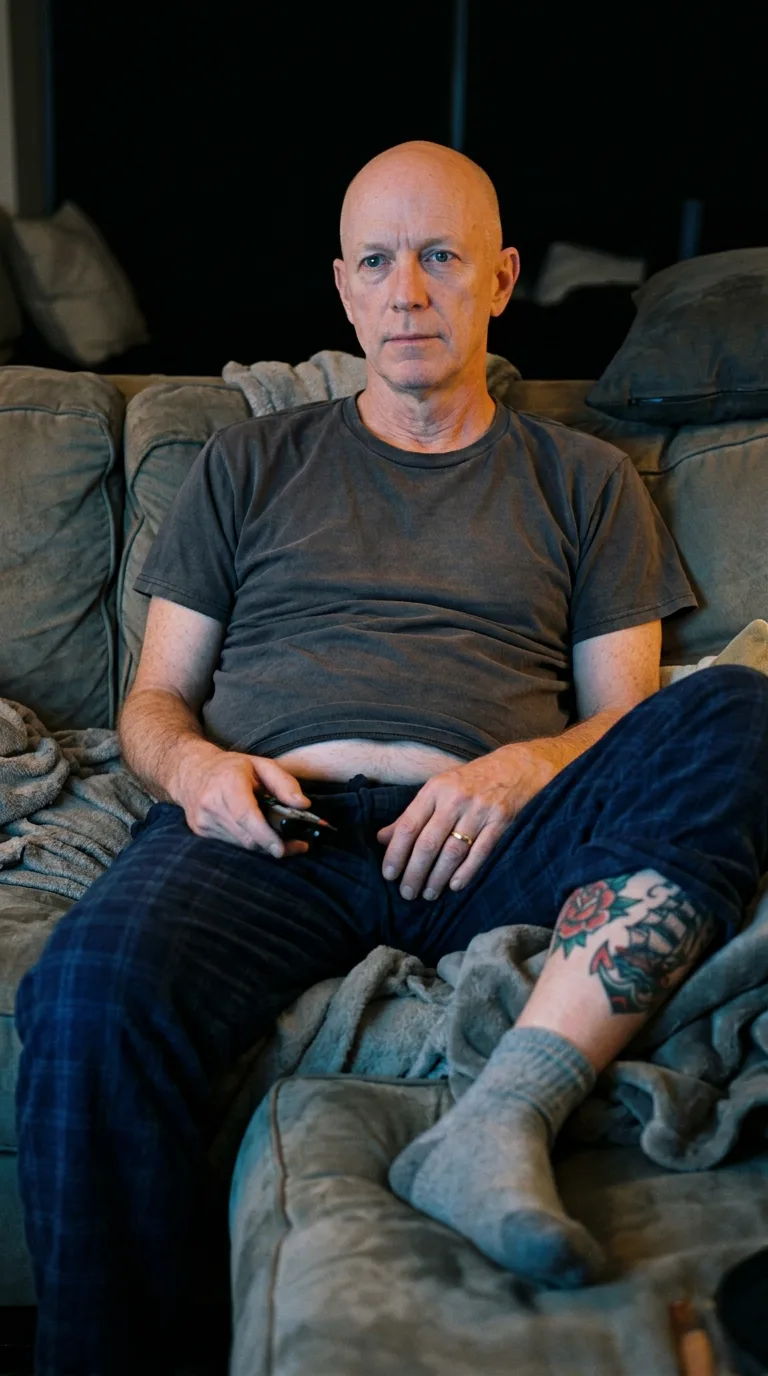
Rarest thing about him: Leg — epic, 1 in 78
Season 0seed 2118064513 · engine v10
Character card
lineage SBZ9UF
His body-swap story
@rohan.bhatt, wearing an unnamed body, rolled the wheel on and woke up as Gerald Aldous Petracca, spent under a minute in him, then spun the wheel and woke up as Marcus Iheanacho
---
Three minutes. That's how long you've been Marcus — six-foot, muscled out from a decade of lifting boxes he didn't ask his body to carry, freckles going dark in the porch light of a Houston night, sweat still cooling on his neck from finishing a route that ended at midnight because the truck broke twice. You stand in his kitchen holding his phone, and the fridge hums, and somewhere down the hall his wife is asleep believing this is just a man who came home late again. You could stay. That's the thing nobody tells you about the wheel — you could always just stay, and every time you don't, it's not because the body is bad. Marcus is a good body. Strong back, quiet mind, a life that fits him like his own boots. But you can feel already, standing here at his counter, that three minutes of this is enough to know the whole shape of the next forty years of it, and that's the problem. You always know too fast. You open the site on his phone with his thumb, which is not yours, on a screen he pays for, and the wheel is already loaded from last time, spinning lazy colors in the dark, and you tell yourself this is the last one for a while, the way you told yourself that in a house in Tulsa and an apartment in Reno and a rented room in Pittsburgh, and you press spin standing in another man's kitchen at an hour that is nobody's business but yours.
The television cuts to a bright frame — some ad, white light flooding a dark room — and in the half-second of that glare you arrive.
You are sitting. You are heavier than you were, low and soft in a body that used to be something else, and your spine straightens on its own before you've told it to, some old reflex of posture surprised into place. A remote is loose in your right hand, cheap plastic, thumb worn into its own groove. There's a couch under you, deep and used, the kind that remembers a person's shape. A blanket half on your knees. Bare feet against wool socks against a hardwood floor gone cool with the hour.
The room is dark except the screen. Somewhere above you, floors up in the same brownstone, or maybe it's just walls — you don't know the layout yet — someone is asleep. It is very late here, or very early, and the show goes on being funny to nobody in particular. You do not laugh. The moment before, someone did.
The remote is the first thing that opens. Your thumb on the volume rocker — twenty years of a habit, muting the ads without looking, hand knowing the buttons blind — and with it comes a flood, small at first: a hundred nights on this exact couch, the shape worn into these exact cushions like a mold taken of a body, the dog they had that's gone now, the specific silence of a house once the kids stopped needing you to check on them. Bill. Your name comes up sideways, attached to nothing grand — Gerald, Ger to the guys at soundcheck, Gerry only to your mother when she was still around to say it.
The t-shirt against your back next — soft gray cotton gone thin at the collar, laundered four hundred times — and that pulls a whole morning up out of nowhere: standing in a bedroom with gray light through the blinds, pulling on jeans that fought you a little more than they used to at the hips, sitting on the edge of the bed to work socks over feet that ached before you'd done anything to earn the ache. Your wife's voice from the bathroom, toothbrush-muffled, asking if you'd eaten. You hadn't. You never do before a gig, not since you were twenty-five and threw up behind a club in Allentown from nerves and food both and decided one of those things you could control. The band shirt you wore that day — a shirt of your own band, faded now, a joke that never stopped being a little bit true, that you dress your own body in merch nobody else bought either — and under your calf, where the sock has ridden down, a tattoo goes warm with remembering: a ship, an anchor, ink laid down thirty-some years ago in a shop that isn't there anymore, by a hand steadier than yours has ever been on a fretboard. You got it the week your first record didn't sell. You've never told anyone that's why.
The wedding band is next, small and plain, warm from your own hand, and it opens two women at once — the first wife, years gone now but never fully out of the songs, a voice that still shows up when you're not trying to write one, and the second, asleep upstairs or down the hall, the one who stayed through the worst stretch, who has never once asked you to get a real job, though you know she's thought it, on the nights the checks are thin and the blood pressure pills are due for a refill you keep forgetting. Two kids between the two of you, grown enough now to just be voices on the phone. You love all of it in the specific, exhausted way of a man who chose the hard thing at twenty-two and has spent every year since finding out what it costs and paying it anyway.
The couch cushion under you gives up the plainest thing of all: this exact night, hours of it, doing nothing, wanting nothing, some show you've seen twice laughing at itself in the dark while your body — this body, skinny in some places and soft in the ones that matter more as you get older, bald head cool under the ceiling fan, feet finally, finally off a stage floor — just rested. It was a good night. It was nothing. It was his.
You look down at the hand on the remote. Push a thumb against the pad of your first finger, feel the callus there gone strange and unfamiliar for exactly as long as it takes to remember it's a guitarist's callus, earned, yours now the way everything here is yours — completely, and only for as long as this lasts.
You look up into the dark room, into where a camera isn't but might as well be, and you say, quiet, not to anyone:
"Huh."