Warren Yasuda
Fictional. Generated by AI — not a real person, and no likeness of one is intended.
56, baker in New York · rolled by @rohan.bhatt · card — no film
History
who has worn him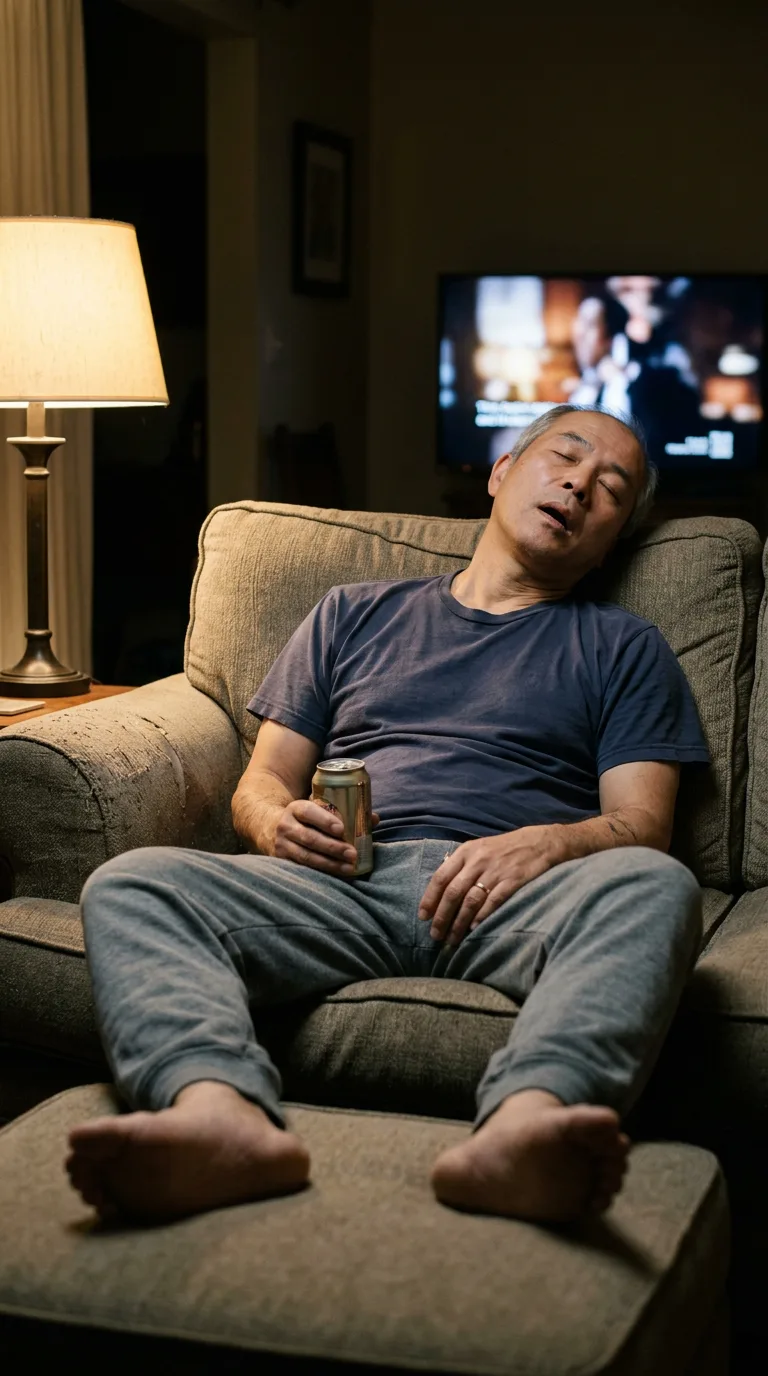
Rarest thing about him: Baker — uncommon, 1 in 83
Season 0seed 1557401209 · engine v10
Character card
lineage SBZ9UF
His body-swap story
@rohan.bhatt, wearing Miguel Vargas, rolled the wheel on and woke up as Warren Yasuda, spent 1 minute in him, then spun the wheel and woke up as Emiliano Casares
Miguel's forearms ache in a way that feels earned, dock-rope callus and container-hook memory sitting under skin that isn't yours, and that ache is the whole reason. Five minutes in and already you can feel the shape of the life waiting to close around you — double shift tomorrow, a landlord problem, a body that hurts when it hasn't done anything yet. You liked him fine at the site, on the screen, before you were in him. Now you are in him, standing in his kitchen at eleven in the morning with a coffee going cold, and the wanting is already turning over, restless, the way it always does. Nine times now. You know the feeling for what it is before you even walk to the laptop.
You spin because five minutes was enough.
The couch takes you mid-recline, cushion warm, can warm too, gone flat and loose in a hand that is not the hand you had a second ago — shorter fingers, a wedding band biting slightly at the knuckle, skin looser at the wrist. Somewhere behind your eyes a stadium roar is already fading into the second replay, the ball crossing the line again in slow motion for men who did not need to see it twice. Your head is tipped back against the cushion. Your mouth is open. It takes a full second before the thumb — his thumb — finds the remote and lowers the volume without you telling it to, some old reflex of a man who has fallen asleep in this exact chair a thousand times and doesn't want the noise to wake anyone upstairs.
The room comes in through the couch fabric first, nubby and sun-faded under your own borrowed shoulder blades, and the lamp is the good lamp, the one Carol picked out at the place on Fifth Avenue that closed years ago, and just her name arriving is enough to open a door: Carol asleep upstairs right now, or reading, hard to say, Friday afternoons are hers once the early shift lets him out. He works the ovens before dawn — that's why sleep finds him sideways in daylight, why a two o'clock kickoff puts him under before halftime, why nobody in this house thinks it's strange that Dad's out cold with the sun still up.
The can in your palm is warmer where his hand has been holding it too long, and that warmth gives you the bakery without asking — four-forty in the morning, the walk-in's cold breath on his arms, dough under his palms with a give he trusts more than his own eyes this early. Forty years of knowing when a proof is ready by smell alone. The apron is folded over a chair somewhere in this house right now, stiff in its own particular places, flour ground so deep into the denim it will outlast the fabric. His hands know babka from brioche blind. They know, too, without being told, exactly how much sugar is too much, a doctor's voice from two years back still sitting behind his sternum like a held breath — the diabetes, the finger-prick kit in the bathroom cabinet, the small permanent argument between what he bakes and what he can eat.
The T-shirt against your back remembers this morning, its own small ceremony: pulling it over his head after the shower, the beer already promised to himself as a Friday reward before he'd even said good morning to his wife. Sweatpants next, waistband loose the way he likes them now that the belly has crept forward the way it does at fifty-six. He'd stood at the dresser a second longer than necessary, catching the crown of his head in the mirror, the bare patch he doesn't love, running a palm over it the way he's done every morning for six years like checking a wound that never quite heals or worsens. Then downstairs, then the couch, then his daughter's voice from the kitchen — she's back for the weekend, twenty-six now, and something in his chest had gone warm and simple hearing her moving around down there, safe, home, her whole life still ahead of her the way his mostly isn't.
None of it is drama. That's the strange sweetness of him — a marriage that still works in its quiet, tired way, a job that hurts his feet and feeds something in him anyway, a daughter he loves without complication. A man built entirely of unremarkable good. You feel it settle into the body like ballast.
Your eyes open. His eyes open, wet at the corners the way sleep leaves them, and the hand that isn't holding the can comes up in front of your face, and you turn it over slowly — the band on the ring finger catching lamp light, the second knuckle swollen slightly the way a baker's knuckles go after enough years of proofing dough in cold rooms.
"Not mine," you say, to no one, to the empty living room, to the game still murmuring low on the screen — and something in his voice, coming out of your mouth, sounds almost sorry about it.