Melvin Draughn
Fictional. Generated by AI — not a real person, and no likeness of one is intended.
61, sales rep in Small-town Ohio · rolled by @colby.marchetti · card — no film
History
who has worn him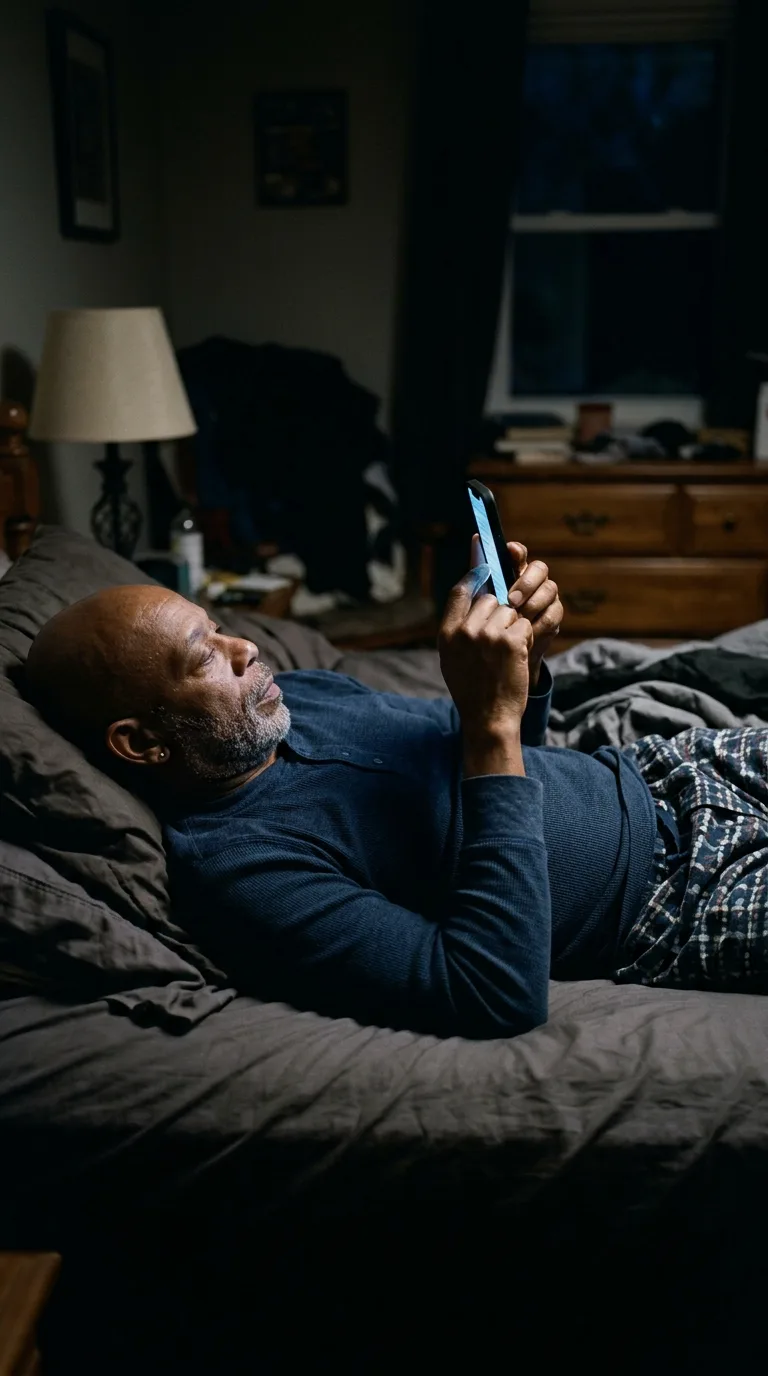
Rarest thing about him: Both earlobes — common, 1 in 31
Season 1seed 1367402610 · engine v11
Character card
lineage OZ80W3
His body-swap story
@colby.marchetti, wearing Desmond Achebe-Wright, rolled the wheel on and woke up as Melvin Draughn, spent under a minute in him, then spun the wheel and woke up as Colin Farraday
Desmond Achebe-Wright's condo has floor-to-ceiling windows and none of the blinds drawn, and you stand at them in his short body with his heart still going too fast from three flights of stairs he insisted on taking instead of the elevator, because that's the kind of thing he does, this one, punishes himself for small pleasures. Three minutes. That's all he's had. You feel his moustache with his own fingers, an unfamiliar bristle, and you feel nothing else — not fondness, not disgust, just the flatness of a man who has not had time to become anyone yet. He worked hard for this condo. He has dimples he probably likes in photographs. None of it is yours to want. The screen of his laptop is still open to the site, the wheel mid-spin from an hour ago when this all started, and something in you — not boredom exactly, more like an itch that thirty-three other men never scratched — walks him back to the chair. Sit. Card in the slot. Spin.
The room is dark and it smells like fabric softener and something faintly medicinal, and your hand — his hand — is in the air in front of a face six inches away, thumb stopped dead mid-flick. Then it isn't stopped. You feel the mattress take his weight, feel a shoulder pressed into a pillow gone slightly damp at the temple, feel the phone's glass warm from an hour of holding, and the thumb starts moving again on its own, faster than whatever rhythm the man had going, cutting clean through the middle of a video he'd paused on without meaning to pause. Somewhere behind you a partner breathes in her sleep, even and unbothered. You are lying on your side in a dark bedroom in a body sixty-one years old, and it does not ache the way you expected sixty-one to ache.
The phone is the first thing that gives you anything, and it gives you almost nothing — just the ordinary itch of insomnia, some article about grandkids he doesn't have yet, a woman's laugh from three seats down a lobby bar that he keeps almost-remembering and losing. You set it face-down on the nightstand, and that's when the shirt starts talking. It's a thermal, waffle-knit, navy, and putting it on this morning comes back to you sleeve by sleeve — his arm through first, the twinge in the left shoulder that's been there since a rental car door caught it wrong two years back, the small satisfaction of a shirt that still fits the way it did ten years ago even though the body under it has softened at the middle in ways he's stopped fighting. He stood in front of a hotel mirror in Canton or Mansfield, some conference room town, clipping a lanyard over his head, straightening it against a white collar, thinking about the pitch he had at ten and not about the years going by. He has done this five thousand mornings. The studs in his ears were his mother's idea, decades ago, church, a boy embarrassed and now an old man who doesn't think about them at all until his fingers find them absently, the way they're finding them now, and behind that touch comes a whole Sunday — a woman in a hat two pews up, his mother's hand flat on his back, the particular smell of a fellowship hall coffee urn that he has never once forgotten and never thought to explain to anybody.
The bed under you holds a marriage that isn't a marriage — a girlfriend eleven years running, a woman who kept her own name and her own house two towns over until the lease ran out and she just never left his, and it was easier than a wedding and it has been, mostly, enough. There's a version of tenderness in the way his body already knows to keep to his own half of the mattress, decades of a different woman having trained that into him before this one benefited from it. The ex surfaces without being called — not a wound, more like a room he doesn't go into anymore but knows the layout of: her voice on the phone last Christmas, businesslike, both of them grandparents now to the same two kids, done being married longer than they'd ever been married. He does not miss her. He misses being thirty-four. Two names arrive with the thought of his children, warm and unspecific, a text thread he means to answer tomorrow.
His hands know the weight of a rolling laptop bag before you do, the muscle memory of forty years of hotel carpets, elevators, a lanyard swinging against his tie. They know how to shake a hand a half-second before it's offered. They know, without asking, to worry the cuticle of the thumb, and you feel that habit try to start now, an old comfort with nothing in reach to bite. Half a million dollars and change sits somewhere in accounts he checks twice a year and otherwise trusts to have grown, quietly, the way everything about him has been quiet and steady and slightly more successful than he ever advertises. He hasn't had a real drink since a wedding in June. He hasn't smoked in eleven years and still sometimes wants one at exactly this hour, lying awake, phone six inches from his face, for no reason he could name to anyone, including himself.
You lift your hand off the phone and hold it up in the blue dark, turning it — his hand, blunt-fingered, a callus at the base of the thumb from the bag strap, nails bitten shorter than a man his age ought to still be biting them. Sixty-one years of somebody else's decisions are sitting in that hand and none of them are yours, and that's exactly the itch that brought you back to the wheel tonight, wearing a stranger for three minutes and finding him already too small.
You bring your eyes up off your palm, find the dark ceiling of a room that isn't yours in any sense that matters, and say, quiet enough not to wake her:
"There you are."