Desmond Achebe-Wright
Fictional. Generated by AI — not a real person, and no likeness of one is intended.
47, engineering manager in Miami · rolled by @colby.marchetti · card — no film
History
who has worn him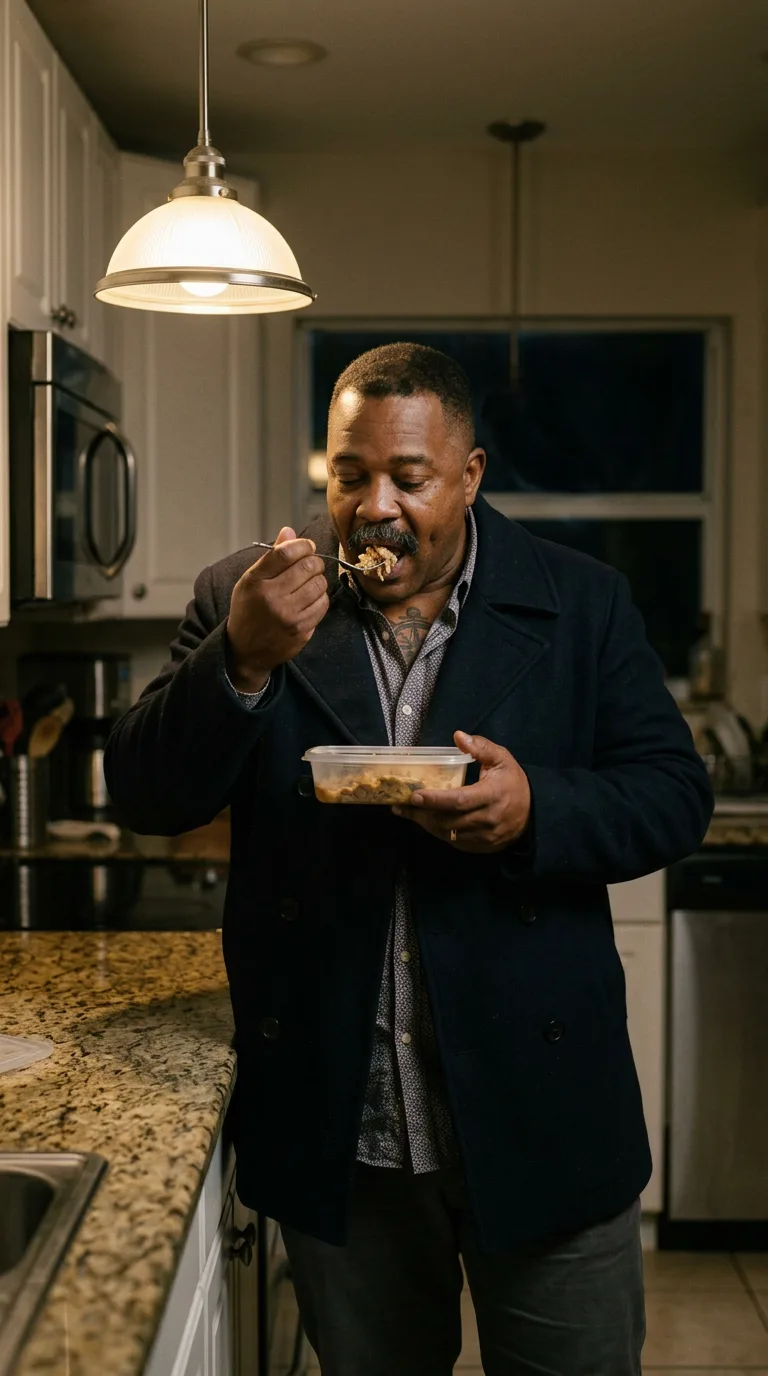
Rarest thing about him: One, chest — common, 1 in 32
Season 1seed 773475900 · engine v11
Character card
lineage OZ80W3
His body-swap story
@colby.marchetti, wearing Sione Taufa, rolled the wheel on and woke up as Desmond Achebe-Wright, spent 3 minutes in him, then spun the wheel and woke up as Melvin Draughn
Sione Taufa's knees ache. That's the first thing, standing in his kitchen at the edge of Denver evening, twenty years old and six-foot-one and none of it feels like enough. A day of somebody else's landscaping calluses, somebody else's mother calling twice and you not knowing what to say to her, somebody else's beauty mark you keep catching in the hallway mirror and flinching at like it's a bug on your own skin. It's not that he's bad. It's that he's borrowed, and one day was enough to feel the seams. You open the laptop on his kitchen table, the one he doesn't know is open, and the wheel is already loaded from last night, patient, colorful, waiting the way it always waits. You don't think about the boy whose hands are doing the clicking. You never do, not by the second night. You spin.
The fork stops an inch from a mouth that isn't yours yet, then it's yours, and it comes back down and sets itself on the counter with a small definite click, and you are standing heavy and short and warm in a coat you don't remember putting on, in a kitchen that smells like garlic and dish soap and the ghost of somebody's cigarette from out on the balcony three floors down. The window in front of you is black glass holding a stranger's reflection — squat, mustached, dimpled even now, even doing nothing. You shrug the coat off one shoulder at a time because the body already knows how, and you sit at the little island because the body wants to sit, and you finish the rice and the oxtail in the container in even, unhurried mouthfuls, looking at nothing in the dark window, while Desmond Achebe-Wright comes back to you in pieces through everything you're touching.
The lanyard is still around his neck, ID flipped backward against his chest, and touching it gives you fluorescent light, a wall of pinned schematics, a kid on his team — Priya, twenty-six, brilliant, terrified of him for no reason he's ever given her — presenting a timeline that's wrong in a way only he catches, and the small mean pleasure of being the one who catches it. The wedding band on the left hand, plain gold, worn smooth at the inside curve, gives you more: Renata's laugh from another room, twenty-one years of it, the exact weight of her elbow in his ribs during a boring sermon, three kids and a fourth almost-conversation they never finished having. The tattoo at his collar — a compass, faded, done when he was twenty-three and reckless in a way none of his children believe — gives you a night on a boat that shouldn't have gone out, and a woman before Renata, Carla, who he still thinks about on nights he'd never admit to, not out of wanting her back but out of wanting to know if the boy who got that tattoo turned into someone worth becoming.
The coat, hung now over the chair, gives you the walk from the car after work, the vape pen's weight in the pocket, three pulls in the parking garage stairwell because Renata doesn't love the smell in the house. The shirt against your back — you register it as your back now, without meaning to, heavy through the middle, dimples set into the face like they were carved there at rest and not earned by smiling — gives you this morning: buttoning it one-handed while balancing a phone against your shoulder, a supplier problem, Renata passing behind you and tugging the collar straight without breaking her own conversation about the kids' schedules, the two of you married long enough to fix each other without looking.
Your leg is bouncing under the counter. It's been bouncing the whole time you've been sitting here and you only notice now, the way he never notices, a motor that runs under everything he is — under the meetings, under church, under this, whatever this now is. The fork is still in your hand. The container's almost empty. Somewhere behind you a hallway leads to a room where a woman you've never met is asleep believing the man who'll get into bed beside her in a minute is the same one who left it this morning.
You set the fork down again, on purpose this time, and you look at your hand — thick fingers, the band catching the window light, a scar across one knuckle you didn't put there and don't know the story of yet, though it's in here somewhere, waiting for something to touch. You turn the hand over once, like checking it's real, then you lift your eyes to the black glass where his reflection is the only face in the room.
"Long day," you tell it, in his voice, to nobody.
The container's empty. The kitchen's quiet. You don't know yet how long you'll let it stay that way.