Mateo Villalva
Fictional. Generated by AI — not a real person, and no likeness of one is intended.
28, tattoo artist in San Francisco · rolled by @colin.hasbrook · card — no film
History
who has worn him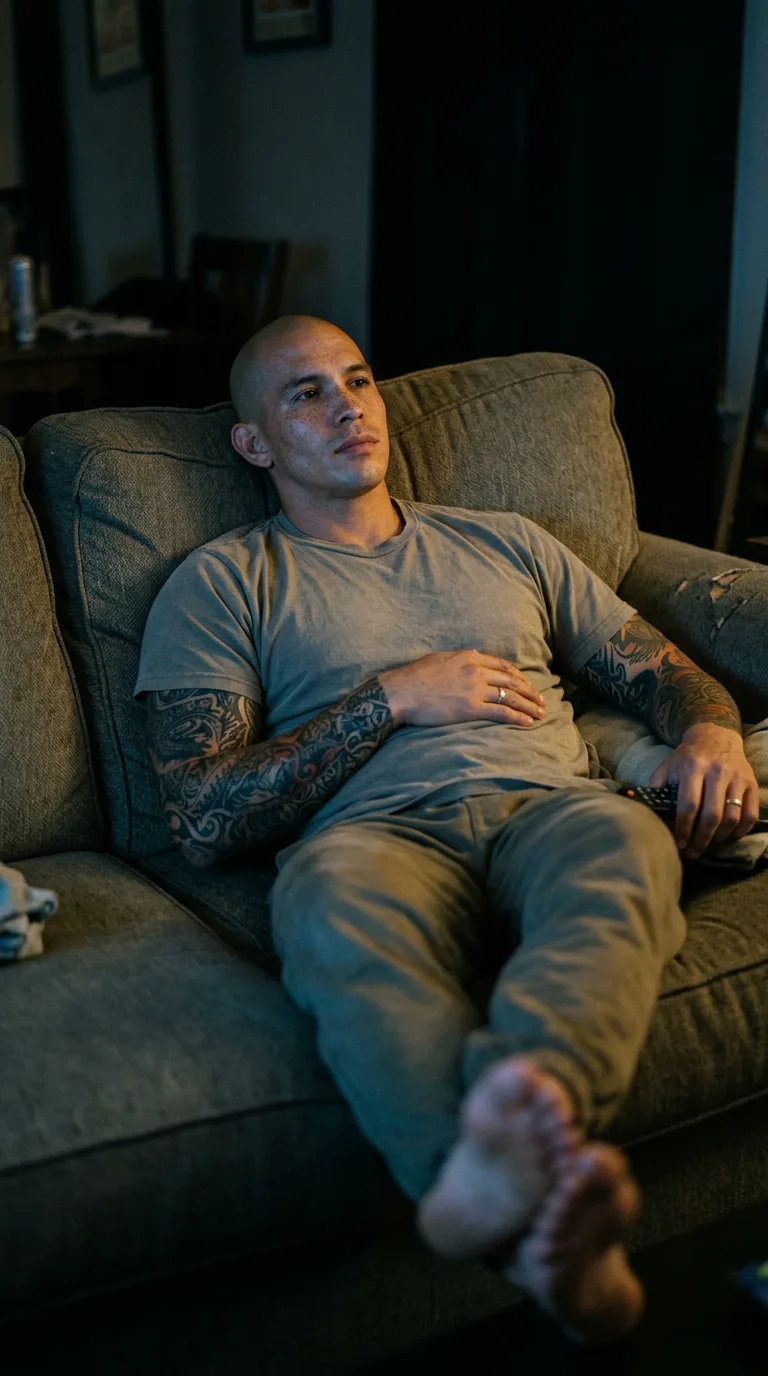
Rarest thing about him: 6'1" — rare, 1 in 50
Season 0seed 1269576862 · engine v10
Character card
lineage 2NZHHJ
His body-swap story
@colin.hasbrook, wearing Francis Halloran, rolled the wheel on and woke up as Mateo Villalva, spent 2 minutes in him, then spun the wheel and woke up as Douglas Merchant
Francis Halloran's slippers are by the door where Francis Halloran always leaves them, and you have been him for maybe forty seconds, standing in his front hall with his mail in his hand, and already you know you are not staying. It is not the slippers. It is the mail — a cardiology follow-up, his name typed above an appointment three weeks out, and under it the particular ache in this chest that isn't drama, that is just a valve doing a worse job than it did last year. You spun into a man winding down. You did not come here to wind down with him. Philadelphia is going gray outside the window at the end of a Monday, and Francis Halloran had a whole quiet evening ahead of him, and you would rather not be the one who sits through it.
So the mail goes back on the table exactly where his hand found it, and you don't so much decide as simply stop being willing, and the wheel takes that for a yes.
The television cuts to a bright frame — some ad, white light flooding a dim room — and in the half-second of that flare you arrive sitting up straight on a couch that is not Francis Halloran's couch, in a body wound tight where his was loosening. The remote is already set down on the arm beside you, which is not what you did, which is what he did, a half-breath before you got here. Your feet are bare and the room is cold in the way San Francisco rooms get cold under a bay window with the heat off. Afternoon light is trying to get past drawn curtains and mostly failing. Somewhere above, a car passes on a street you can't see, and its sound comes down through the ceiling wrong, close, like the house is built into the hill instead of on it.
The shirt is what opens first — soft cotton, worn thin at the collar, and it comes with a Sunday morning, hungover, pulling it over his head one-armed because the other arm was busy holding his phone, texting his wife a joke about the noise she made in her sleep. The fabric against your back gives you the couch itself before it gives you anything else: nights exactly like this one, lights off, some show he half-watches because watching it fully means thinking about the day, which he does not want to do. Mateo Villalva does not love easily but he loves specifically, and there is a woman his memory keeps circling back to who is not his wife, not anymore anyone he'd call, a name that surfaces and gets pushed back under every single time, and the shame of that push is old enough now to feel almost comfortable, a groove worn smooth.
The wedding band on your left hand is warm from his skin and it brings his wife whole: her voice through the wall this morning, the two of them not fighting exactly, just tired around each other, the particular silence of two people who chose right and still ache for something they didn't. You feel it the way he feels it — low, constant, something he manages rather than solves, the way he manages the two pills every morning that keep the worst of the dark from getting a full grip, the way he manages the drink that undoes some of what the pills do and he knows it and does it anyway.
Your hands know things before you do — the ghost-weight of a tattoo machine, the particular economy of movement his fingers have from six years bent over other people's skin, steady even when the rest of him isn't. And under the shirt sleeve, ink that isn't yours to have made but is yours now to wear: hours of it, color going into a forearm while a client gritted through it, the shop smell of green soap and antiseptic, the good tiredness of a full day between two chairs. There's a fresh memory sitting right on top, thin as this afternoon: reclining a client's chair an hour ago, telling him to take five, checking his own phone in the back room, nothing urgent, just filling a gap. Ordinary. Small.
And underneath all of it, older and heavier than the shop, there's Douglas Petrakis — bald, blue-eyed, an electrician's rough good humor at a job site lunch table, a coworker Mateo half-likes and half-can't-stand, the two of them trading insults over conduit and coffee for years. You know that man from both directions now, having stood in his shoes less than a minute ago and in this man's life a hundred times secondhand, joke by joke, and there's something almost funny in that, some private joke only you get to have.
You look down. Freckles scattered over knuckles that aren't scarred the way you expected a tattoo artist's hands to be scarred — clean, careful hands, the nails bitten down past comfortable despite everything he takes for the nerves, an old habit medication never quite reached. You turn the hand over once, like checking it's real, like checking it's yours.
"Okay," you say, out loud, to the empty room, to nobody. "Okay."
Somewhere the wheel is still spinning, or isn't, or is waiting — you don't know when you'll want it again, only that you always do, eventually, and that Mateo Villalva has no idea he is now just a very good guess away from being erased a second time, and that guess isn't due today.