Francis Halloran
Fictional. Generated by AI — not a real person, and no likeness of one is intended.
55, retired in Philadelphia · rolled by @colin.hasbrook · card — no film
History
who has worn him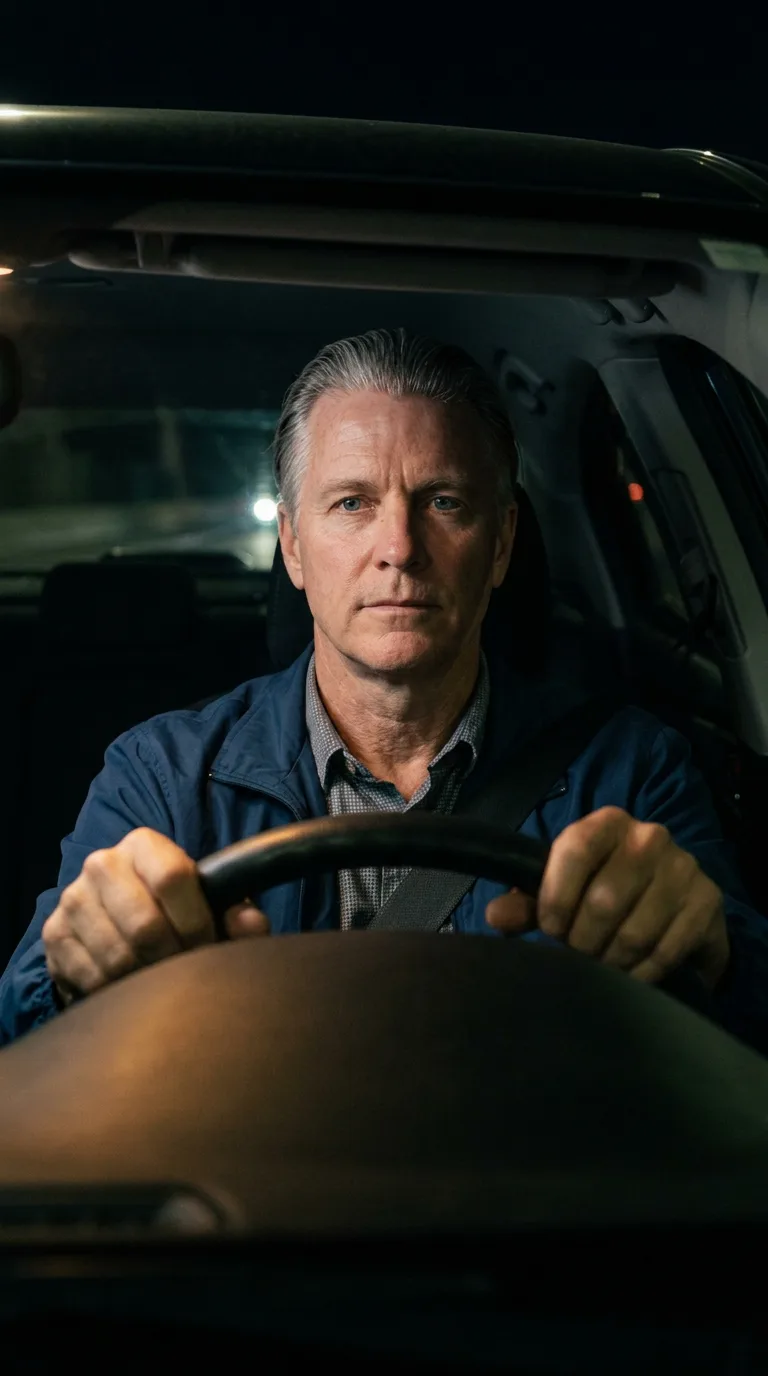
Rarest thing about him: Slicked back — uncommon, 1 in 45
Season 0seed 1421846050 · engine v10
Character card
lineage 2NZHHJ
His body-swap story
@colin.hasbrook, wearing Douglas Petrakis, rolled the wheel on and woke up as Francis Halloran, spent under a minute in him, then spun the wheel and woke up as Mateo Villalva
---
Douglas Petrakis's hands smell like pipe dope and cold coffee, and they have been Douglas Petrakis's hands for forty seconds, and already you are bored of them.
It is a Monday afternoon in San Francisco and you are standing in somebody's kitchen — his kitchen — with a voltage tester still clipped to your belt loop, and the job you just finished is written all over this body: the low ache riding up both knees from thirty years of crawling under houses, the smell of solder still in your nose, the particular tiredness of a man who is fifty-nine and bald and done for the day at two in the afternoon because the shift started at five in the morning. You spun for this. Less than a minute ago you wanted this — an electrician, a trade, hands that know things — and it delivered exactly what it promised and that is the whole problem with it. There is nothing left to find out about Douglas. You already know how his evening goes. You know before he does.
So you go back to the site on his phone, thumb leaving a print on Douglas's own cracked screen, and there's the wheel again, turning under your borrowed thumb, and you spin it not because anything is wrong but because nothing is, because comfortable is its own kind of hunger, and because two hundred and fifteen men were not enough and you are past pretending they might be.
—
The wheel doesn't ask. It never does.
You come up standing, and the standing is wrong before anything else is — your knees don't hurt, your hands are wider, there is a wheel under them and a seatbelt cutting a diagonal line across a chest that is not the chest you had four seconds ago. Streetlights are sliding past a windshield. The dash glow sits low and orange on knuckles you have never seen. Your foot is already easing off the gas though you didn't tell it to — his foot, still finishing his intention, the body coasting on a decision made a half-second before you arrived. The turn signal is ticking. It is ticking for an exit that means nothing to you yet, and somewhere underneath, distant, like a light going out in another room, there had been a Francis Halloran driving home three miles from his own door, and now there is not.
—
The wheel steadies under your palms and the first thing that comes isn't a memory, it's a complaint — low back, a dull hot wire strung from hip to hip, older than any single day, the kind of pain that has its own name in his head, just "the back," the way you'd talk about a difficult relative. It has been there so long it barely registers as pain anymore, just as Tuesday, just as getting up from a chair.
Your hands are on the wheel at ten and two — his hands, before you moved them — and touching it gives you a Sunday: him teaching his nephew to parallel park in this same car, in this same spot, laughing so hard at the kid's third attempt that he had to pull over. No wife in that memory. No kids of his own. Just a nephew borrowed for an afternoon and the particular sweetness of a man who has time and no one waiting at the end of most of his days.
The jacket. Navy, zipped halfway, and when your arms shift inside it you get the morning — Francis standing in front of a closet that has fewer decisions in it every year, pulling this jacket off the same hook it's hung on for six years, because it is not cold enough for the wool one and not warm enough for nothing. Under it, a gray polo, soft from washing, and putting it on this morning had been nothing, had been muscle memory, his arm finding the sleeve without his eyes needing to check. He'd stood on the porch after with his coffee, watched the first sun come down the block the way he does most mornings, marble steps under his shoes worn into a shallow bowl by ninety years of other people's feet before his. He liked that porch. He liked, specifically, that nothing was required of him on it.
Retired eighteen months. A city job, decades of it, then a pension and a quiet that took some getting used to and that he'd decided, somewhere in the last year, to stop fighting. Divorced a long time ago, amicably enough that neither of them tell the story with any heat in it anymore. No kids. A brother in Delaware he calls on Sundays. He quit drinking around the time of the divorce, not dramatically, just stopped reaching for it, the way you'd stop taking a route that used to be faster and now just isn't. He never smoked. He goes to a Quaker meeting sometimes, not every week, sits in the silence and doesn't call it God but doesn't call it nothing either.
Tonight he'd been coming from his brother's place across the bridge, three miles out, thinking about nothing in particular — whether he had eggs, whether the Eagles game was worth staying up for — hands steady at ten and two the way he's driven since he was seventeen, when the wheel reached into that nothing and took it.
The seatbelt against your chest, his shirt against your back, the wheel under fingers that already know its exact give and play — every one of them hands you another minute of him, unasked, generous, a man with no urgent grief in him and no one he's failing by being gone.
—
The car finishes its drift, settles dead center in the lane, and your — his — hands come off the wheel for a second, turn palm-up in the dash light like you're checking them for something you already suspect isn't there.
You look up, through the windshield, at a Philadelphia street you've never driven and already half remember.
"Okay," you say, out loud, to no one. "Let's see what you've got."