Mateo Reyes-Molina
Fictional. Generated by AI — not a real person, and no likeness of one is intended.
24, butcher in New York · rolled by @colin.hasbrook · card — no film
History
who has worn him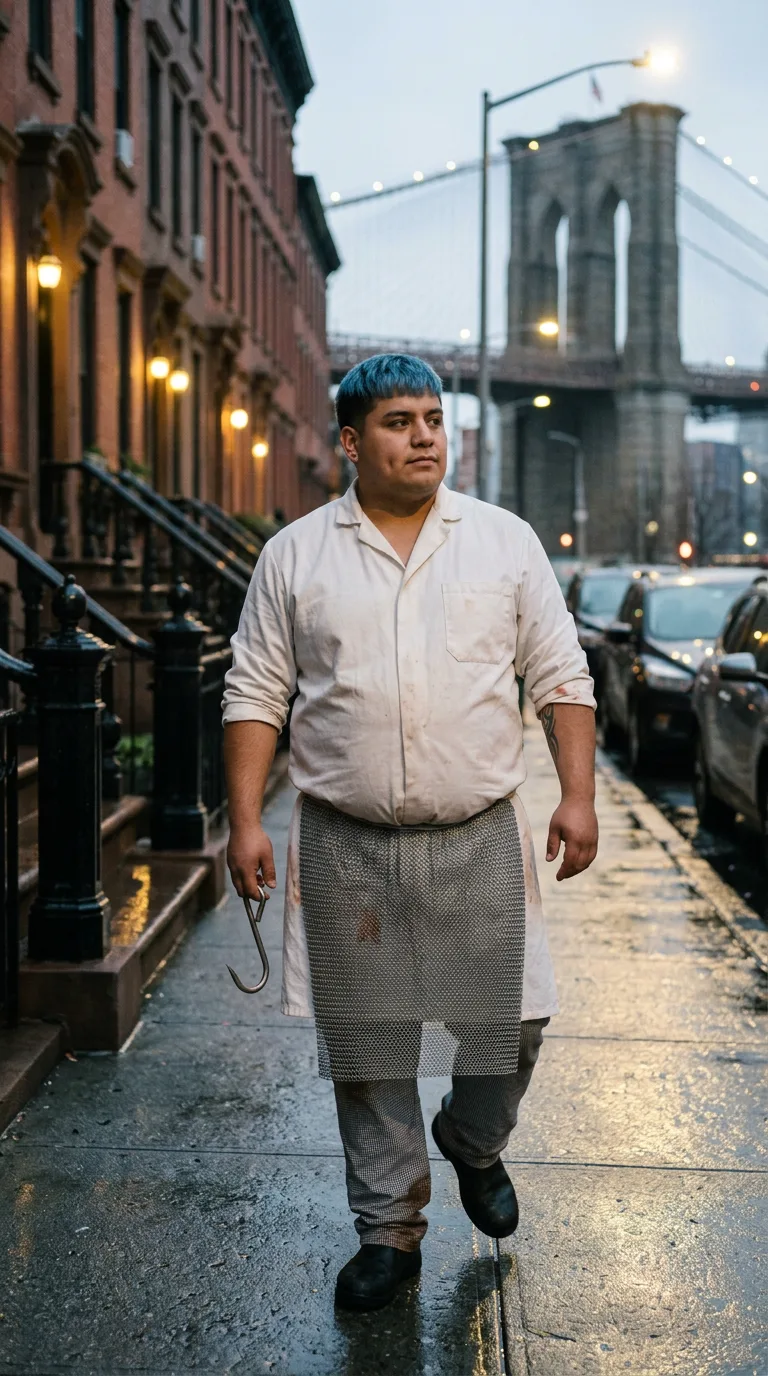
Rarest thing about him: Cigars only — epic, 1 in 56
Season 0seed 1939323787 · engine v10
Character card
lineage 2NZHHJ
His body-swap story
@colin.hasbrook, wearing Todd Marchibroda, rolled the wheel on and woke up as Mateo Reyes-Molina, spent under a minute in him, then spun the wheel and woke up as Caleb Whitfield
HIS LAST NAME IS Reyes-Molina. He is Julian Reyes-Molina's brother. HOOK: You leave a Seattle fridge tech's hands, and land in his brother's, holding a boning knife.
Todd Marchibroda's kitchen smells like coffee gone cold an hour ago, and his hands — thick, blunt-nailed, a callus along the right palm from a nail gun he doesn't remember buying — are flat on the counter, not moving. It is the middle of a Monday and there is nowhere Todd needs to be, which is the problem. Forty-two years old and every room in this house is already known. You spun the wheel nineteen times to feel a door open, and Todd's house has no more doors in it. You know his ex-wife's number by heart now and you don't want to call her. That's reason enough.
You open the laptop already logged into vessel.cards, because Todd left it that way, because you left it that way, and the wheel is just sitting there, patient, colored like a carnival.
You spin.
The knife is already halfway through the motion — wrist rolling, blade following the seam of a shoulder clod the way it's done a thousand times before — when the arm attached to it stutters. A half-inch skip, blade catching where it shouldn't, and then it corrects, slow and wrong-careful, like a hand relearning where its own bones are. Ten more cuts come out checked. Each one watched like it might not land right. Fluorescent light overhead, tray of trim to the left, a radio somewhere playing something with a lot of horn in it. The apron chain-mail is heavier than you expect, resting low on a belly that Todd never had, and the room smells like cold iron and sawdust and, underneath that, a man's sweat that isn't the sweat you walked in with.
The shirt is the first thing. Cotton gone soft at the collar from washing, a little tight across shoulders that carry more weight than Todd's ever did, and it comes with a flash — an early morning, dark still, pulling this same shirt off a hook by the door, sleeve first, right arm, because the left shoulder's been sore since Sunday from hauling a hindquarter wrong. A small thing. It arrives whole anyway: the walk down three flights to the street, breath visible, the bridge lit up gold and blue at the end of the block like it always is, like it's been every morning for six years. Mateo. The name comes up out of the shirt like it was folded into the seam.
The knife handle next — worn smooth in a groove only this hand fits, and it brings the smell of the shop before you even opened, the walk-in door groaning, Danny the counter guy already there with two coffees because Mateo always forgets his. A joke that isn't funny anymore because Danny's told it four hundred times. Something in the chest, warm, unbothered — this is a job he is good at and does not resent, which after nineteen bodies feels almost exotic.
The apron strings against your back give you church — his mother, Sunday, a missal with a cracked spine, the particular boredom of incense and the particular comfort of it existing at all whether he means it or not.
The mesh glove on the left hand, hung loose off two fingers because he took it off between cuts, gives you a girl's name — Camila — and a year and a half that ended without a fight, just a slow unplugging, him still checking her Instagram some nights with the same hand that's holding this knife now, thumb doing it before the rest of him agrees to.
And then, underneath everything else, unbidden, ugly and quiet — Julian. A different kitchen than this one. Seattle rain on a window. You were in that house four spins ago, wearing that brother's skin for the length of a phone call and a walk to a truck, and some of what you know about Mateo you know because Julian complained about him once, gently, the way brothers do — *he touches his face when he's nervous, always has, since we were kids* — and here, now, your free hand comes up and does exactly that, unasked, pressing two fingers into the meat of the cheek like checking for a bruise. The dimples show. They show even now, even doing nothing, a groove in a face that was built to look happy whether it means it or not.
You stop the knife an inch from the tray.
You look down at the hand holding it — wide, brown, a black tribal band inked into the inner forearm that some other you, some other body, once asked about at a barbecue and was told *got it at nineteen, don't remember why* — and you turn it over slowly, both sides, like checking it for damage.
Then you look up, past the trays, toward the reflection in the steel of the walk-in door, and you say, to no one working the counter with you, in a voice thicker than the one you left behind in Nashville:
"There you are."