Caleb Whitfield
Fictional. Generated by AI — not a real person, and no likeness of one is intended.
28, social worker in Eastern Kentucky · rolled by @colin.hasbrook · card — no film
History
who has worn him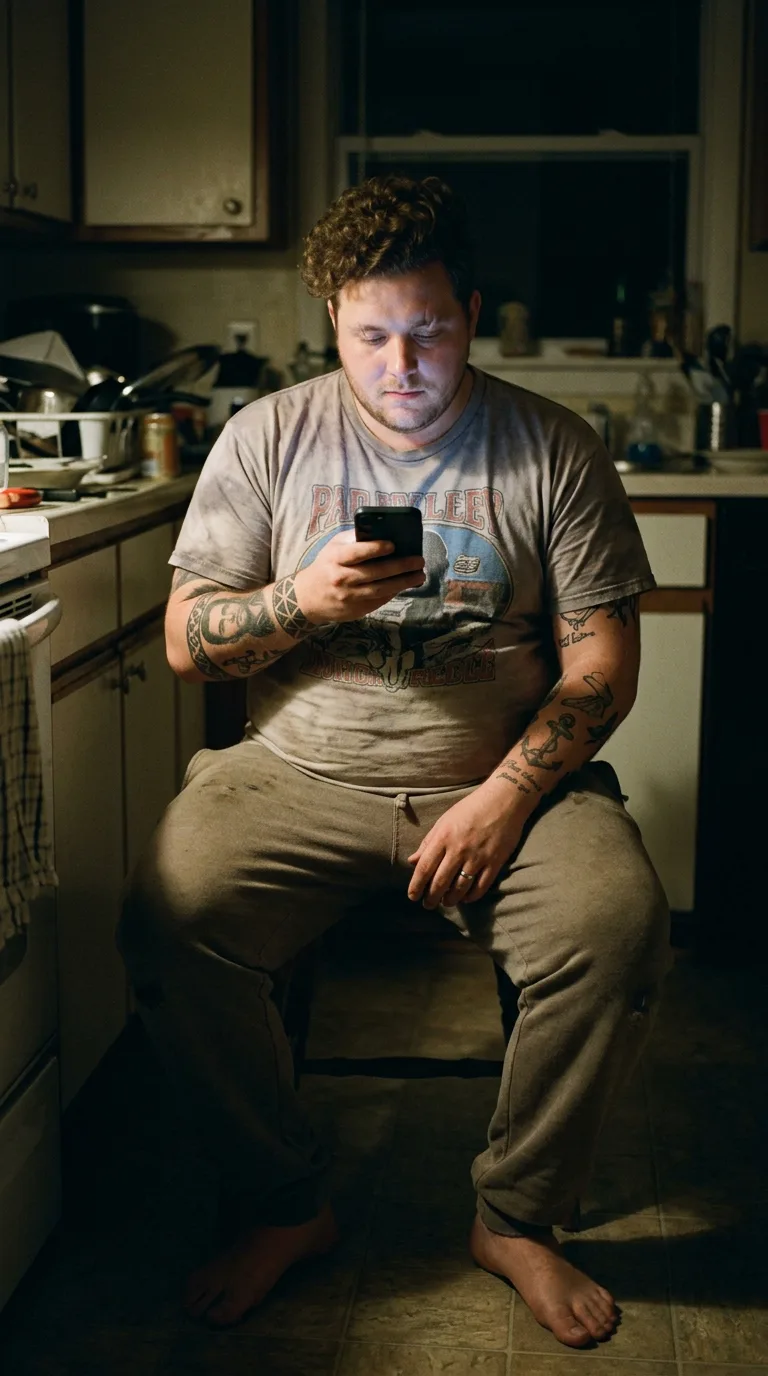
Rarest thing about him: 6'6" or over — epic, 1 in 212
Season 0seed 991711976 · engine v10
Character card
lineage 2NZHHJ
His body-swap story
@colin.hasbrook, wearing Mateo Reyes-Molina, rolled the wheel on and woke up as Caleb Whitfield, spent under a minute in him, then spun the wheel and woke up as Brendan Coyle
—
The cleaver comes down clean, the way it always does, and you watch the fat separate from the bone in a body that isn't tired yet even though it's been at this since five. Mateo's shoulders. Mateo's dimples, catching in the steel of the walk-in door when it swings. Twenty-three hours in him and you already know his hands better than he did — the little hitch in the wrist before impact, the callus map, the way he counts the register by fives out of habit and not need.
It should be enough. It was enough, this morning.
But there's a wall clock behind the register that runs four minutes fast, and every time you catch it you think about the four minutes you didn't spend deciding, and how easy that was, and how the ease is the whole problem — because now you're standing over a cutting board thinking about a shop you don't remember opening, a watch you'll never buy in a body that will never own it, and the thought arrives simple and total: *just one more*. Not boredom with Mateo exactly. Something under that. The itch that doesn't have a name, that the good ones don't cure, only postpone. You wipe the blade. You tell the guy at the register you're taking five. You don't come back.
—
The kitchen is dark and it smells like dish soap gone cold in standing water, and the first thing you have is weight — a lot of it, settling down through legs that are longer than any you've wandered in, feet flat and bare on tile that ticks warm-cool-warm under a bad furnace cycle. A phone is turning face-down under your own hand. The thumb that just did that is thick, pink, scarred faintly white through one knuckle you haven't found yet. You are enormous. You are sitting on a kitchen stool built for someone smaller. The last dregs of a scrolled number — four figures, a strap, a brand you'd never risk saying out loud in this house — are still bright behind your eyes like a struck match, and then they're gone, because his hand has already let go of wanting them.
—
It comes in through the shirt first — old cotton, thin at the elbows, and with it a Sunday: standing at the mirror in the church hall bathroom buttoning a shirt just like this one, sleeve by sleeve, his wife's voice through the door telling him he looks fine, he always looks fine, stop fussing with the collar. That was the wedding-band shirt, the one he wore the year they got married in his mother's backyard in Menifee County with folding chairs sunk in the grass. The band is on your hand now, plain, a little loose over the knuckle, and it drags up the whole day behind it — her dress catching burrs at the hem, his father's flask he didn't drink from, the vows he'd practiced saying without letting his voice do the thing it does.
The tattoos on the forearm answer when the light off the stove hood catches them: a face in black-and-gray, a man he never talks about, inked into the skin the year he decided he'd rather carry the grief where he could see it than keep pretending he didn't have any. Underneath that comes the job — a walkway outside apartment 4C, brown paper case file sweating a little against his ribs in July heat, a kid's mother not answering the door for six minutes while he counted them out loud in his head so he wouldn't start jaw-clenching in front of the peephole. The creek footbridge on the walk home, cable swaying, green light coming off the trees onto brown water, and how it was the only ten minutes of a shift that ever felt like it belonged to him.
His body under your hands now: heavy through the gut and shoulders in a way that carries strength nobody bothers to notice, a low ache already sitting in both knees though he's only twenty-eight, hands that know without asking how to hold a case file steady in a doorway and how to hold a stranger's crying kid without flinching. He is stone sober by a decision he made once and never revisited, and there is a clean, scraped-out feeling where liquor would sit in another man, a held breath he's held for years. He clenches his jaw when he's thinking of nothing — you feel it happen now, low and automatic, teeth finding each other in the dark kitchen for no reason he'd give you if you asked him, except there's no him left to ask.
The dishes in the rack came from her cooking something he complained about liking too much. The paycheck was already gone before rent by a hundred dollars he hasn't told her about yet. He wanted that watch the way a boy wants a bike he's already told himself he doesn't want, so it would sting less. That's the whole ache in him, small and honest and not going anywhere: not enough, never going to be enough, wanting something anyway.
—
You turn the hand over on your knee, palm up, the tattooed anchor catching sideways light from the window over the sink, and it does not feel like a stranger's hand for a second — it feels like the first honest thing you've held in twenty-one tries, heavy and warm and someone else's completely.
You look up into the dark glass of the window like it's a mirror, and you say, quiet, to no one in the room:
"Didn't need that watch anyway."