Brendan Coyle
Fictional. Generated by AI — not a real person, and no likeness of one is intended.
30, roofer in San Francisco · rolled by @colin.hasbrook · card — no film
History
who has worn him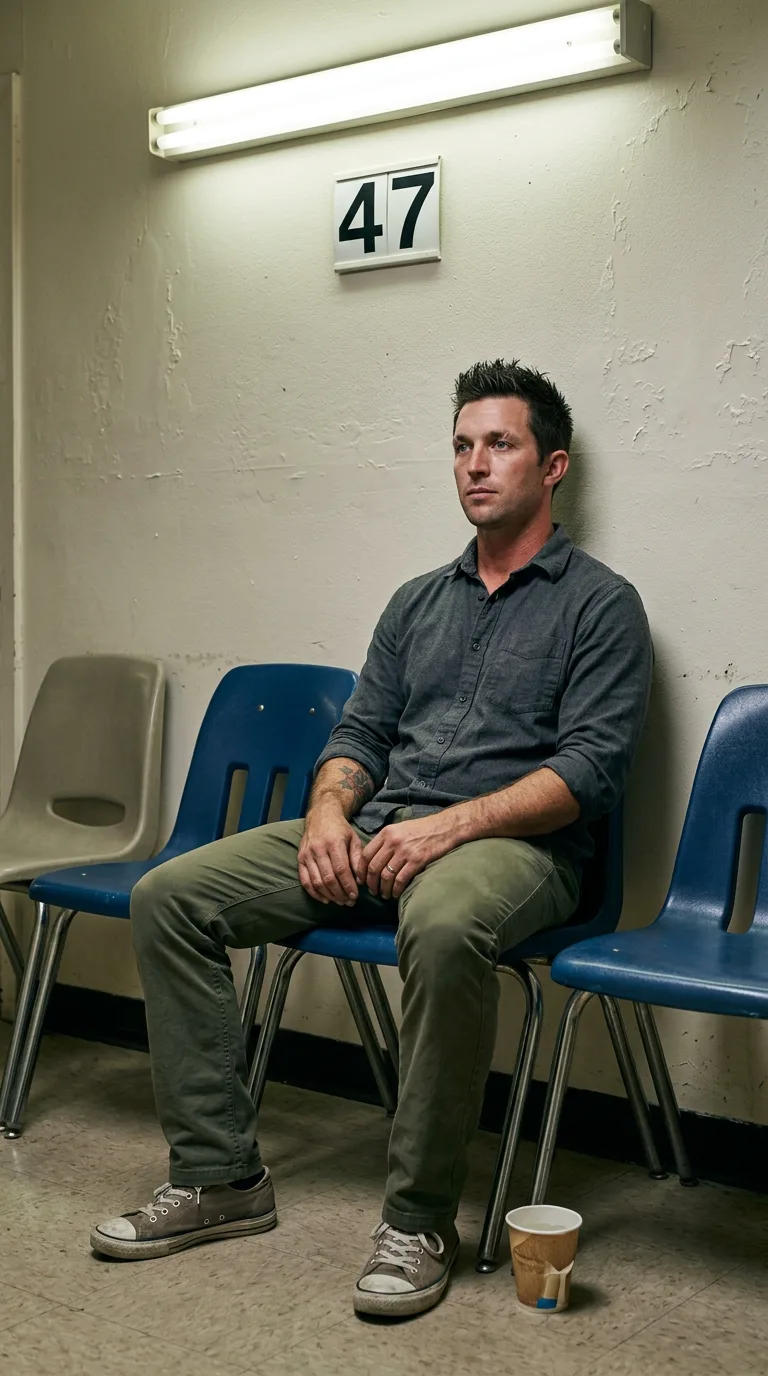
Rarest thing about him: Cigars only — rare, 1 in 30
Season 0seed 192342372 · engine v10
Character card
lineage 2NZHHJ
His body-swap story
@colin.hasbrook, wearing Caleb Whitfield, rolled the wheel on and woke up as Brendan Coyle, spent 3 minutes in him, then spun the wheel and woke up as Kevin Osterhaus
You are standing in a kitchen in Eastern Kentucky at two in the afternoon, wearing a man who is not tired, though his body should be. Caleb Whitfield sleeps days and works nights, out on calls when the rest of the county is asleep, and today he is off, and the off-ness of it is the whole problem — a Monday with nothing in it, sun coming through a window over a sink full of someone else's dishes, and you have been him for less than a minute and already the walls of him feel close. Not bad. Not cruel to be in. Just small, the way a room is small when you know every door in it. Twenty-eight years old, six-foot-six of him folded into a kitchen chair, a scar through his eyebrow that some other version of you didn't put there, and a case file on the table with a kid's name on it that isn't yours to carry. You did not spin the wheel because Caleb Whitfield failed you. You spin it because he is only one room, and you have twenty-one of them memorized already, and the door is right there on your phone, and it never once occurs to the part of you that keeps spinning to ask why staying never occurs to it at all. You pay. You spin. You let go of him the way you let go of a chair you were only ever borrowing.
The wheel gives you a paper cup.
It is cool in your palm, gone tepid past cool, water inside it barely moved, and you are sitting, knees bent at ninety degrees, spine against a cinderblock wall that has been painted over so many times it doesn't feel like paint anymore. A strip light hums somewhere above your head. There is a board on the far wall — you can feel the shape of the room around you before you can name anything in it — and it clicks, a small mechanical sound, 47 to 48, and your knee, which was bouncing, stops on the same click, like the number and the leg were wired to the same switch. You set the cup down. You fold your hands. Somewhere a name is called that used to be his and isn't answered.
It comes in through the shirt first — chambray, soft at the collar from years of washing, sleeves rolled to the forearm — and it comes in wrong-side-to, the way memory does when it isn't yours: not I put this on, but the ghost of an arm going into a sleeve, weight settling onto a shoulder that has carried plywood and shingle bundles for twelve years, an ache set so deep into it that it isn't pain anymore, just information, like a compass needle. Brendan Coyle. Thirty years old. The name arrives with the shirt collar, the way his wife says it when she's annoyed and when she's not, two completely different words that happen to be spelled the same. This morning — his morning, hours behind this borrowed afternoon — he stood in a bathroom with the bay window's cold light coming down through the driveway grate above the garage they live under, and buttoned this shirt one-handed while the other hand held a mug of coffee going cold on the sink edge, because appointments make him nervous in a way that roofs never do, roofs he can read like a face, roofs he has stood on above the whole fog-line of the city with nothing under him but pitch and nail and twelve years of knowing exactly where his weight wants to go. The dermatologist's office does not want his weight anywhere. He has been putting off the mole on his shoulder blade for four months and his wife finally sat him down at the table with the coffee still steaming and said, in the voice that isn't a request, you're going today, and he said okay, and meant it, because when Denise uses that voice he has never once not meant it.
The tattoo on the forearm comes up warm under your own touch, though you haven't moved to touch it — a dagger through a rose, done cheap and young at twenty-two with a buddy who's since moved to Fresno, bold lines already softening at the edges the way traditional work is built to age, like it knew it would outlast the friendship. The ring on the left hand is heavier in feeling than in weight, a plain band that has scraped against roof flashing more times than it's been polished, and through it comes a wedding six years back in a backyard in Bayview, her family's whole church there, a choir that made him cry without deciding to, and her hand finding his after, sunburned both of them, laughing about nothing.
The chair under you, cheap blue plastic, gives you the whole morning: the walk from the truck, the receptionist's clipboard, the number he drew — 43, ticking up too slow, other people's names swallowed by the strip light's hum, his knee going without his permission because he is a man who is fine forty feet up on a thirty-degree pitch and not fine sitting still under fluorescent light being made to wait for someone to look at his skin and tell him something he doesn't want told. He has not said any of this to Denise. He has not said it to anyone. It is the one thing he carries that he would not bring up, and it sits in his chest now the way it always does, small and low and patient.
You look down. The hands are a stranger's hands and also, now, exactly the right size — big-knuckled, a callus map you didn't earn and already understand, the ring catching the strip light when you turn the wrist. You turn it over once, like checking it's real.
"Forty-eight," you say, out loud, to no one, in his voice, and it comes out steadier than the knee ever was.