Julian Reyes-Molina
Fictional. Generated by AI — not a real person, and no likeness of one is intended.
26, refrigeration technician in Seattle · rolled by @colin.hasbrook · card — no film
History
who has worn him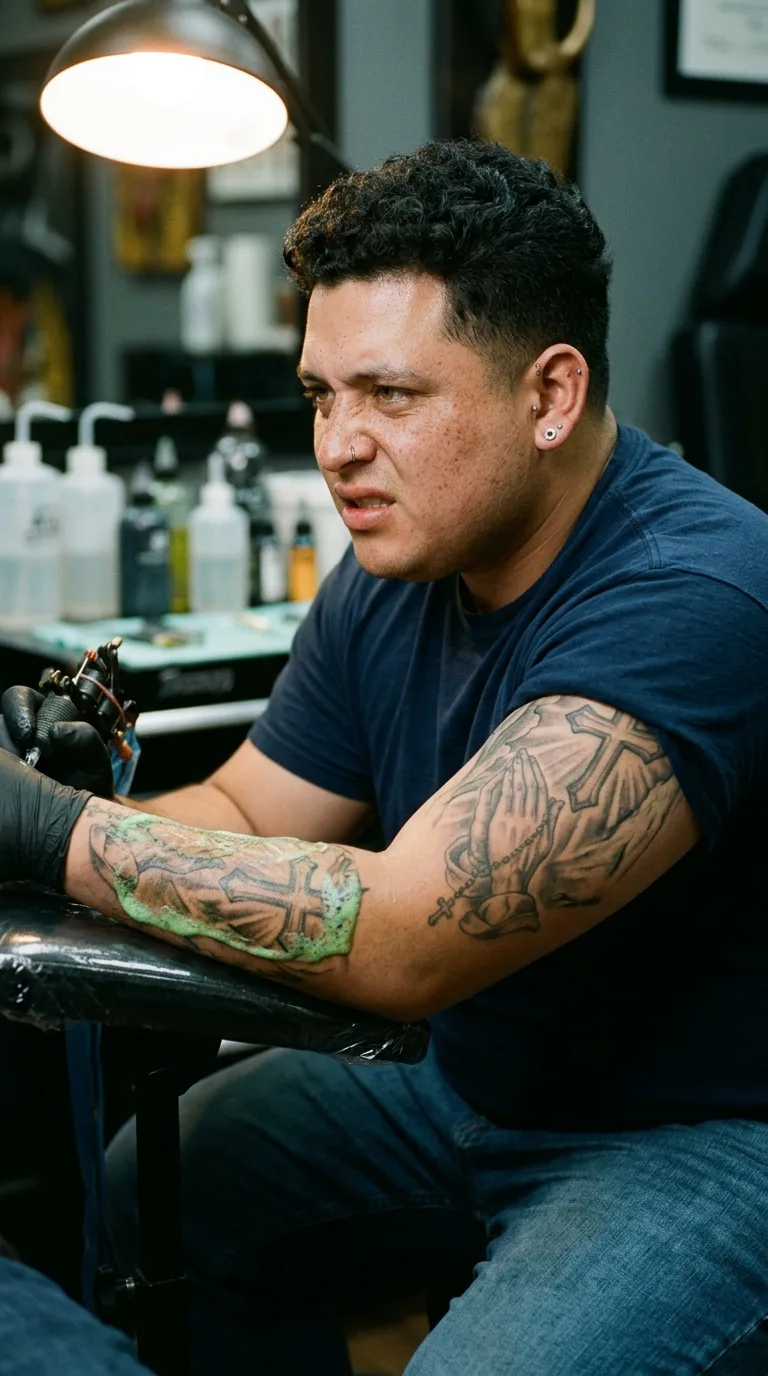
Rarest thing about him: Several — epic, 1 in 79
Season 0seed 1776014568 · engine v10
Character card
lineage 2NZHHJ
His body-swap story
@colin.hasbrook, wearing Marco Espinal, rolled the wheel on and woke up as Julian Reyes-Molina, spent under a minute in him, then spun the wheel and woke up as Gary Kaminski
You are sitting in Marco Espinal's cruiser, engine off, radio murmuring nothing that matters, and the problem is the mirror on the visor. You flipped it down twenty minutes ago to check a graze on your — his — jaw, from a call that went sideways at a gas station on Route 15, and you have been looking at this man's face ever since like it's a stranger's, because it is. Five-foot-three of him. Forty-one years he's lived that you didn't. A wedding ring in the cupholder he takes off for shifts, for a wife you have never spoken to, in a house you have never slept in a full night in. He's fine. He's capable. He caught a runner last week without breaking stride and something in you noted, distantly, that his knees don't hurt yet, that this body still has good years in it. That's exactly the trouble. You have been him less than an hour and you already know his whole shape, the way you always do, fast now, sixteen times fast — and knowing him is not the same as wanting to be him for however long forever turns out to be. It is Monday afternoon in Eastern Kentucky. The wanting is already back, low and dumb and specific, the itch that isn't about Marco at all. You open the app before you've finished deciding to.
The wheel spins on a screen with a crack across one corner of Marco's phone, and then there is no wheel, no screen, no cruiser. There is a light so hot and close it might as well be inside your skull, a smell of green soap and machine oil, and a sound — a thin mosquito whine — that stops, mid-note, like a record lifted. Two seconds of nothing. Then the light comes back and you are heavier, wider, sitting instead of standing, and a forearm that is now yours is laid out flat on a padded armrest with a needle chewing into the skin of it and you did not flinch. You were supposed to flinch. Some other man was flinching a second ago and now there is only stillness, your head still turned away from the work like you're watching something on television, mildly, from a couch.
The tattoo artist doesn't look up. The machine doesn't stop. Nothing announces itself except the noticing: that this hand, this new hand resting palm-down near your knee, has grazes across two knuckles already scabbing, small and recent and not from any fight you were in.
The shirt is what opens first — plain navy cotton, damp under the arm where the machine has been vibrating against you for forty minutes — and through it comes this morning, sleeve by sleeve, in his hands and not yours: standing in a bedroom with grey light coming through blinds he keeps meaning to fix, pulling the shirt over his head one-armed because the other elbow was sore from bracing under machines for other people's ink last week too, a whole life of being the guy who sits still for hours getting worked on because his boy Danny at the shop does it for free when Julian helps him move his compressor. Grey light, because it is the middle of the morning here and the middle of the morning in this city means clouds sitting on the roofs like a hand pressed flat, and because he was up at four for an emergency call — a bakery walk-in dying on a Sunday night bleed-into-Monday, compressor screaming, and he does not sleep regular hours, has not since he took this job, and the tiredness is still in the shoulders you're wearing, a low ache under the newer sharper sting of the needle.
The chair under you gives him back in pieces: the vinyl smell, the particular slouch his heavy frame knows without thinking, weight settled into the good hip, the bad one — right hip, from four years crouched into walk-ins on concrete — tucked slightly forward to spare it. Freckles prickle faintly under the studio light, an old joke of his mother's, mijo con motas, and it comes with her kitchen, her radio, a whole childhood in West Seattle he left twenty minutes early this morning without eating because Marisol texted him a photo of coffee she made and he wanted to answer it in person tonight instead of over the phone, wanted to tell her about the appointment, the second session on the sleeve, how the praying hands are almost finished now, how his abuela would've had opinions about a rosary tattooed instead of worn but would've liked that it was there at all.
The nose ring is cold when you notice it's there, and both ears carry small weights he stopped noticing years ago, and none of them belonged to anyone before him, and the freckles are just freckles, warm under studio light, the one thing everyone says first when they meet him. His hands — thick fingers, knuckles wide from twenty-six years of wrenches and hose couplings — already know things yours never learned: the particular give of a Schrader valve, the way to brace a manifold gauge set without looking. Faint chemical burn ghosts across two fingertips, old scar tissue from nitrogen lines, and it aches in exactly the specific way old work aches, a familiar comfortable soreness that has nothing to do with fear.
He is not afraid, because he never knew to be. He turns his head — the tattoo artist mutters something about him finally looking, and you almost answer for a man who is no longer choosing his own words — and the cross and the praying hands on his forearm are half a shade darker than the last time he checked, healing under green soap and blood.
You lift the hand with the fresh scabbed knuckles, turn it over slowly under the tattoo lamp, and it is broader than any hand you've worn in fifteen turns of the wheel, and none of the freckles across it are lying to you.
"Almost forgot what my own hand looks like," you say, to no one, in his voice, and you don't know yet if that's a joke or a confession.