Marco Espinal
Fictional. Generated by AI — not a real person, and no likeness of one is intended.
41, cop in Eastern Kentucky · rolled by @colin.hasbrook · card — no film
History
who has worn him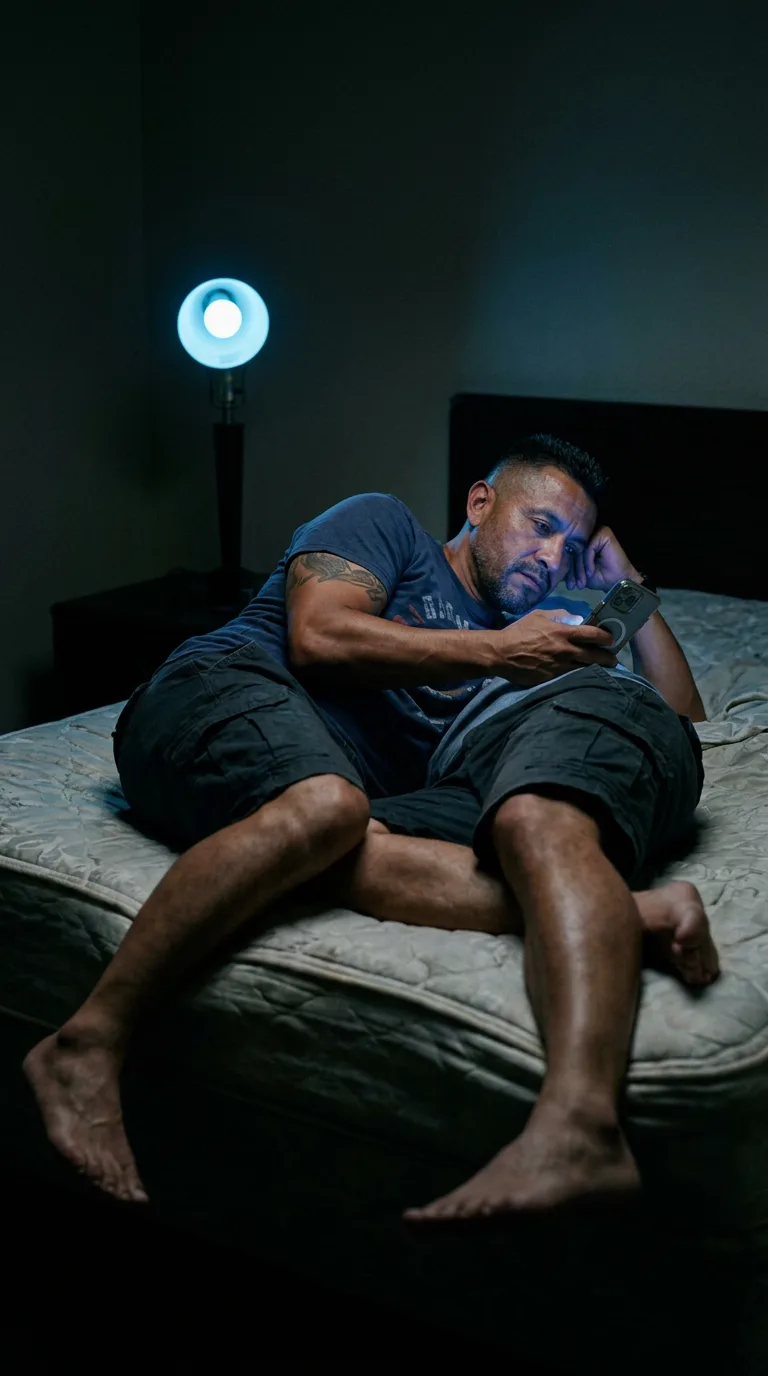
Rarest thing about him: 5'3" or under — uncommon, 1 in 14
Season 0seed 1490672010 · engine v10
Character card
lineage 2NZHHJ
His body-swap story
@colin.hasbrook, wearing Corey Ostrander, rolled the wheel on and woke up as Marco Espinal, spent under a minute in him, then spun the wheel and woke up as Julian Reyes-Molina
Four minutes is nothing in a body like this one. Skinny, twenty-one, dark hair still soldier-short at the sides, standing in a barracks room in Atlanta with the light coming flat through a blind you never bothered to check the time of day on. You are Corey. You have been Corey since yesterday's spin, and Corey is bored in a way that has nothing to do with him and everything to do with you — his arms too thin for what you want from arms, his knees that click on the stairs, a body built for running errands nobody records. Fourteen men behind you and this is the fifteenth thought, not even a decision so much as an itch: something better. Always something better waiting on the far side of the wheel. You take out the phone that isn't yours, on a desk that isn't yours, and you open the page you already have bookmarked from someone else's life, and you spin without saying goodbye to Corey, because you never do.
The wheel doesn't ask what better means. It just gives you a man mid-shift in a house in the hills, and there's no seam, no travel — one second you're a soldier's cheap desk lamp buzzing overhead in Georgia and the next you're on your side in the dark, weight settled low and solid into a mattress that knows your hips, a phone six inches off your nose lit up blue, thumb resting between two frozen images. The thumb starts moving again. Not his rhythm — yours, learned in four minutes on his body, faster, cleaner, no hesitation at the ones he'd have lingered on.
You are short. That is the first fact that arrives, before any memory does — the bed too long for you, feet not reaching where a taller man's would, shoulders compact and dense with muscle that did not come from a gym so much as from years of getting in and out of a car forty times a shift. The shirt is against your back, an old soft undershirt, gray going soft at the collar, and it gives you the first flash the second your shoulder blade shifts against the sheet: this shirt, an April morning, him pulling it over his head one-armed because his girlfriend was still asleep and he didn't want the closet door to wake her. Not this girlfriend — an old one, years back, a name that surfaces and then won't hold still: Dana. Something with Dana ended badly enough that even the shirt remembers it like a bruise you press to check if it still hurts. It does, a little. Less than it used to.
Your hand finds the phone's case, ridged rubber, chipped at one corner from being dropped on a cruiser's console, and that gives you the belt — not on you now, but you feel its ghost anyway, the drag of it low on the hips, forty pounds of gear that makes a short man walk like he's bigger, and under that a whole shift arrives: leaning against the driver's door in a gravel lot at dusk, watching the light go orange over a ridge, radio quiet, waiting on nothing in particular, which is most of the job most days. Ten years of that. A commendation once, framed somewhere in a house you haven't been shown yet. High blood pressure medication in a bathroom cabinet, taken most mornings, forgotten some.
The mattress under you is thin in the middle where a body sleeps every night in the same groove, and that gives you the house whole — a single-story place near a cable footbridge that sways over a creek gone the color of strong tea after rain, green coming down off the trees so thick in summer the porch light barely reaches the yard. A kid's shoes by the door, small, Velcro straps. A boy, six, who has his mother's laugh and asks too many questions about the gun, which he isn't supposed to touch and hasn't. The current girlfriend — Renee, not Dana, the phone case somehow knows the difference — asleep or working, you can't tell which yet, and a soft trailing thought that isn't guilt exactly, that he hasn't called her since this morning.
The room smells like a house that airs itself out during the day and shuts up tight at night, and you understand, arriving all at once the way the last things always do, that this is a man on nights — off now, sleeping through an afternoon that should be his morning, curtains doing their best against a sun three hours from where his body thinks it ought to be. Forty-one years old. Nothing about him reaches for your attention on its own — no scar you're told to feel for, no ring, nothing on the skin — just a body that has been used steadily and carefully for four decades and asks for nothing back except the blood pressure pill and a knee brace some winters.
You look at your hands. Small hands, blunt-fingered, a callus along the trigger finger's second knuckle that a hundred training days put there, the phone still lit and waiting in the right one like it's used to being held exactly like this.
"Didn't feel a thing," you say, to no one, to the empty blue-lit room, and you don't know yet if that's true for a day or for years — only that the wheel is still out there, patient, and somebody else is always one spin away.