Gary Kaminski
Fictional. Generated by AI — not a real person, and no likeness of one is intended.
35, machinist in Philadelphia · rolled by @colin.hasbrook · card — no film
History
who has worn him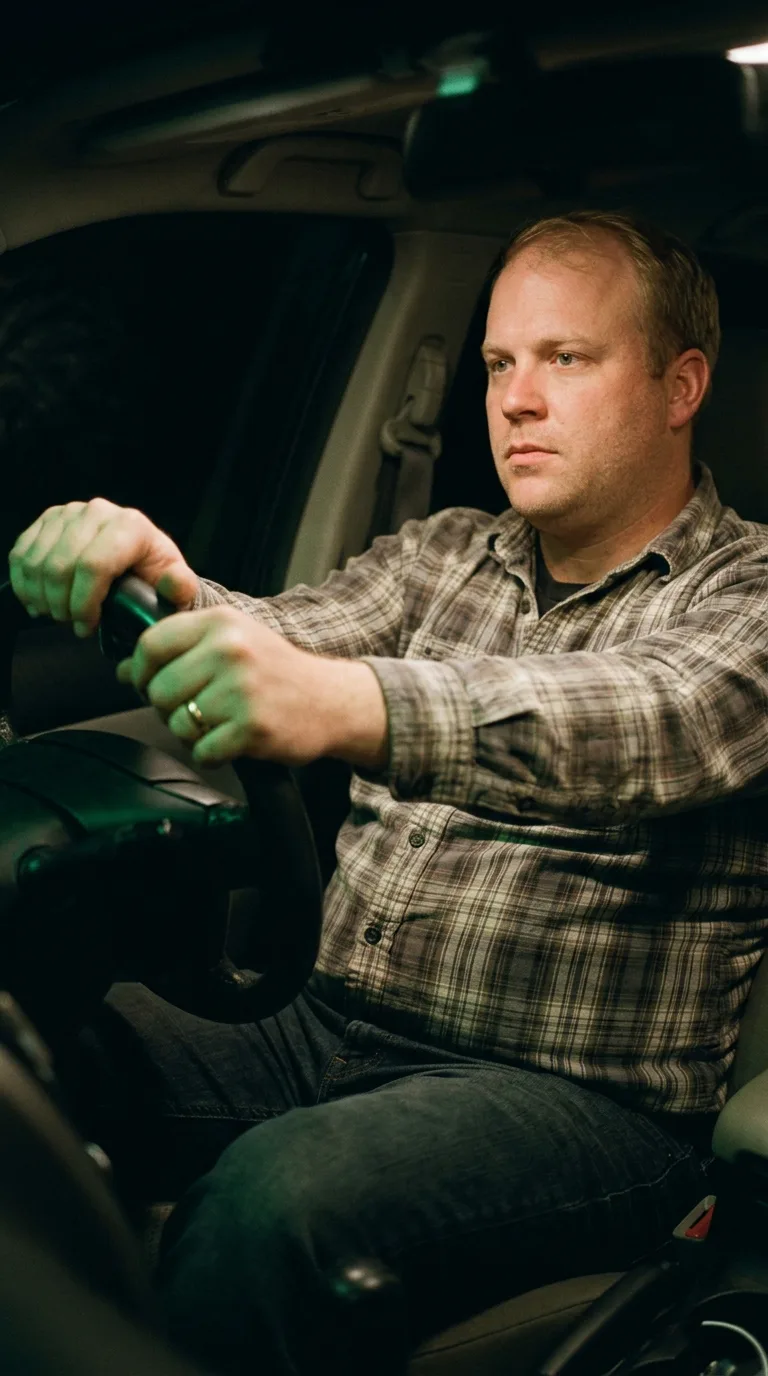
Rarest thing about him: Machinist — uncommon, 1 in 101
Season 0seed 1727027867 · engine v10
Character card
lineage 2NZHHJ
His body-swap story
@colin.hasbrook, wearing Julian Reyes-Molina, rolled the wheel on and woke up as Gary Kaminski, spent under a minute in him, then spun the wheel and woke up as Wendell Marsh
---
The walk-in freezer at the fish plant is still ticking cold behind Julian's ribs when you decide, standing in a Seattle loading dock at eleven in the morning, that you don't want to be him anymore. It isn't the smell, though the smell is bad. It's the compressor unit you spent forty minutes on that still won't hold temp, and the shift lead who talked to you like you were slow, and the freckles on the backs of these hands that aren't going to stop being there no matter how long you wear them. Julian had less than a minute of being Julian before you took the wheel out from under him, and you've given him a whole morning since, and the whole morning has been this: cold, small, tired, someone else's aching lower back. You wipe your palms on your thighs, feel the coveralls Julian bought at a Ross in Tacoma, and think, not unkindly, that this one is used up. You go to the site on your phone in the break room. The wheel is already loading before you've finished deciding.
You are three miles from a house with the porch light not yet on, hands at ten and two, dash lights green along your knuckles, and the road is doing the thing dark roads do at highway speed, unspooling itself like it has no plan to end. Then it ends. Your hands come off the wheel on their own — not your hands, not your own, wider through the knuckle, a wedding band catching the glow — and resettle lower, looser, a driver's hands rather than a passenger's. The car drifts a foot toward the centerline and pulls itself straight before you've had the chance to be afraid of it. The blinker starts ticking for an exit you have never taken toward a life you don't have yet.
The shirt gets you first. Flannel, worn soft at the elbows, and the second your back settles into the seat you're standing at a dresser in the grey nothing-hour before dawn, one arm in a sleeve, listening to Katie run water in the bathroom down the hall and thinking about the noise the lathe made yesterday afternoon — a chatter in the cut that meant the tool was going, meant an hour he didn't have to fix it before the run. Gary. That's the name that comes with the shirt, easy as breathing, the way his own name always comes first and unasked-for. Gary Kaminski, buttoning up in the dark so as not to wake anyone, feeling for the second button because the first one's a half-inch off and always has been, a defect in the shirt he stopped noticing years ago.
The seat under you gives you more: eleven years at Yorke Precision, the smell of cutting oil that never fully leaves his hands no matter what soap Katie buys, the particular ache low in his back from standing at a machine eight, nine hours a day, a body that carries thirty-five years and two kids and a few too many easy dinners without apology and without much thought either. Strong forearms. Soft through the middle. Knees that complain on the stairs at the row house on Tasker before he's even fifty. He is, in no order that matters, comfortable — the kind of comfortable that means the mortgage gets paid and nobody talks about money at the table, comfortable enough that when his daughter wanted the orthodontist with the good reviews instead of the one on their insurance, they just did it.
The wedding band gives you the wedding: a backyard in Fishtown, folding chairs, Katie's sister crying before Katie did, a want that had nothing complicated in it, no ex-anybody left over, no old flame kept warm in a back pocket — just her, plainly, still. The two kids arrive in fragments through the wheel itself, worn glass-smooth under his palms: a girl's hand once sticky with popsicle, a boy's weight asleep against his shoulder on a redeye home from a funeral neither of them talks about. He doesn't drink — never saw the appeal, watched an uncle lose a marriage to it and decided early that wasn't going to be a door he opened. No cigarettes either. Nothing in his pockets he'd ever need to explain. He believes there's something out past the edges of what anyone can point to, a shape to things, but he's never once darkened the door of a church over it, and that sits fine with him too.
The dash glow is still green on your knuckles, and through them comes the whole morning he actually had — coffee, the loaf pan Katie left soaking, the machinist's steel rule riding in the coat's breast pocket where it always rides, cold and flat against his chest like a second collarbone, and the shop floor after: steel curling off the lathe in bright ribbons around his boots, the particular satisfaction of a part coming off true to a thousandth, nobody watching, nobody needing to. Then the drive. Then nothing that was his to keep.
Your hands — his hands, wide, a little swollen at the knuckle, the band snug enough now it'll never come off without soap — sit low on the wheel where they resettled, and you lift them one at a time and turn them over in the blinking green dash-light like they're new tools you haven't learned yet. Steel-dust ghost in the pores. A callus at the base of the right thumb that has nothing to do with you and everything to do with him. The turn signal keeps ticking for the wrong exit, patient, indifferent, and you let it run one more second before your foot finds the wheel again.
"Almost home," you say, to no one, in his voice, and it comes out easier than it should, and you don't know yet if you mean his home or just the words.