Mateo Olazábal
Fictional. Generated by AI — not a real person, and no likeness of one is intended.
24, paramedic in Philadelphia · rolled by @marco.villagrana · card — no film
History
who has worn him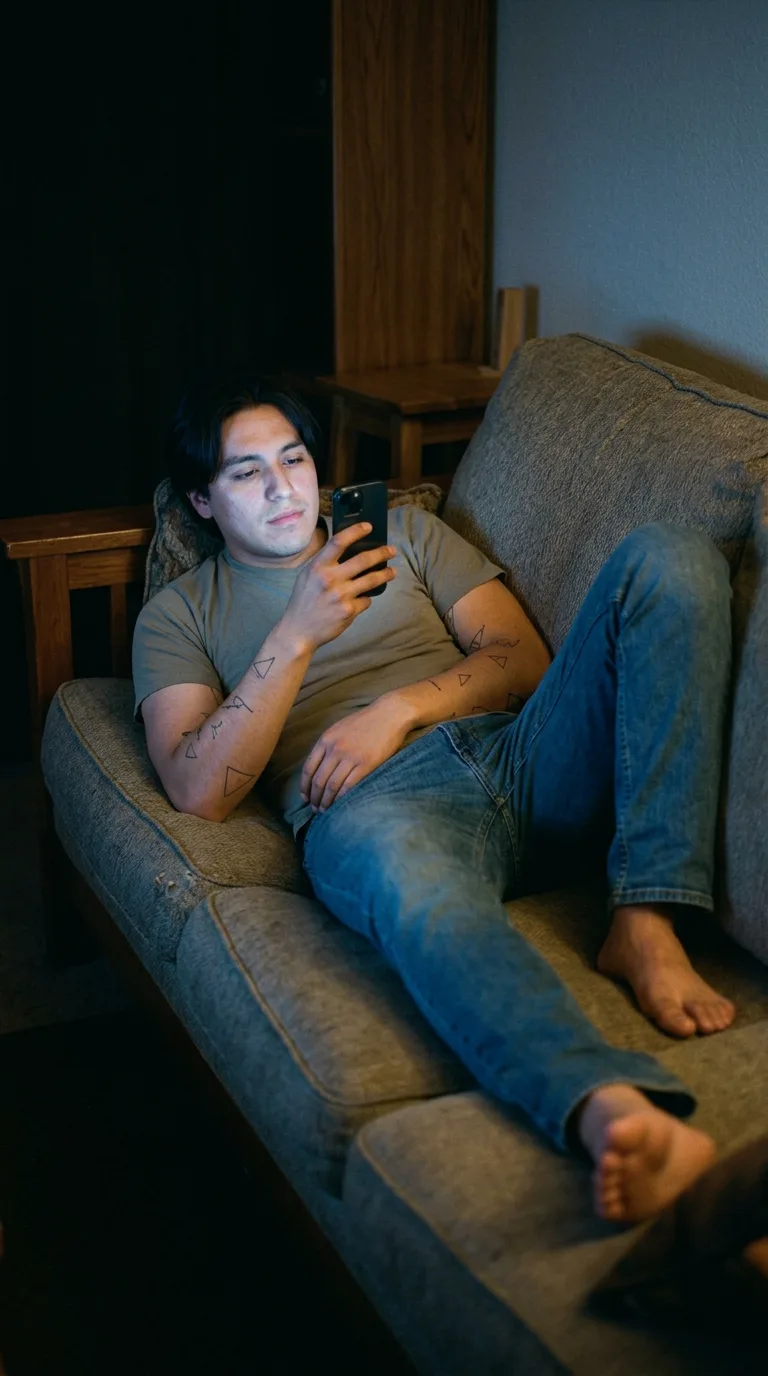
Rarest thing about him: An old injury that never healed right — epic, 1 in 86
Season 0seed 1648611696 · engine v10
Character card
lineage LJL8SV
His body-swap story
@marco.villagrana, wearing Gregory Pastrano, rolled the wheel on and woke up as Mateo Olazábal, spent 23 hours in him, then spun the wheel and woke up as Warren Sturgill
---
You gave it four minutes, this Gregory Pastrano body, and four minutes was enough to tell you the eyebrow scar itches when he's nervous and the knees complain going down stairs, and that whatever else this man's life was, it was not going to be interesting to stand inside of. You spun into a shift-change hallway smell, fluorescent and old coffee, and a locker with somebody else's photographs taped in it, and you thought: no. Not boredom exactly. More like — you already knew the ending of this one, and you wanted the part where you don't know yet. So you found his phone, thumbed to the site out of habit more than plan, and let the wheel go around while a man in New York who used to be Gregory Pastrano, briefly, stood in a break room feeling his own borrowed knees ache for no one.
The wheel stops on a couch in Philadelphia, on a Wednesday evening that is somebody else's early morning fatigue wearing the wrong hour, on a thumb that was slowing down and now doesn't. You arrive already scrolling. The motion is his, muscle-deep, and for half a second you are only speed — thumb, glass, blue light — before you are anything else. His weight settles into you like a coat someone else has already broken in: taller than the last one, looser in the shoulders, a leg slung over the couch arm, one foot bare on the cushion, the other bare foot hanging off into the dark of the room.
Then his life starts arriving in pieces, keyed to whatever you happen to be touching, and you are touching almost everything at once.
The phone first — the glass cool and a little damp where his thumb has been, and that gives you the last stretch of the shift before this one: a call at 2 a.m. that turned out to be a man who'd fallen getting his mail, insisting he was fine, blood going into his shoe the whole time he insisted it. Mateo had liked him anyway. Mateo likes almost everyone he treats, actually, a fact that arrives not as a thought but as a warmth low in the chest, an old habit of care that isn't performance, it's just how the wiring runs.
The couch under you — worn in a specific place at the base of the spine, and that gives you Sunday mornings, plural, stacked up like Sunday mornings do: coffee, the Eagles on low, someone's feet — not his — in his lap. Diego's feet, cold-toed even in June, and Mateo complaining about it every single time and never once moving his own legs out from under them. Eight months of Sundays like that. The apartment two blocks from the firehouse that isn't his, that's Diego's, that he's slowly and without discussing it stopped leaving.
The t-shirt against your back brings the morning this exact shirt went on: pulled from the floor, not the drawer, sniffed first out of laundry laziness, good enough, over a head still fogged from four hours of sleep after a night shift that ran two hours over because the truck ahead of him needed a hand with a call that went bad in the way calls sometimes go bad. His hands remember, without being told to, the particular economy of movement that means twelve-hour shifts: nothing wasted, dress fast, eat standing, sleep the second there's nothing left to do.
Your own left knee, drawn up on the cushion, throbs faintly and low, an old complaint — a slip off a curb three years back chasing a stretcher into traffic, healed wrong under the skin where nobody but him would ever know to look for it, and his hand — your hand now — has already drifted down to it without asking permission, the way it does most evenings, a small rub at the joint that isn't quite pain and isn't quite nothing.
The tattoos along the forearm — the fine geometric lines, triangles inside triangles, a compass rose that isn't finished — carry the parlor on South Street, one sitting at a time over two years, each one paid for out of a tip jar of shifts he picked up extra, each one his own idea and nobody else's, small private geometry nobody at work ever asks about because from a distance they read as nothing much. Under the fingers of the other hand, his own cuticles, already being worried at without him — without you — noticing, a habit so old it isn't even nervous anymore, just what his hands do while the rest of him is elsewhere.
Somewhere in the dark, past his bare foot, a laugh from another room — Diego, on his own phone, not paying attention yet — and that alone brings up a whole unfinished argument from two nights ago about whether Mateo picks up too many extra shifts, whether he'll say it out loud that the ambulance bay is easier some days than the apartment, and the guilt of that thought sitting exactly where it always sits, low and familiar, not resolved and not going to be tonight.
The last thing that comes, thin and almost missed, riding in under everything else: he doesn't go to church anymore, hasn't in years, but he still says something under his breath over bad calls, not quite a prayer, more like leaving a door open in case anyone's behind it.
You stop scrolling. You turn the phone over in his hand — your hand — and look at the screen gone dark, then at the fingers holding it: tan, a white scar-thin line across one knuckle you didn't put there and can't account for and don't need to, ink climbing the forearm in shapes that don't spell anything.
You say, out loud, to the dark room and the man laughing in the next one, "Yeah — okay."