Marcus Whitfield
Fictional. Generated by AI — not a real person, and no likeness of one is intended.
59, undertaker in New York · rolled by @colin.hasbrook · card — no film
History
who has worn him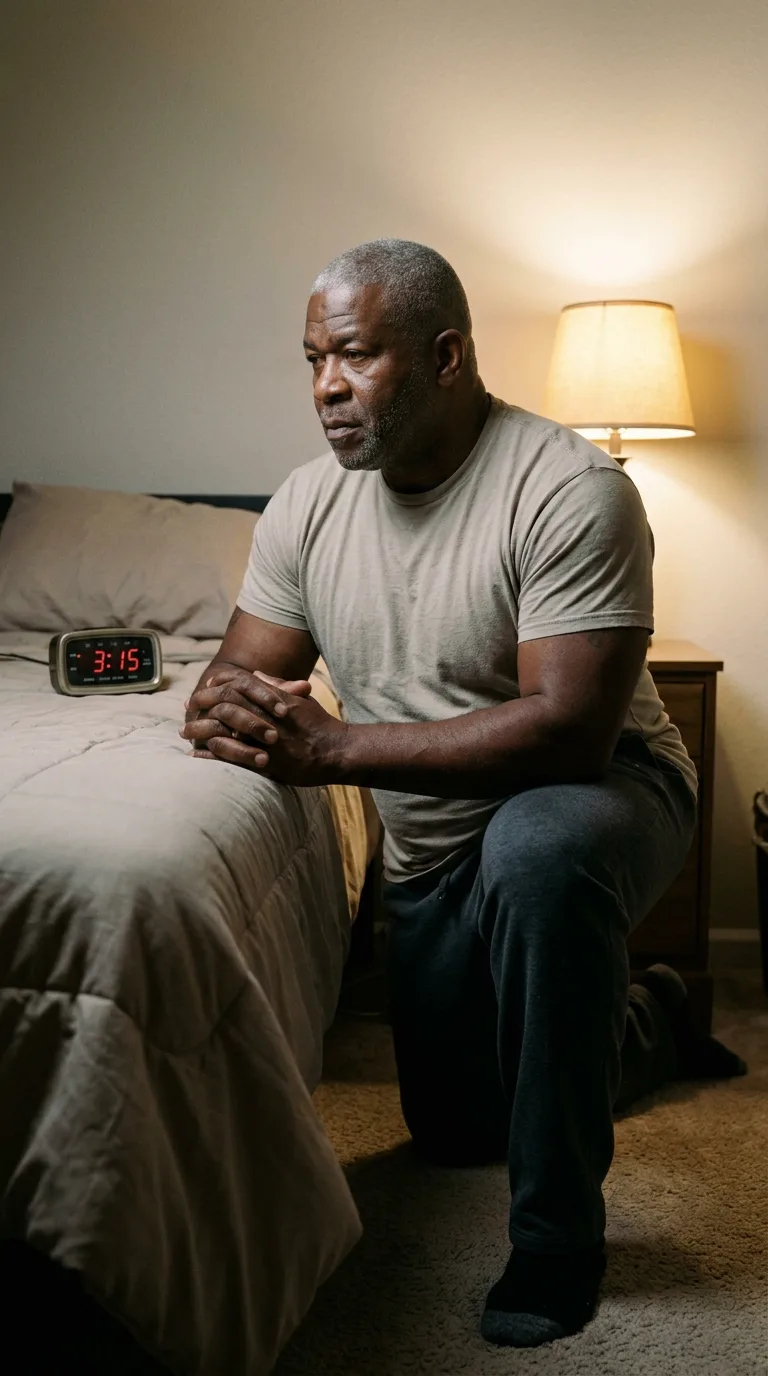
Rarest thing about him: Dating — rare, 1 in 20
Season 0seed 371496690 · engine v10
Character card
lineage 2NZHHJ
His body-swap story
@colin.hasbrook, wearing Saul Brenner, rolled the wheel on and woke up as Marcus Whitfield, spent under a minute in him, then spun the wheel and woke up as Héctor Salomón
The welding shop closed an hour ago and Saul Brenner's knees still ache from standing on concrete all day, and that is reason enough, some nights, except tonight it isn't the knees. It's the scar through his eyebrow itching the way it does when you've worn a face long enough to stop noticing it's not the one you started in. Four hundred and eighty-eight men and this is the one you're standing in, alone in his kitchen in Dorchester with the lights off, and there's nothing wrong with him, that's the trouble — he is fine, he is solvent enough, his hands still know the torch. But solvent enough is not the thing you spun for the first time or the fortieth, and boredom arrives the way weather does, without asking permission. You open the laptop. The wheel is already loaded from last time, spinning lazy behind a login you never bothered to log out of. You put in the card. You do not think about Saul, because Saul is not a thought you carry into the wheel, only the last thing you leave running like a stove.
You spin.
You are on your knees on a bedspread and your hands are laced together loosely at the fingers and there is a clock on the nightstand, red numbers, and your mouth is already moving, already most of the way through amen, and the half-laugh is yours before you have any idea what's funny. You start to rise. Your body — heavier than the last one, wider through the chest, a knee that pops going up — stops you halfway, some old momentum from a prayer that isn't finished, and you fold back down onto both knees like gravity remembered you. Forehead touches the bedspread. Cotton, warm from a reading lamp. The smile goes out of your face mid-breath and you are just kneeling there, a big man in a small undershirt, in a room three hours ahead of the one you left.
The bedspread against your forehead gives you the room first — beige walls, a lamp with a yellowed shade, the particular hush of a Brooklyn brownstone at an hour when the street outside has gone down to sodium light and cab noise. Then the shirt against your back, worn thin at the shoulder blades, and it opens like a door: this morning, or some morning close enough to it, pulling this same shirt over your head before the six a.m. shift, the smell of the funeral home already a phantom on you even before you leave the house — formaldehyde and lily and the particular cold of the prep room, a smell that gets into cotton and stays. Marcus Whitfield's hands did this, buttoned a stranger's collar for the last time yesterday, adjusted a tie on a man who would never again mind it being crooked. Thirty-one years of that. You feel the callus along the outside of his right thumb, worn smooth from cosmetic wax, and you feel, underneath the calm he wears into every viewing room, the particular fatigue of a man who has made his peace with other people's grief being his Tuesday.
The clock on the nightstand keeps opening things. 3:15 — his eyes were on it a second ago, out of habit more than need, because Marcus doesn't need alarms, he needs to be up before them. Nights he works late — a service ran long, or the family wanted one more hour with an open casket before he closed it for good — and this is one of those nights folded backward into morning, his body clock scrambled enough that eleven at night reads to him like the deep run of it, praying not because Sunday told him to but because his mother did, decades ago, and it stuck to him the way scent sticks to cotton, without much theology left in it. He believes in something. He couldn't tell you the shape of it. Kneeling here, hands together, is muscle memory more than faith, the amen coming early and half-laughed because some nights it just feels a little foolish, a grown man on his knees at his own bedside, and some nights it doesn't, and he never quite knows which one it'll be until he's down there.
A ring, thin and plain, on the third finger — not marriage, you understand from the warmth of it rather than the sight, a gift from a woman named Denise who calls him baby in a voice that still surprises him some nights with how much he wants to hear it. Two kids grown and gone, a daughter in Albany who calls on Sundays, a son who doesn't call enough and Marcus doesn't say so, just keeps the number where he can find it fast. Under his knee, through the carpet, some echo of standing all day at a lectern in a black suit, comforting people who have run out of things to say to each other, and the specific ache of his lower back from bending over caskets, and high blood pressure humming somewhere behind his sternum like a second, quieter heartbeat, the one his doctor keeps asking him about. There's a toothpick somewhere — not in his hand now, but his jaw wants one, some habitual clench where a toothpick usually rides, and you feel that want arrive in the muscle before you understand what it's for.
You look at your hands. Broad, dark, a small paleness across the right thumb pad where wax has worn the print thinner than the rest, the ring catching what little lamp light finds it. They are not the hands you had an hour ago in a cold Dorchester kitchen; they don't shake, they don't ache in the same places. You turn them over once, like you're checking they're still attached, and something in Marcus's own gesture library recognizes the motion as an old prayer habit and almost forgives you for it.
"Didn't mean to stop halfway," you say, to the empty room, in his voice, low and unhurried, the voice of a man used to speaking softly next to the dead. Somewhere behind that sentence, unspoken, is the other question, the one that rides with you into every body and never gets said out loud: how long this one, and when the wanting starts again.