Saul Brenner
Fictional. Generated by AI — not a real person, and no likeness of one is intended.
60, welder in Boston · rolled by @colin.hasbrook · card — no film
History
who has worn him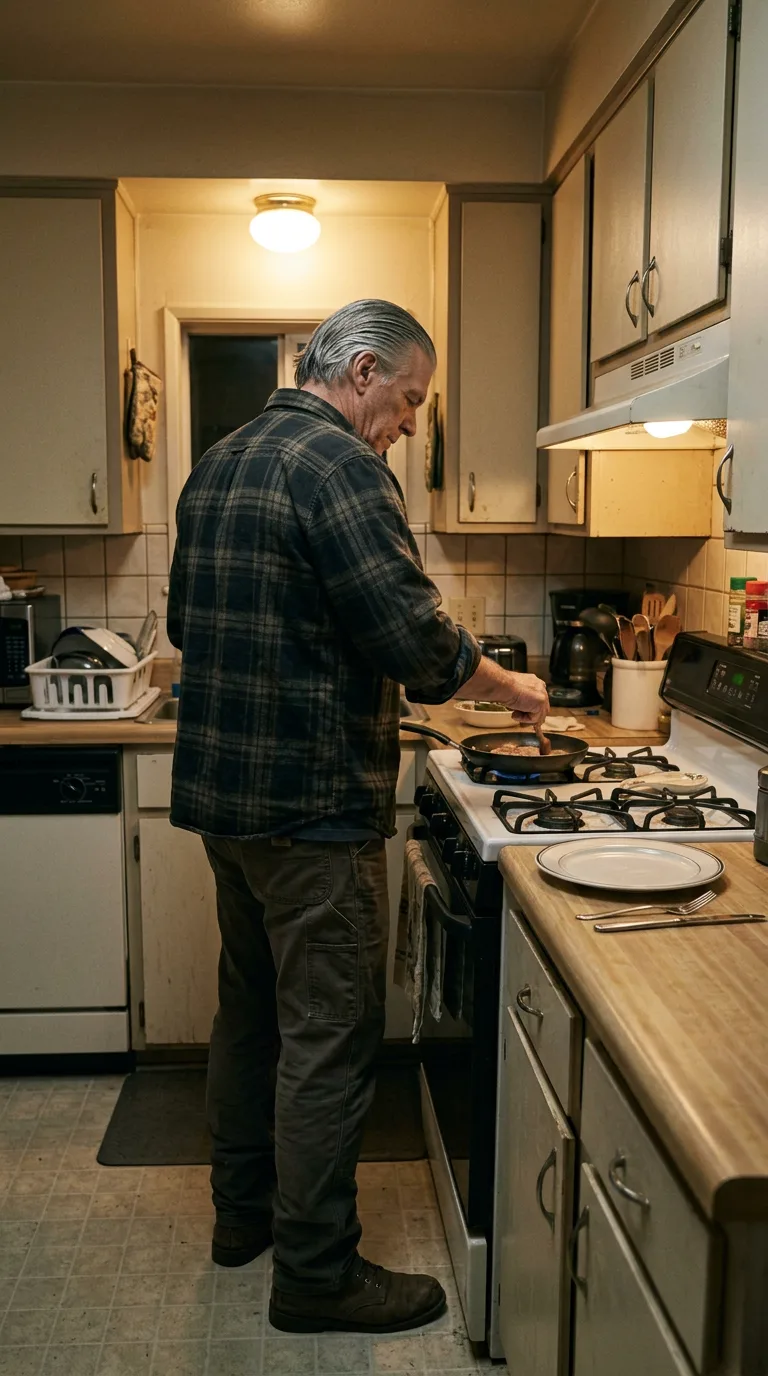
Rarest thing about him: Jewish — rare, 1 in 37
Season 0seed 2058731634 · engine v10
Character card
lineage 2NZHHJ
His body-swap story
@colin.hasbrook, wearing Marlon Etheridge, rolled the wheel on and woke up as Saul Brenner, spent under a minute in him, then spun the wheel and woke up as Marcus Whitfield
Marlon Etheridge's body stands in a locker room in Phoenix, and you have been him for forty seconds, and already it is not enough.
That is the thing nobody warns you about, spin after spin: the wanting doesn't care what it's holding. Forty seconds ago you were desperate for this exact frame — the height of him, the strength banked in the shoulders, a Friday night's fight-purse still buzzing somewhere behind the ribs — and now you are standing under a bad fluorescent light looking at a hand that isn't scarred yet, isn't tired yet, hasn't done anything yet, and the wanting has already turned its face toward the door. It is not boredom exactly. It is that a body handed to you complete, with nothing left to arrive, stops being a body and becomes a photograph you're standing inside. You do this four hundred and eighty-seven times and you learn the taste of that particular flatness. You know what cures it. Not staying. Spinning.
You take out your phone with his hand, the nails trimmed, a hand that has never drummed against a countertop waiting for a wife to finish a sentence, and you open vessel.cards, and you pay, and the wheel goes around under your thumb the way it always does, cheerful and indifferent, and it lands.
—
The spoon is already turning the other direction before you understand you are the one turning it.
You are shorter. That is the first fact, arriving before any other — the counter is lower, or you are, and the pan is closer to your face than it should be, and there is a smell of onion and browning meat that is not unpleasant and is not yours. Salt is in your left hand, the shaker cool and a little greasy at the seams. You tip it over the pan you don't remember lifting and you do not taste what you're salting, and some instinct that is not quite yours and not quite not-yours reaches sideways into a cabinet and brings down a second plate and sets it down next to the first one on the counter, click of stoneware on formica, and you have no idea why you did that, not yet.
Your back aches low and to the left, a dull filed-down ache that has clearly been there so long it has stopped being news. Your shoulders are heavier than you're used to, not with muscle, just with age, the kind of tired that lives in joints. There is gray hair falling against your forehead. There is a ring on your left hand, plain gold, warm from your own skin.
—
The shirt gives it up first, because the shirt is against your back and has been all day: flannel, soft from washing, a button missing near the third from the top that you — that Saul — never got around to fixing, and with it comes the morning, sleeve by sleeve, him standing in a bedroom with the shade half up and gray Boston light coming through it, working his left arm through the cuff first because the right shoulder doesn't like reaching up before it's warmed, a small practiced wince, forty years of that same wince, Ruth still asleep or pretending to be, one leg out from under the blanket. He buttoned it from the bottom because his fingers do better working up than down, some old trick they taught themselves. He did not know yet what he'd be salting tonight. He never knows in the morning. That's not how it works with him — the day tells you what it wants for dinner, not the other way around.
The apron. Not on him now but the ghost of it is in the shoulders, that leather weight, the two straps that have worn a permanent shine into the shirt collar underneath from thirty years of buckling and unbuckling, and with it comes the shop — the flying dying orange arc of a bead going down clean, the smell that isn't a smell so much as a taste at the back of the throat, metal and ozone and burnt flux, the particular satisfaction of a weld that comes out right the first time, no grinding, no redo, a thing that stays where you put it. He is good at this. He has been good at this since before some of the men he trains were born. The scar through his eyebrow came from a grinder kickback in 1987 and he tells it different every time somebody asks, funnier each year, less true each year, which is its own kind of honest.
The wedding band gives up more than the shirt does. Ruth, thirty-one years, an argument they had in a Chevy in 1994 that neither of them remembers the subject of anymore, only the silence after, which somehow became one of the better silences of the marriage, the kind two people build together without meaning to. Before her — sharper, quicker, still capable of stopping the spoon in his hand even now — Deborah, twenty-two years old both of them, a summer that ended badly and never quite finished ending, thirty-some years later and he still sometimes salts a pan and thinks of her hands instead of the pan.
Two kids, grown, far enough away that Fridays are usually just him and Ruth, except tonight Ruth is not — the second plate wasn't a mistake, you understand now, holding the salt shaker, feeling how his hand knew exactly where the cabinet was without his eyes checking — tonight Ruth is at her sister's and comes back late, and some old animal habit set two plates anyway because thirty-one years doesn't unlearn itself just because a chair will be empty a few hours. He does this a lot without noticing. He is noticing it right now, from a distance, the way you notice somebody else's tenderness.
The joints ache the way they've ached for a decade, low back and both knees, worse Fridays after a full week under the hood, worse in the cold, and there is the small ritual thought, not quite yours, not quite his either the way you're holding it, that there's a drink in it for him in twenty minutes, one drink, maybe a second, and a cigarette on the porch after, storm door propped with his boot, looking at a street he's looked at ten thousand times.
His hand wants to drum on the counter. It does, twice, without you telling it to — an old tic, filling a silence, and you feel how much of him is made of these small automatic mercies to himself.
—
You look down at the hand with the ring on it, and it turns over in the light above the stove, unfamiliar and exactly as tired as it should be, and for a second you are only interested in that — the give of the skin over the knuckle, the small tremor of the pinched nerve nobody's fixed — before you lift your eyes up into the dark window over the sink, where the glass is doing the job of a mirror against the night outside.
"Two plates," you say, out loud, to no one, in his voice, and you almost laugh, because you don't know yet if you'll still be standing in this kitchen when the second one gets used.