Héctor Salomón
Fictional. Generated by AI — not a real person, and no likeness of one is intended.
58, barber in Rural Texas · rolled by @colin.hasbrook · card — no film
History
who has worn him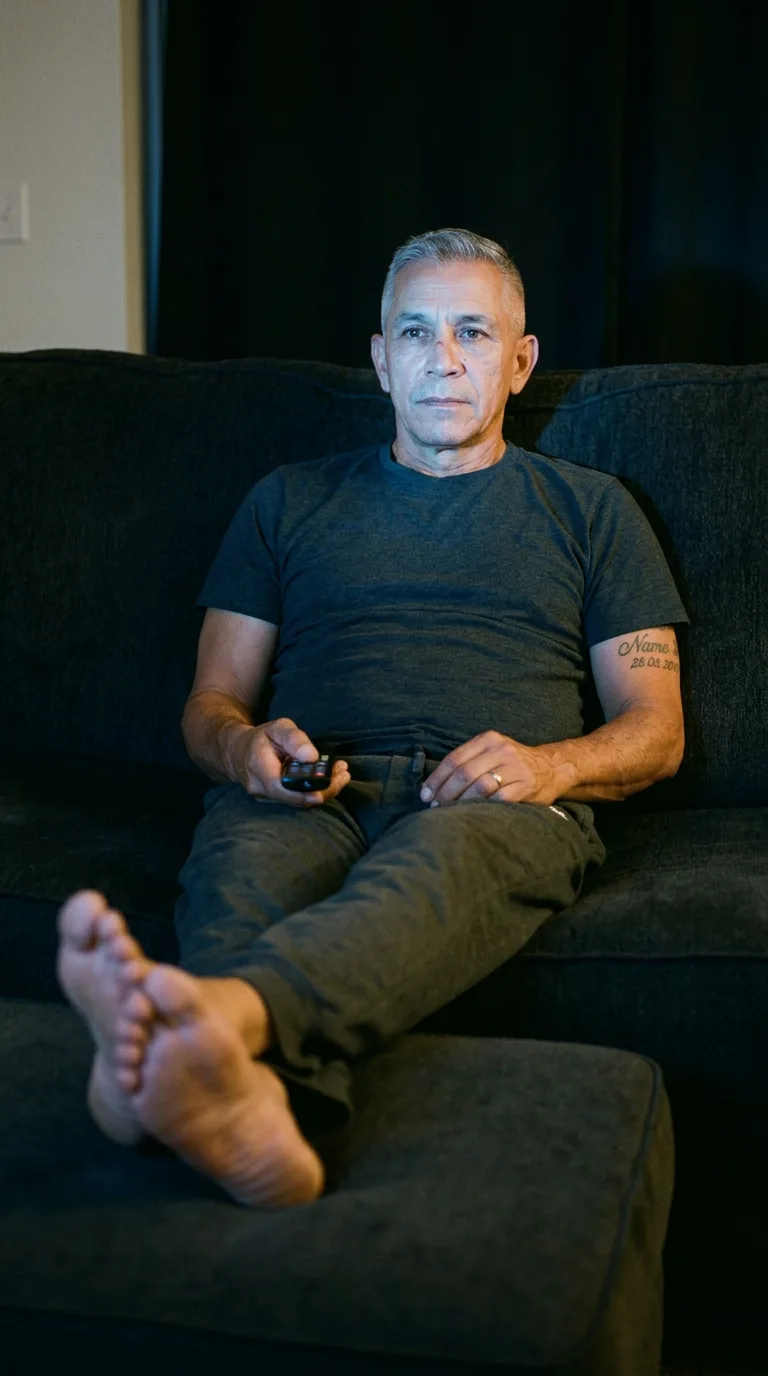
Rarest thing about him: Flips a lighter — rare, 1 in 52
Season 0seed 1222059638 · engine v10
Character card
lineage 2NZHHJ
His body-swap story
@colin.hasbrook, wearing Marcus Whitfield, rolled the wheel on and woke up as Héctor Salomón, spent under a minute in him, then spun the wheel and woke up as Dennis Yamashita
You are standing over a stainless table with a body on it that will not be up for viewing until Sunday, and your back does not hurt because Marcus Whitfield's back has never hurt a day in its life, and that is the whole problem.
Less than a minute in him and already you know the shape of the rest of it: forty more years, maybe, of good knees and a mortuary that smells like flowers laid over formaldehyde, of a wife you have not met yet who will love a man you are only pretending to be, of Fridays exactly like this one, alone in the prep room with the radio low and nobody to talk to but the dead. You did not spin four hundred and ninety times to arrive somewhere quiet. You spun to feel the drop, and this body, this life, sturdy and salaried and sad in a way that isn't even yours to be sad about — it hasn't dropped in thirty seconds. That's the tell. You've learned to listen for it. When the new one stops being new, you go back to the wheel, and Marcus Whitfield, six-foot-two of him, stopped being new the second you got here.
So you set down whatever tool his hand was holding, and you take out your phone, and vessel.cards loads the way it always loads, patient, gray, a wheel drawn thin as a clock face with no numbers on it. You pay again. The fee stops meaning anything around spin sixty. You spin.
The television cuts from a dim kitchen scene to a sudden bright frame — some sitcom laugh line landing too hard on the eyes — and in that half-second of white light you are sitting up straight on a couch that is not the one you were on, in a room gone the color of a bruise, and your feet are bare on an ottoman, and there is a remote in your hand you did not pick up, being set down now, carefully, on the couch arm, by fingers that know exactly where the arm of this couch is without looking.
The show goes on without you laughing at it.
You feel the couch before you feel anything else — a give in the cushions that has memorized this man's weight, a body that has sat here enough evenings to leave its outline in the foam. Your back — his back — announces itself low and dull along the belt line, an old ache that has nothing urgent to say, it has said it every day for years and you already know it will say it every day for years more. Your knees are loose. Your shoulders carry a tiredness that isn't sleep, it's just standing all day, cutting hair all day, the particular fatigue of a body that works with its hands and has for four decades.
The remote's plastic is warm where his palm was on it. That's the first door. A flash: this same couch, this same dark, a woman's laugh beside him that isn't on the television — Rosa, before she went to bed early, before the shows he liked started running past her bedtime — and something behind your ribs that isn't your feeling, it's his, missing her already though she's thirty feet away down a hall.
The shirt is against your back next — no, not this shirt, memory doesn't care about sequence — the shirt from this morning, dark with small dots, short-sleeved, buttoned by these same fingers standing in front of a dresser mirror in gray early light, and here it comes whole: he'd stood there with his bad shoulder complaining the way it does every morning until the second cup of coffee loosens it, and he'd looked at the tattoo on his arm before he covered half of it with the sleeve — *Sofía, 28.03.2011* — his daughter's name and the day she was born, inked on when he was fifty-one because Marisol had teased him for forty years about never getting one and he finally did, for the second kid, so the first wouldn't feel forgotten either, though there's no ink for her, and that's a small guilt he carries the way he carries the clippers, without thinking about it, just there. He'd slid the wedding band back on after washing his hands — he takes it off for haircuts sometimes, cheap gold catching in a comb, thirty-one years married in November — and clocked the crook of his own nose in the mirror, broken by a cousin's elbow at a quinceañera in 1988, set wrong on purpose almost, a joke between him and his reflection every morning since.
The shop comes back through the memory of standing all day — Héctor's Barber Shop, two chairs, hair on the linoleum in soft gray drifts he sweeps between every customer, the smell of Barbicide and Tres Flores, a bell over the door that a Anglo rancher named Dale rings at four every Friday for his flat-top, same joke every time about the price of beef. Thirty years in that chair. His father's shop before it was his. A framed photo by the register — the kids at their first communions, Sofía and her older brother — and the register itself, a squat old thing he still trusts more than the card reader bolted beside it.
Your hand twitches for something that isn't there and his memory answers it anyway: a lighter, steel, worn smooth at the hinge, that lives in his pocket though he doesn't smoke and never did — Marisol's father's lighter, an inheritance of habit more than tobacco, flipped open-shut open-shut whenever his hands have nothing else to hold, at the shop, in church, right here on this couch during commercials he doesn't remember. Your thumb finds the ridge of it in a pocket you didn't know you'd reached for.
You feel how tired he is underneath all of it — the good kind, the kind that comes from a full day at the chair and a little pain in the lower back that a hot shower didn't quite reach — and you feel how content he was four seconds ago, sunk into this couch, half-watching, waiting for Marisol to call out goodnight from the bedroom the way she does every night, a small ceremony neither of them would call one.
You look down at your hand. It is not the hand that set the remote down a moment ago, and it is not the hand that has held clippers eight hours a day for thirty years, and yet it is — the same brown, the same crooked knuckle on the ring finger where the band sits a little tight now, the same nose broken and mended wrong visible if you tipped your head to a mirror, none of it yours and all of it, for now, the only hand you have.
You turn it over once, feeling for the lighter that isn't in this hand but in a pocket, and you don't reach for it yet.
"Hey," you say, to the empty dark room, to nobody, "you still there?" — and you don't know if you mean her, down the hall, or him, gone.