Marcus Odell Whitaker
Fictional. Generated by AI — not a real person, and no likeness of one is intended.
27, factory foreman in New York · rolled by @klaus.dietermann · card — no film
History
who has worn him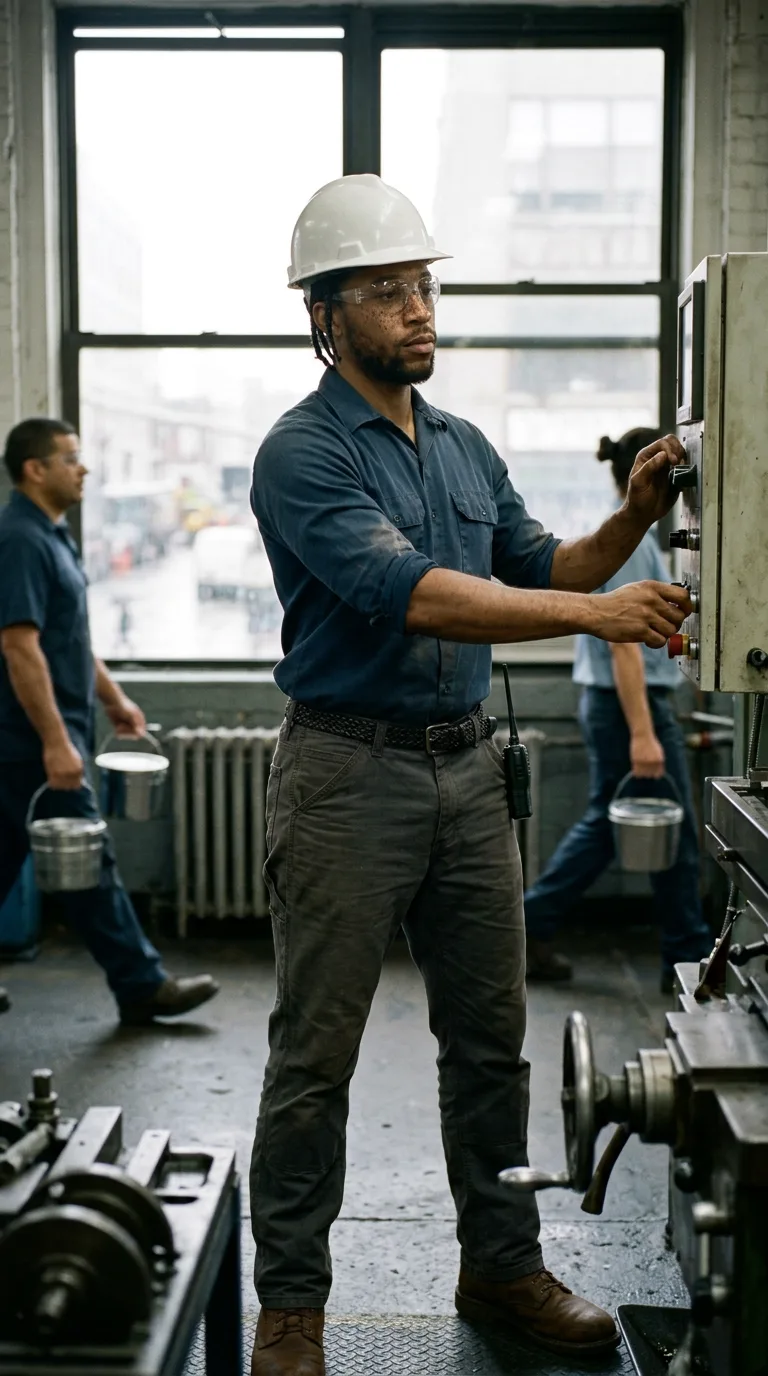
Rarest thing about him: Cornrows — uncommon, 1 in 285
Season 1seed 471545092 · engine v11
Character card
lineage KEPHG1
His body-swap story
@klaus.dietermann, wearing Desmond Halvorsen, rolled the wheel on and woke up as Marcus Odell Whitaker, spent 8 minutes in him, then spun the wheel and woke up as Darnell Osei
Three minutes ago you were nobody, and now you are a teacher named Desmond, standing at a classroom window in Mexico City with chalk dust on a stranger's fingers, and it is already boring you. The body is good — broad through the shoulders, a beauty mark you keep noticing in reflections, a goatee you can feel when you rub your jaw — but three minutes told you everything it has to tell. The lesson plan on the desk is someone else's handwriting. The coffee going cold is someone else's brand. You did not spin twenty-six times to sit still in borrowed patience, waiting for a bell. There is a hunger under this that has nothing to do with Desmond Halvorsen at all, and it wants a new weather, a new pair of hands, a new man's whole life poured into you at once like something you get to drink. You open the site on your phone with Desmond's own fingers. The wheel is already spinning before you've decided anything.
The floor is under your feet before you've finished falling into it — concrete, faint vibration through the soles of work boots, the whole building humming with machines that never stopped for you. Your hand is on a control panel, two fingers on a dial that was already turning a half-second before you arrived, and for that half-second the motion is wrong, sloppy, a stranger's guess at a job. Then it corrects. Slows. Does it again, careful, like checking your own work for the first time in years. Around you the line keeps running. Nobody has noticed yet that the man standing here changed his mind about how to turn a dial.
The shirt is what opens first — worn cotton against your back, sleeves rolled to the forearm, and it comes with the smell of machine oil and someone else's sweat and, underneath that, a Sunday morning: an iron on a board, a woman's voice from the next room telling him he's going to be late for second service, him grinning back that the Lord forgives a man his tardiness if the man brings doughnuts. That's Renée. Girlfriend, eleven months, laughs with her whole chest, sends him a verse most mornings before either of them is properly awake. The shirt remembers her hands smoothing the collar down before he left, more habit than need, and the small ordinary happiness of being fussed over by somebody who wanted to.
The belt, worn soft at the hole he actually uses — that one gives you the floor itself, seven years of it, the day they made him foreman and his father drove up from Newark just to stand at the gate and watch him walk in wearing the white hat instead of the blue one. Pride sat on the old man's face like it belonged there. Marcus had cried in the bathroom afterward, quick and ashamed and glad nobody saw.
The radio clipped at your hip crackles once, static only, and it drags up a night eight months back — a line jam at 2 a.m., him talking a nineteen-year-old temp through freeing a jammed feed without losing a finger, calm the whole time though his heart was going, because somebody had to be calm and that was the job description nobody wrote down. He'd bought that kid a coffee after. Never mentioned it again.
Your boots — steel-toed, cracked at the crease, older than the belt — carry the ghost of a different woman's voice. Tanya. The ex. Two years, engagement talked about but never bought, ended in spring over something that started small and became everything, the way those things do — her wanting Sundays for her family, him wanting Sundays for God and the overtime both. He still has a photo of her on a drive somewhere he hasn't opened. The boots remember standing outside her building at midnight not going up. He never told anyone that either.
The hard hat, tipped back on cornrows redone two weeks ago by a cousin in Bed-Stuy who talks too much and charges too little — that gives you the mirror this morning, him checking the freckles across his nose like he does every day without deciding to, an old joke from childhood about looking like he'd been sprayed with cinnamon, his mother's line, said with love enough that he never minded it. He'd pulled this shirt off the hook, these pants from the dryer still warm, laced these boots sitting on the edge of the bed while Renée slept in, and walked out into a wet Brooklyn street under sodium light that was just starting to go gray with morning. A vape pen in his jacket pocket, three pulls taken on the stoop before the walk to the subway. A body twenty-seven years strong, a shoulder that aches faintly from a lifting mistake two summers back and otherwise nothing but muscle that knows this floor cold — knows exactly how far to reach, how hard to turn, how to read a line's whole mood by sound alone.
You look down at your hands. Calloused, sure along the palm, a nick healed pale near the thumb from a year he can't quite place. You turn them over once under the factory light, and the machines keep running behind you, patient, indifferent, the way they've always been.
"Alright," you say, to no one, in his voice, testing the weight of it in your mouth. "Let's run it again."
Nobody around you thinks anything of a foreman talking to himself. The line does not stop. The wheel, wherever it is, does not care how long you stay.