Darnell Osei
Fictional. Generated by AI — not a real person, and no likeness of one is intended.
37, operations manager in Philadelphia · rolled by @klaus.dietermann · card — no film
History
who has worn him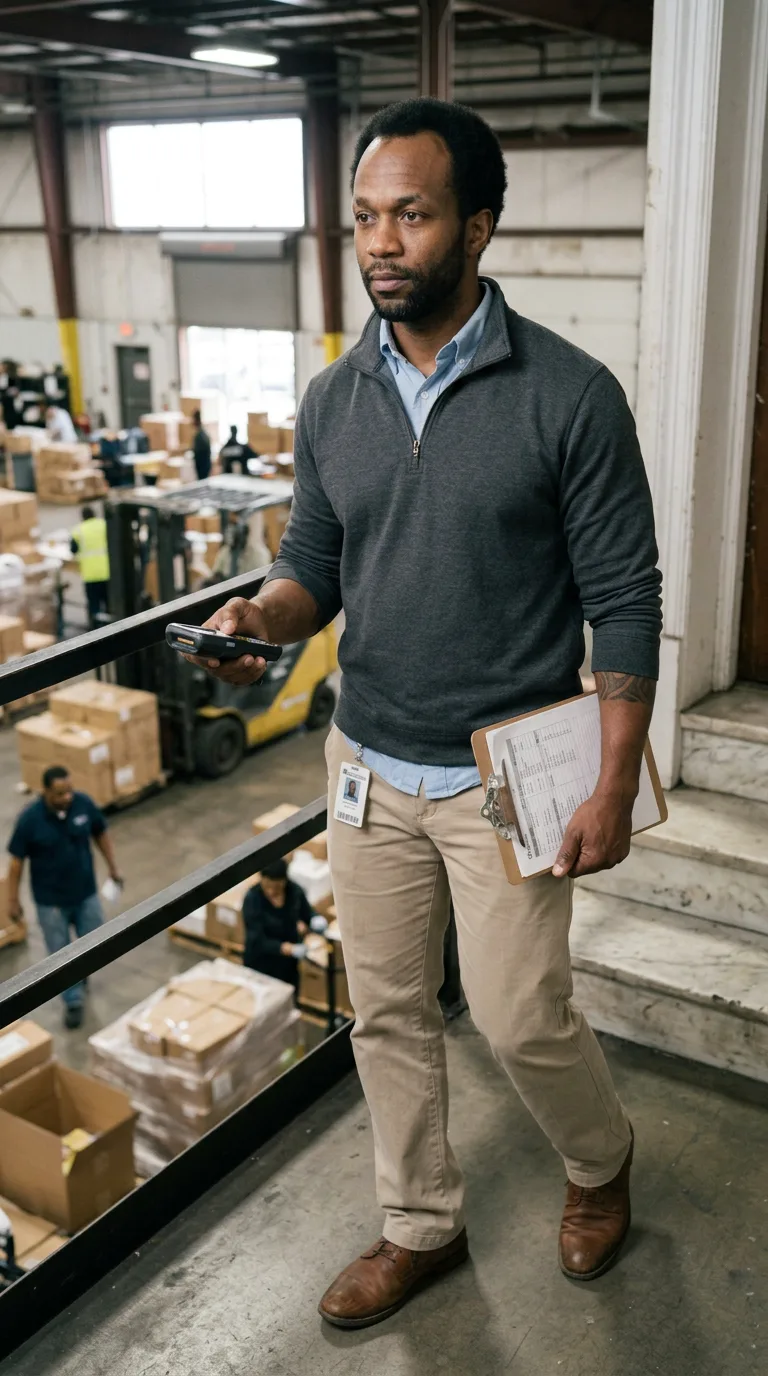
Rarest thing about him: Cigars only — common, 1 in 30
Season 1seed 2088378152 · engine v11
Character card
lineage KEPHG1
His body-swap story
@klaus.dietermann, wearing Marcus Odell Whitaker, rolled the wheel on and woke up as Darnell Osei, spent 1 minute in him, then spun the wheel and woke up as Gerald Antonucci
---
Seven minutes is not enough time to know a man is wrong for you, but it's enough. Marcus Odell Whitaker's hands still smell like the machine floor, and his shift doesn't start for four more hours, and he is standing in his own kitchen in the middle of a Monday with nothing to do and a phone in his pocket that keeps buzzing with a name you don't recognize and don't want to. The freckles across his nose look like someone else's idea of a face. You did not choose this body so much as land in it, and landing in it has told you everything: foreman, day off, a woman texting him things a wife shouldn't have to find out about, and seven minutes of standing in his echoing apartment feeling like a guest who's overstayed already. You want out of him the way you want out of a waiting room. So you open the site again, the wheel already spinning in your head before your thumb touches it.
The wheel turns and it does not ask you why, which is its whole mercy.
The floor tilts up at you — a mezzanine railing under one palm, cool black pipe, and below it a warehouse breathing in forklifts and shrink-wrap and men shouting numbers at each other in a rhythm that isn't yours yet but is about to be. There's a scanner in your right hand, a clipboard wedged against your ribs with your left arm, and your body — his body — is mid-reach, thumb already coming down on a trigger for a barcode that isn't there anymore, because the pallet moved on without you half a second ago. Your hand corrects. Presses air. Corrects again, slower, deliberate, like a man double-checking a math problem he's done ten thousand times and has suddenly, inexplicably, stopped trusting.
The scanner beeps. Right pallet this time. You do it again. And again — ten more, each one checked, each one you watch your own thumb do like it belongs to a stranger, because for half a second it did.
Then it comes, not as a name but as weight: the specific ache low in the lower back that means a decade of stairs and concrete floors, a body thirty-seven years old and still calling itself strong because it has to. The clipboard against your ribs smells like pencil shavings and cardboard dust, and that smell alone opens a door — Monday mornings for six years, this exact walkway, the particular way the light comes through the bay doors at this hour and lands gold on box towers before noon burns it white. You know, without deciding to know it, that the shift started at six and there's a lunch rush of trucks due at eleven and a kid named Desmond on forklift four who clips corners too tight.
The scanner's grip is worn smooth in one spot from your own thumb, over years, and that wear tells you something about patience — how you talk low and even to men twice your size when a shipment's short, how you learned that from watching your own father lose jobs by yelling. The clipboard's pen is chewed at the cap. Your jaw is tight, has been tight the whole seven minutes you've been standing here without noticing, the muscle in it flexed like a fist you keep meaning to open.
The shirt against your back — pale blue, tucked, ironed by nobody but yourself at 5:10 this morning in a bathroom with the fan broken and loud — gives you the rest of it in the order clothes always give things: cuff first. Rolling the left sleeve down over the tattoo you got at twenty-three, black tribal bands that meant something once about your grandfather and now mostly mean you don't have to explain it to anyone at church. The wedding band next, sliding it on after, the way you do every morning like a small vow renewed on schedule — Danielle's face across the pillow this morning, already awake, already annoyed about something small, the two of you married eleven years and three kids deep and a fourth maybe coming, though you haven't said that out loud to anyone, not even her fully, not the way it needs saying. Belt. Watch. The clip-on badge that catches the light funny, your photo on it younger and thinner and without the M creeping back on both sides of your hairline.
And underneath that, quieter, a thing the shirt doesn't want to give but gives anyway: a name that isn't Danielle's, texted twice last week, deleted twice, a woman from three summers back who still calls sometimes just to hear you not hang up right away. You feel the guilt of it arrive with the same weight as the lower back ache — old, chronic, managed rather than healed. You go to Mass most Sundays. You have not told a priest about her. You clench your jaw about it now, standing on the mezzanine, the muscle jumping under the beard without your permission, same as it's jumped a thousand mornings in the shower not thinking about her and thinking about nothing else.
The scar through your eyebrow itches faintly — old, from a bar fight at twenty-one nobody brings up anymore, not even you. A cigar this evening if the shift goes clean. A last drink before bed most nights that's stopped being one drink some years back and you haven't said that out loud either.
Below, the floor keeps moving, boxes and men and the forklift's yellow flank swinging wide again, Desmond, always Desmond, and somewhere in the stack of everything you now know is a Tuesday parent-teacher conference and a daughter's asthma inhaler you need to remember and a son who wants to play travel ball you can't quite afford yet but will find a way.
You look down at your hand on the railing — his hand, wide-knuckled, a little scarred at the first finger from a box cutter years back, the ring catching gray light.
You turn it over once, slow, like checking it for damage.
Then you lift your eyes to whatever's watching, and you say, low, almost to yourself:
"Man, I don't even know why I checked that twice."