Gerald Antonucci
Fictional. Generated by AI — not a real person, and no likeness of one is intended.
60, retired in Pittsburgh · rolled by @klaus.dietermann · card — no film
History
who has worn him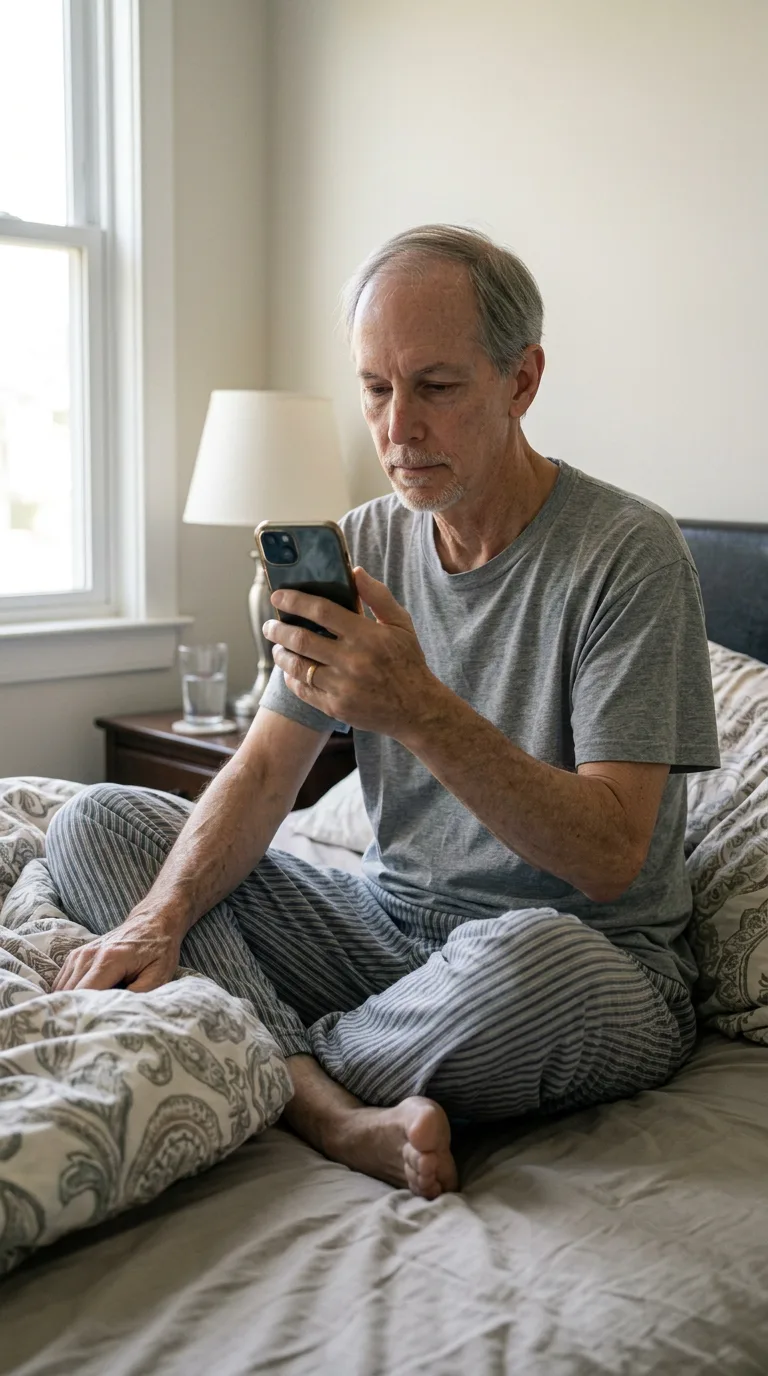
Rarest thing about him: Chinstrap — uncommon, 1 in 93
Season 1seed 1335480923 · engine v11
Character card
lineage KEPHG1
His body-swap story
@klaus.dietermann, wearing Darnell Osei, rolled the wheel on and woke up as Gerald Antonucci, spent 2 minutes in him, then spun the wheel and woke up as Brett Halloran
The office chair is Darnell's, and it is a good chair, ergonomic mesh, the kind you buy when you finally stop letting your back tell you what to do. You have been in him less than a minute and already the phone call is over, the one where the VP thanked him for handling the Chen account escalation, and the whole time he was talking you were thinking about how good this body is at its job, how easy the words come, how the hand you're using drums the desk without being told to. Twenty-seven other men behind you and none of them had this — the clean apartment, the six-figure comfort, the scar through the eyebrow like a story someone else gets to ask about. It should be enough. It was enough, for the length of a phone call.
But there's a thing that happens around minute forty in any of them, a kind of itch under the new skin, and today it happens fast: you catch yourself in the black screen of the monitor, Darnell's face looking back competent and rested, and you think, *I already know how this one goes.* You have had confident men before. You have had men who are good on the phone. What you have not had in twenty-seven spins is stillness — someone with nothing left to prove, sitting on a porch that isn't going anywhere, holding a coffee that isn't going anywhere either. Boredom, if you want the honest word for it, dressed up as curiosity. You open the site on Darnell's second monitor, the wheel already spinning in your head before it spins on the screen, and Darnell's hand — your hand, for four more seconds — clicks the button that will make him a stranger to himself forever.
—
The window light is the wrong angle for the hour you're used to, low and slanted like afternoon when your body just told you it was morning, and that's the first thing that arrives even before the room does: a mismatch, a held breath. You are cross-legged on a made bed that isn't made anymore, a phone warm in your palm, a wife's pillow — you don't know that yet, only that it smells like someone else's laundry — against your hip. Thumb still moving. Somebody else's name lit up across three text threads, a fantasy football group chat, a woman named Carol asking *did you get my last message*, and you are already three lines deep into answering as if you were him, because the hand does not know yet that it isn't.
Then the shirt gets you.
Gray cotton, soft from two hundred washes, and touching it is like putting your hand flat on a tape deck — Gerald Antonucci, sixty years old, pulling this exact shirt over his head forty minutes ago in a bedroom two floors above a kitchen where his wife Donna was already running the tap. He'd stood at the dresser a second too long, the mirror unkind about the hairline the way it always is now, low part, scalp showing through where the comb-over lies flat and honest about what it's covering. He didn't mind it the way he used to. There's a version of him at forty that minded everything; this one doesn't, mostly, except at 2 a.m. some nights when Donna's asleep and he's not, and he thinks about Renee — thirty years gone, married someone else, had three kids he's never met — and wonders, not for long, what that Tuesday would have looked like instead of this one.
The jeans know something too, dark denim gone soft at the knee, and through them comes the whole geometry of a body that used to run and now walks, mostly on the stairs behind the house, the public ones that cut down through the yards to the street below, wet leaves plastered flat on the concrete this time of year, railing cold under his palm. Retired eighteen months from an engineering firm downtown, a good pension, a portfolio Donna's brother-in-law manages, more money than either of them ever talk about because talking about it feels like bragging in church. Catholic, the two of them, ushers some Sundays, a toothpick worked between his back teeth right now out of a habit thirty years old — you feel your jaw already doing it, chewing nothing, an old man's tell nobody in the house has ever once mentioned.
The ring is the last thing, plain gold on the left hand still holding the phone, and it opens the widest room of all: thirty-one years, a wedding in a hall that doesn't exist anymore, Donna in her sister's dress because the budget didn't stretch, and a marriage that settled the way good concrete does — not exciting, load-bearing. No kids, a decision made early and never fully explained to either family, a grief they let go quiet a long time ago. And under all of it, this morning specifically: his nephew's kid, nineteen, dropping off an old phone last week, *try this app, Uncle Gerry, it's actually good*, not mentioning he'd forgotten to wipe it first. Gerald had been scrolling a stranger's notifications for ten minutes now thinking, mildly, *I should tell him about this*, charmed rather than alarmed, the way he is charmed by most small malfunctions of the world.
You look down. The hand on the phone is spotted at the knuckle, veins raised, a stranger's thumbprint still on the glass under yours. It is not Darnell's hand. It is thinner, older, and it aches faintly in the first two fingers the way hands do after sixty years of being hands.
You lift your eyes off it, into whatever's watching, and the toothpick habit finds your tongue before words do.
"Whoever's phone this was," you say, "I hope he doesn't need it back."