Marcus Guilbeau
Fictional. Generated by AI — not a real person, and no likeness of one is intended.
32, waiter in New Orleans · rolled by @colton.weyburn · card — no film
History
who has worn him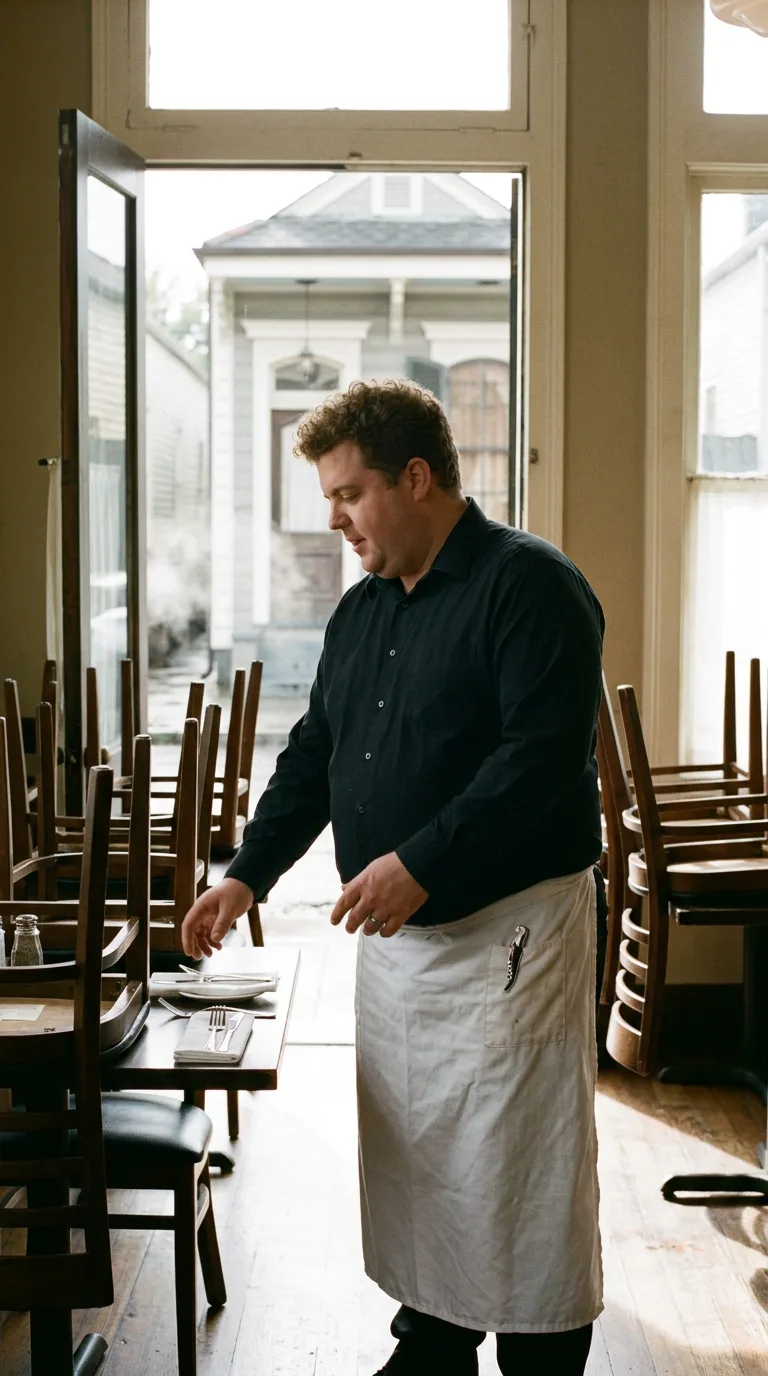
Rarest thing about him: Buddhist — rare, 1 in 55
Season 0seed 1175570689 · engine v10
Character card
lineage GSHCK1
His body-swap story
@colton.weyburn, wearing Tyler Bracey, rolled the wheel on and woke up as Marcus Guilbeau, spent 2 minutes in him, then spun the wheel and woke up as Kevin Dombrowski
You are Tyler Bracey, and Tyler Bracey's gym smells like bleach and old canvas, and it is nearly dark outside the propped door, the heat finally letting go of the parking lot. You've had this body two minutes. You spun it up out of a dead stop, a boxing trainer's rangy shoulders, green eyes that aren't yours, hands wrapping tape around a heavy bag post out of some habit that isn't yours either — and it should be enough, it should hold you a while, except that seven minutes ago you were Vikram Saini, standing in a walk-in cooler in Ohio with a boning knife and somebody else's asthma, and the man who owns that cooler had just walked in on you wearing his butcher. He didn't know it was you. He never will. But you know his voice, you know the exact flat annoyance in it — *you're standing in the wrong spot, Vik, move* — and something about being told to move, in a body that wasn't even yours to be told about, is sitting in you like a coal. You did not choose to be small in front of him twice. You are choosing it now, on purpose, so it will not have been an accident. That is the whole reason, and it is not a reason you'd say out loud even here, where there's nobody to hear it. You set down the tape. Tyler's hands, not yours, twitch once. You go.
The wheel turns and there is no floor under you and then there is: warped wood, damp through the sole of a boot, a rag in a hand not shaped like Tyler's fingers at all — thick through the palm, a wedding band biting where it's always bitten. You are standing at the fourth table from the door with your arm out, and the motion your arm was making — flip a chair down off a table, set it square — comes out wrong, catches the chair leg on the table edge with a little bark of wood on wood, and you freeze mid-reach the way a man freezes when his own body surprises him. Then you do it again, slower, and it's right. You do the next chair the same over-careful way, and the next, ten in a row, each one checked like a task you've never done before, though something underneath you has done it ten thousand times and knows it does not need checking.
The rag is what opens him first. Cotton gone soft-thin at the fold, a coffee ring long since bleached out of it, and it comes with a whole shift attached — the particular ache low in the heavy back from bending over these same tables since before the lunch cover, the wet-wool smell of the room in this weather, steam still ghosting up off the brick outside the propped-open door because it rained an hour ago and New Orleans doesn't dry so much as sweat it back out. Late. Later than a lunch shift has any business running. And under that, half a beat behind, the asthma — this chest is heavier and shallower than Tyler's, the air going in with a small, permanent effort you'd stopped noticing were you him, and aren't now, either, quite yet.
The apron string against your gut gives you the morning: tying it twice because the first knot slipped under this belly, laughing about it a little, alone in the kitchen, because there's nobody left to laugh with about it who'd find it funny anymore. The corkscrew in the apron pocket, thumb finding its shape without being told, gives you years of it — hundreds of bottles, a whole trade learned by his hands and not by him thinking. The wedding band gives you her, briefly and hard: a kitchen table, her voice not unkind, just done, a decision that had already been made somewhere he wasn't invited to it, and under that, stubborn and embarrassing, someone else — a woman who isn't the wife, whose name comes with the smell of her apartment and a version of himself he liked better, and the specific shame of missing her on a Tuesday for no reason at all. The shirt across his back, buttoned this morning one-handed in a doorway with the light coming up wet and grey, gives you the whole unremarkable fact of him: no savings to speak of, no children, a temple he goes to some Sundays and not others, two big nights a month and otherwise nothing, knuckles that crack themselves without his permission fifty times a shift. A man built heavy and easy in it, strong across the back from carrying trays for years, tired now in the specific way of a shift that has run past when it should have ended, on a night his own clock says is later than the light in this doorway wants to admit.
You set the tenth chair down correctly. Your hands — his hands, thick-fingered, the band catching the last grey light off the wet street — come up in front of your face on their own, turning over once, like you're checking they're still attached.
You look up into the empty dining room, past the upended chairs, out through the propped door at the steam still rising off somebody else's stoop across the street, and you say, to no one, in his voice and not the voice you came in with:
"Move where, Vik?"
Then you laugh, once, short, at a joke nobody in this room could ever be told.