Marcus Deveraux
Fictional. Generated by AI — not a real person, and no likeness of one is intended.
43, delivery driver in Boston · rolled by @colin.hasbrook · card — no film
History
who has worn him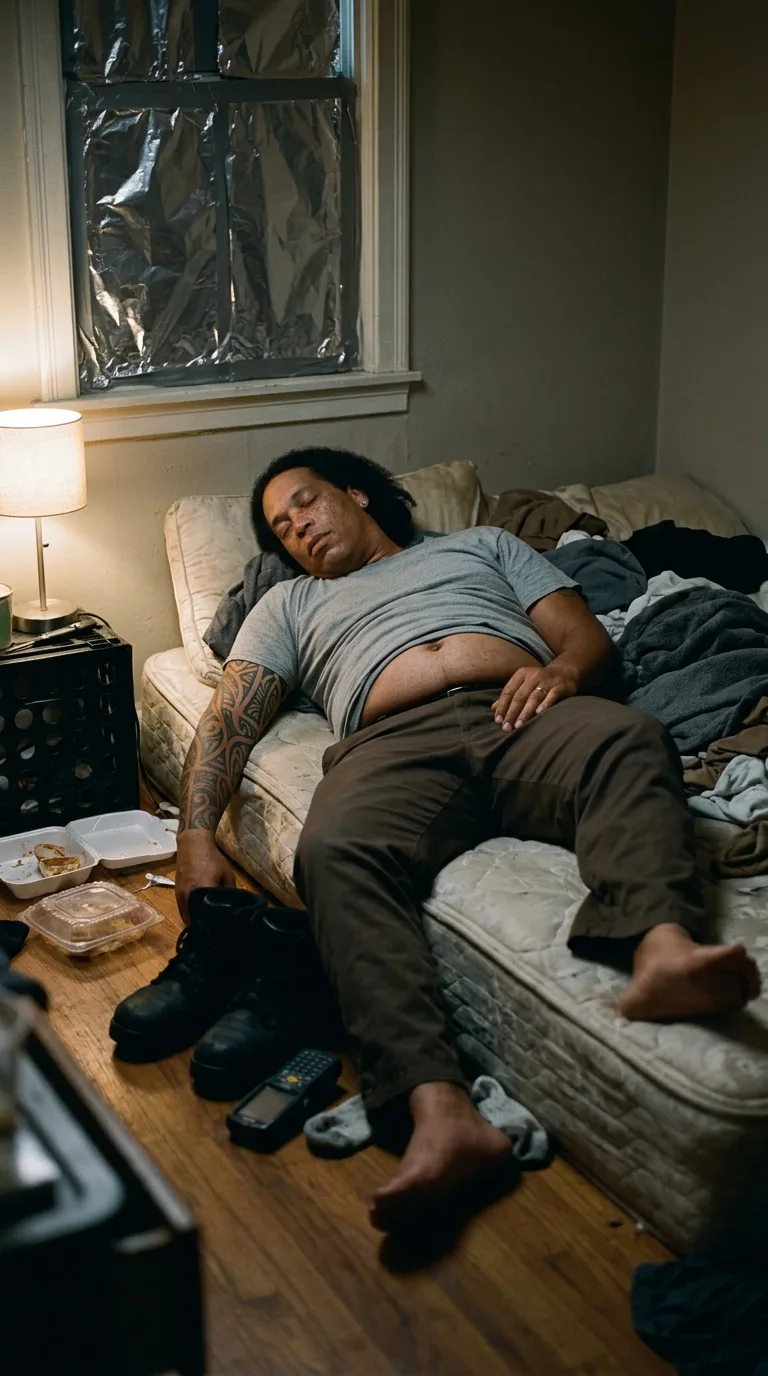
Rarest thing about him: Blue — legendary, 1 in 167
Season 0seed 13222780 · engine v10
Character card
lineage 2NZHHJ
His body-swap story
@colin.hasbrook, wearing David Yoon, rolled the wheel on and woke up as Marcus Deveraux, spent under a minute in him, then spun the wheel and woke up as Desmond Okafor
You are standing at the front of a classroom that has emptied itself of children for the weekend, and you are still, underneath the borrowed skin, the one who came back to the site. David Yoon's hand — smooth, younger than any hand you've had in a while — rests on a stack of ungraded essays, and that is the thing that decides it. Thirty-one of them. Rubric on the left, comments on the right, the same five sentences about topic sentences you have written eleven times already. You have been him less than a minute and you already know the rest of the weekend by heart, the whole shape of it, and that is the problem with a good body: it comes with a life attached, and the life has homework in it. You did not spin the wheel to grade essays. You get up, sit at his kitchen table because it feels like the place a decision should happen, and you open the site on his phone, the wheel already spun bright in your memory from the last 318 times, and you go again before you can talk yourself into being a reasonable man for one more Sunday.
The light comes first — a hard white bar laid across your face through a gap in foil that should not exist and does — and you turn from it out of some sleeping instinct that is not yours yet, and then turn back into it, and open eyes that are not the eyes you had a half-second ago into a glare that does not blink. Weight arrives all at once and wrong: shorter, heavier through the middle, a body that has been lying down in the middle of the day with its boots already off and its trousers still on, like it fell rather than lay down. Somewhere under you a couch gives with the particular sag of years. There is take-out foam by your foot. Your right arm from shoulder to wrist is dense with old ink you can feel more than see, a weight of pattern along the skin. Everything smells like foil-dark room and cold noodles and the particular mustiness of a triple-decker that has never quite gotten its windows to seal.
The shirt is what opens first — grey cotton, worn soft, riding up over a belly that did not used to be there and that some part of you, arriving, already loves without deciding to — and through it comes a morning: not this morning, an old one, four a.m., him buttoning a brown work shirt in the dark so he wouldn't wake her, the DELIVERY CO. patch cold under his thumb before his body warmed it, the little private ritual of tucking it in one-handed while the other hand held his phone light so he wouldn't wake the baby down the hall. Not a baby anymore. Eight now. He'd checked on her on his way out, every single night shift, stood in her doorway two full seconds longer than made any sense, just to hear her breathe.
The wedding band is next, plain gold, worn smooth — Toni, seven years married, and a whole marriage comes up through that one small pressure of metal on skin: her laugh at something stupid on the porch, the storm door he keeps meaning to fix and keeps not fixing, an argument eleven months ago about money that dissolved into nothing because there was, it turned out, plenty of money, more than either of them had grown up believing existed, a windfall neither of them talks about at church because it feels like something you're supposed to be humble about. He tithes anyway. Doesn't brag. Drives the truck because the truck is who he is, not what he's worth.
The tattoo sleeve, when your attention lands there, gives up something rowdier — twenty-six years old, a shop in Dorchester, three sessions over two summers, the specific clean pain of a needle on the inner forearm that he'd sworn to his mother he'd never get and got anyway, grinning through it. Small studs in both ears from the same era, same reckless year. He quit smoking the year Toni got pregnant, cold, out of a fear he never told anyone the real size of. He drinks now only twice a month, big and loud with old friends, because the ADHD diagnosis at thirty-eight explained finally why quiet nights alone in his own head had always felt like standing in traffic.
The boots on the floor, out of reach but remembered anyway through the ache still riding his heels, give the night shift itself: pallets, a scanner gun that beat a rhythm into his palm for nine hours, a route memorized so completely his body drove it without him. Sleeping through daylight behind taped foil is not laziness, it's architecture — the only way a man on that clock gets dark enough to rest. His hand, unbidden, finds his own mouth, and you feel the old worn-down nails before you feel anything else, a habit forty-three years deep, gnawed to nothing since he was a kid nervous in a pew waiting to be called on.
You sit up on the ruined couch, boxed take-out crushed somewhere under a heel, and you look down at the hand that just left your mouth — broader than the last one, ink climbing one arm, a ring catching the foil-light like it's trying to say something.
You turn it over once, slow, feeling the whole unfamiliar weight of him settle into your wrist.
"Toni," you say, to no one in the empty room, testing the name in his voice, "I overslept."