Marcus Deshields
Fictional. Generated by AI — not a real person, and no likeness of one is intended.
35, soldier in Small-town Ohio · rolled by @colby.marsh · card — no film
History
who has worn him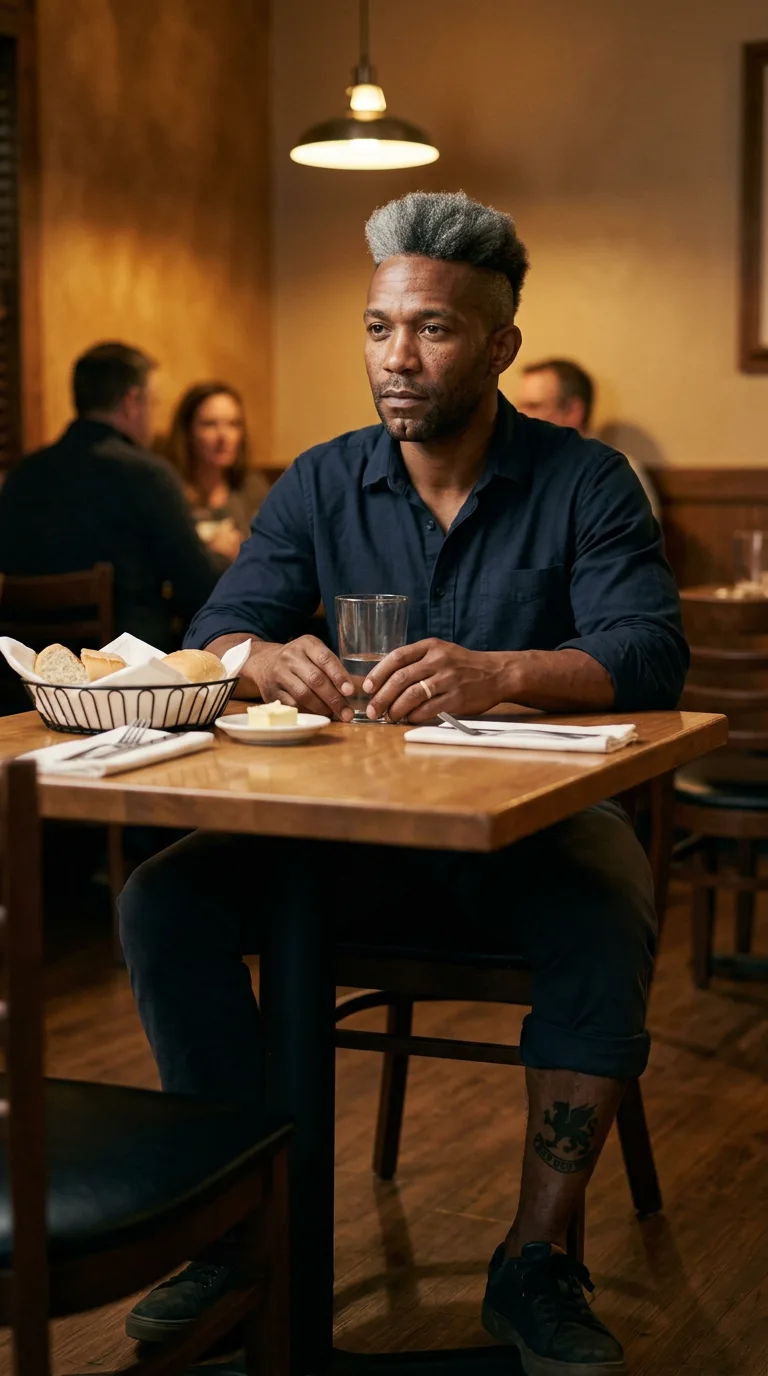
Rarest thing about him: An undercut — rare, 1 in 75
Season 0seed 1410456294 · engine v10
Character card
lineage PYNCV3
His body-swap story
@colby.marsh (admin), wearing Jesús Morales, rolled the wheel on and woke up as Marcus Deshields, spent 1 minute in him, then spun the wheel and woke up as Nestor Vandenberg
Jesús Morales's knees ache before his boots even touch the rig floor, and it is that ache, more than anything, that decides it. Fifty-nine years old, skinny-fat, a body that carries its weight low and wrong, and the desert cold gets into the joints out here in a way that Latino skin apparently does nothing to stop. You have been him less than a minute — you can still feel the last spin's vertigo behind your eyes — and already the wanting is back, ugly and immediate, because being Jesús for even sixty seconds has reminded you that Jesús is a man thirty-four years into a body that hurts, on a rig in Nevada at an hour when the sky hasn't decided what color it wants to be, with a wife's voicemail still unheard on a phone in a pocket that isn't yours to check. You did not come back to be him longer. You came back because the site was still open on a screen somewhere in a life you no longer have, and because thirty-six men were not enough, and because there is a particular kind of morning — his kind, cold, early, aching — that makes the wheel look like mercy instead of appetite. You spin. You do not wait to see where Jesús goes. You are already leaving.
The water glass is turning under your fingers before you understand you have fingers again, younger ones, and the light in this room is amber and low and smells like fryer oil and cut bread. You are mid-sentence. You can feel the shape of the words even though you did not choose them — *I'm sorry, I didn't mean* — and then the sentence simply completes itself in a voice that is not thin and reedy like Jesús's but low and even, carrying two tables over, and a woman across from you flinches slightly at the volume of an apology that didn't need to be that loud. The glass stops turning. Your hand is flat against the condensation ring it left on the wood.
The shirt is what opens first — navy, buttoned, sleeves he rolled himself standing in front of a mirror that morning, and the memory comes in through the fabric against your back like heat off a stove: him buttoning it slow, second-guessing it, unbuttoning the top button because too formal, buttoning it again because maybe not formal enough for a woman he met on an app three weeks ago, a woman whose name is arriving now too — Denise — along with the small flat dread of a Wednesday morning date because that was the only day her schedule and his last field exercise didn't collide. He is thirty-five. He is a soldier stationed outside a barracks town with one stoplight and a diner that closed two years ago and never got another tenant, and this restaurant is twenty minutes from post because he didn't want to be seen by anyone he outranks or is outranked by, not on a first date, not when it's already this fragile.
The cleft in his chin arrives almost as its own memory — his ex-wife's fingers finding it in the dark, years ago, saying it was the first thing she noticed, and the tan line on his ring finger under your hand throbs with an absence that is still new enough to be a shape, not just a color. Two kids. A boy who has his laugh and a girl who has her mother's stubbornness, both of them nine hundred miles from wherever he gets stationed next, and the money — the money is a hole he doesn't tell dates about, child support and a truck payment and a lawyer's bill that outlived the marriage, twenty-some thousand under water and sinking slower now but still sinking. He ordered water tonight instead of a beer because he's trying to be someone who orders water, though most evenings there's a drink or two waiting for him back at the room he rents off-post, and never a cigarette, never once, his father's lungs having taught him that lesson early and permanently.
The calf tattoo under the table — unit insignia, inked the week before his first deployment, a version of himself so young and so certain the memory of getting it comes back sharp as the needle: laughing with three guys who don't answer his texts anymore, a couple of them not answering anyone's texts anymore. The boots on your feet know how to stand at parade rest without being told. The blood pressure medication in his jacket pocket is a small circular pressure against your ribs, taken every morning with black coffee, a habit older than the divorce.
And underneath all of it, arriving last and heaviest: he liked her. Denise. Twenty minutes in and it was already going wrong, some joke he made landing flat, some silence he couldn't fill, the bread basket between them untouched because neither of them trusted their hands enough to reach for it, and he was mid-apology, trying to claw it back, when the sentence in his mouth simply — stopped being his.
You look down at the hand still flat on the table. It is darker than any hand you have worn, ring-fingered pale where a life used to sit, knuckles a little swollen from something — a bag, a rifle, a fight nobody logged — and when you turn it over the cleft in the chin tilts with it in the window's reflection, unmistakably not the face across from Denise a minute ago, though she couldn't say why.
"Sorry," you say, and your voice — his voice — comes out low and certain in the quiet room. "I lost my train of thought there for a second."
You don't know how long the train stays lost.