Jesús Morales
Fictional. Generated by AI — not a real person, and no likeness of one is intended.
59, oil rig worker in High-desert Nevada · rolled by @colby.marsh · card — no film
History
who has worn him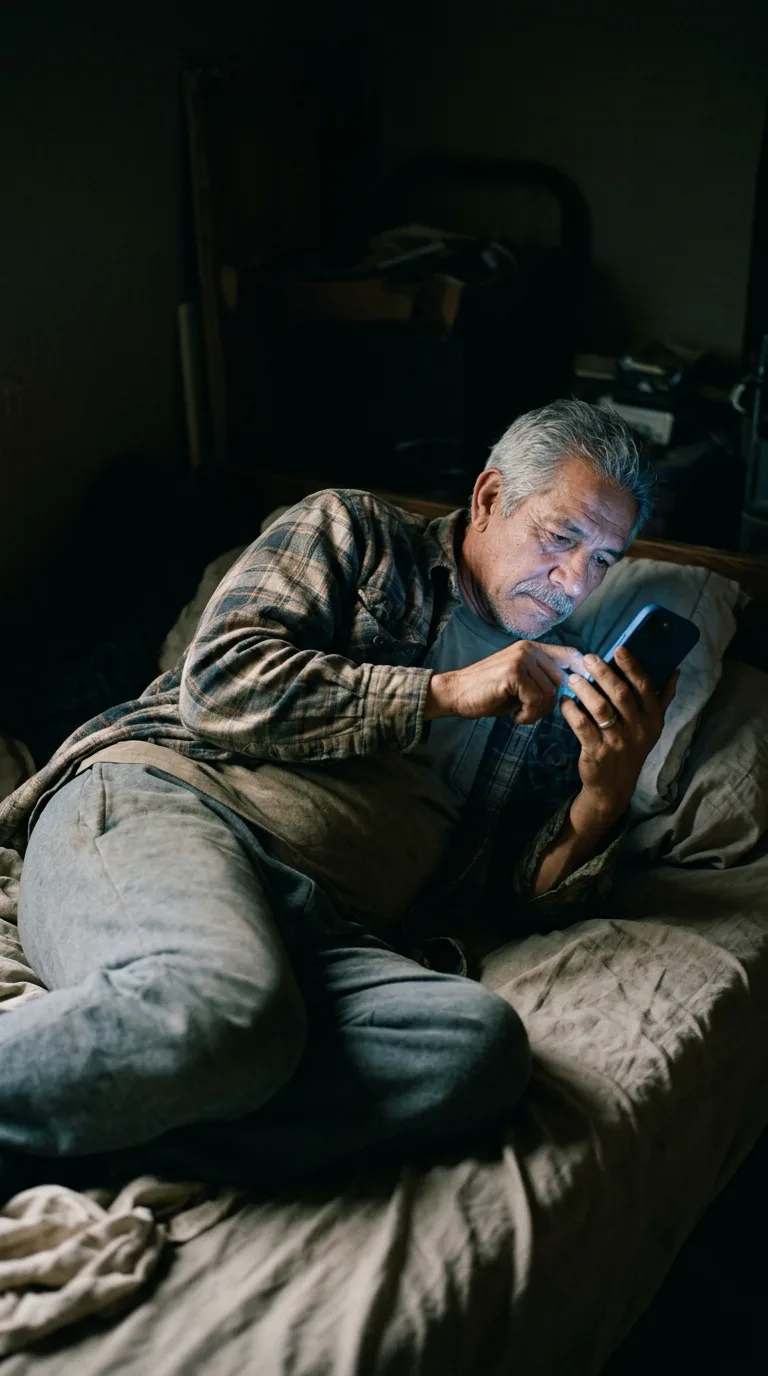
Rarest thing about him: Mainline Protestant — rare, 1 in 26
Season 0seed 1316681918 · engine v10
Character card
lineage PYNCV3
His body-swap story
@colby.marsh (admin), wearing Saul Kanter, rolled the wheel on and woke up as Jesús Morales, spent under a minute in him, then spun the wheel and woke up as Marcus Deshields
---
The machinist's hands are cramping again, and that is the last thing you feel as him — that dumb ache in the knuckles from a job he did for thirty years and you have done for less than a minute. You are standing in his dark kitchen in Honolulu, everyone in that house asleep, and there is a smell of citronella coil and cold rice, and none of it is yours to keep. You did not spin again tonight because Saul Kanter did anything wrong. He is fine. He is heavy and slow and his back complains on the stairs, and there was a whole life sitting in him you barely touched, a granddaughter's drawing on the fridge you never asked about. But he is a machinist, and machining is a Tuesday-through-Saturday thing, and you are already bored of a body that has nowhere to be at eleven at night. That is the whole reason, and you know it is a thin one, and you spin anyway, standing in his socks on his cold floor, because thin reasons are the only kind you have left by the thirty-sixth time.
The wheel turns and gives you weight before it gives you anything else — shorter, softer through the middle, a low ache already sitting behind the sternum that isn't pain yet, just a body's low hum of overuse. Your thumb is already moving. It was stopped on something — you catch the ghost of a headline, gone before you can read it — and now it flicks up the screen fast and even, faster than the hand's owner had been going, like something got its confidence back before it got its name. Blue light on a cheek that needs a shave. A pillow smell of Marlboro-that-isn't-anymore, hair oil, someone else's shampoo two feet away in the dark.
The room comes in through the mattress first — thin, a metal frame that ticks when you shift, and under you the give of a bed that has taken this exact weight in this exact spot for eleven years. Sagebrush smell bleeding faint through a window that doesn't seal right. It is morning outside, the kind before the kind anyone calls morning, and that wrongness — his body settled into sleep-heavy stillness at an hour that should have him upright — comes with its own small answer, arriving with the mattress: nights. Not always. Just this week, the swing crew, four on, four off, and Marisol two feet away breathing the flat even breath of someone who has learned to sleep through a husband coming to bed sideways at dawn.
The phone in your hand gives you the most, because his thumb already knows this glass, the exact resistance of the screen protector he never replaced. A message from her — his daughter, Priscilla, thirty-one, in Reno, something about the baby's fever going down — sits three scrolls back, already answered, already worried over at two a.m. with the specific tenderness of a man who does not say much out loud and puts everything into showing up. There is his ex-wife's name in a text thread further down that he does not open, hasn't in months, a habit more than a want now, an old scar he still checks like checking a tire.
The wedding band is cold and it has memory in it too, the dumb kind, the kind that arrives as weight rather than picture — twenty-two years, the second time around for both of them, a courthouse afternoon and barely any family because both of their families were tired by then of being asked to show up for love. Marisol works the register at the Family Dollar in town and complains about her feet and rubs the ache out of his shoulders on the good nights without being asked, and neither of them says the word love much because neither of them was raised to.
The shirt is what gives you the morning itself — not this one, an older one, flannel gone soft as cloth can go, and it comes back sleeve by sleeve the way the wheel promised: an elbow first, favoring the left because the right shoulder has forty years of derrick work sitting in it like sediment; then the collar, buttoned one off so it sits crooked and he never notices; then the whole gesture of a man dressing half-asleep in a trailer that gets so cold before dawn his breath used to fog, before Marisol made him get the better heater. Coveralls the same way, denim gone the color of nothing, gloves that carry the ghost-smell of drilling mud and grease no wash has ever gotten out, a hard hat with a headlamp band because the pad lights on the rig are never where you need them. RIG SERVICES stitched over a heart that a doctor two years back told him needed watching, the diabetes making itself known in numb toes some mornings, in a thirst he blamed on the desert heat before he blamed anything else. His body: fifty-nine years slack around the middle in the way of men who worked hard once and now mostly stand, thick through the gut, thinner everywhere else, a body that hurts in the knees getting up and does not hurt at all in the forearms, which still remember exactly how much torque a chain needs and give it without asking him.
Somewhere in the sheets his knuckles ache to crack and you let them, one hand and then the other, that habit arriving in the joints themselves rather than in any memory at all — an old tic, older than the marriage, older than the rig, a boy's tic probably, from some house you will never see.
You look at the hand holding the phone. Not the machinist's soft thick fingers — these, ropey at the tendon, a nail gone half-black from a dropped pipe wrench some June, the band catching the screen's blue light.
"Mari," you say, quiet, not to wake her, testing the voice more than meaning to use it for anything — and it comes out lower than you expected, rasped from cigarettes he quit years ago and never fully got the sound back from.
She doesn't stir. You keep scrolling.