Nestor Vandenberg
Fictional. Generated by AI — not a real person, and no likeness of one is intended.
31, locksmith in Miami · rolled by @colby.marsh · card — no film
History
who has worn him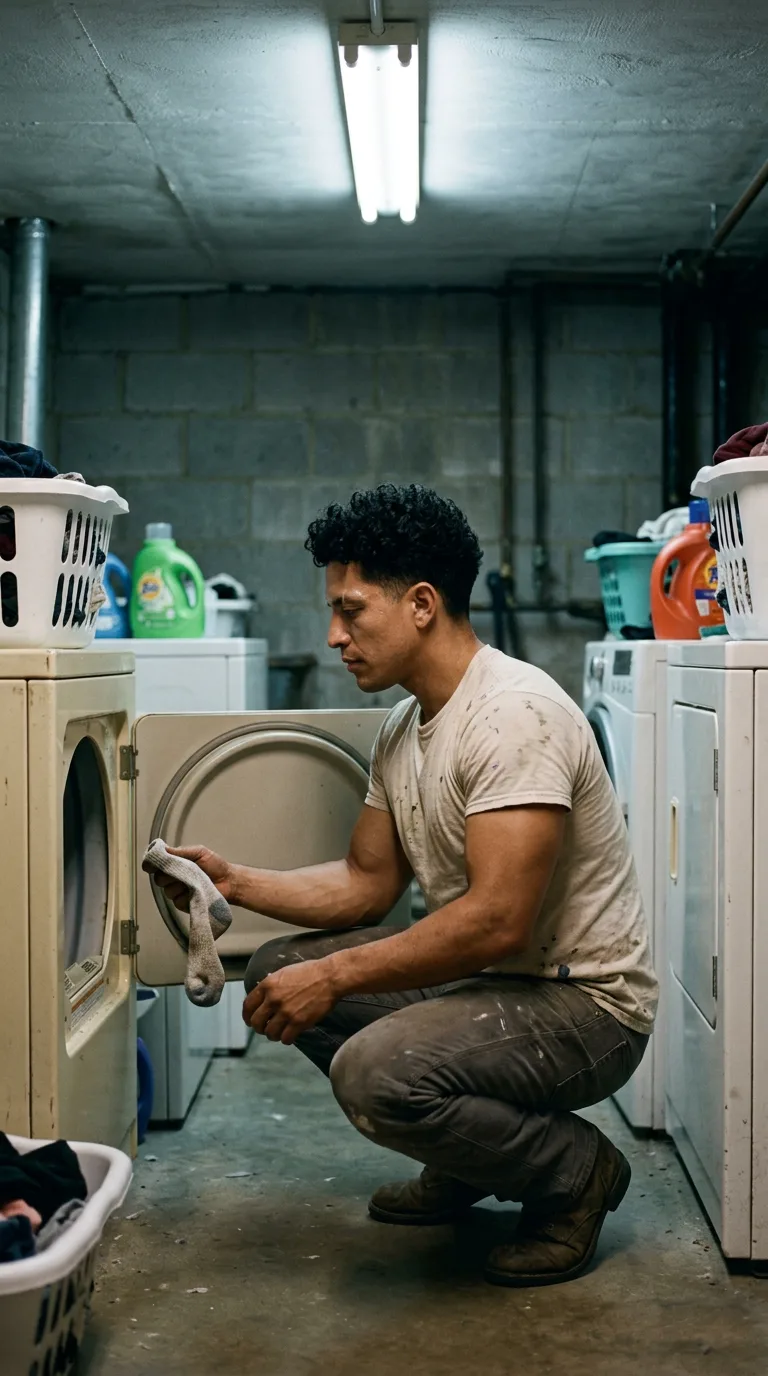
Rarest thing about him: Ex-spouse — rare, 1 in 33
Season 0seed 177761120 · engine v10
Character card
lineage PYNCV3
His body-swap story
@colby.marsh (admin), wearing Marcus Deshields, rolled the wheel on and woke up as Nestor Vandenberg, spent 13 hours in him, then spun the wheel and woke up as Liam Okafor
The kitchen table in front of Marcus Deshields is bare except for a coffee going cold and a phone propped against the sugar bowl, showing a wheel. His hands — broad, gray-haired knuckles, a soldier's hands, steady from twenty years of being told what to carry and where — sit flat on either side of it like he's bracing for something. He isn't. He's just thinking.
You spun this man 1 minute ago and already the itch is back, which tells you something about yourself you've stopped bothering to argue with. It isn't that Marcus is wrong. Small-town Ohio at eleven in the morning, a house that smells like woodsmoke and gun oil, a discharge paper folded in a drawer somewhere upstairs — there's nothing broken here. That's almost the problem. You spun for danger once, for money once, for a face you wanted to wear to a wedding you weren't invited to. Today you spun because two spins ago you wore a soft-handed personal trainer in Los Angeles named Craig, and somewhere in his kitchen, on his refrigerator, under a magnet shaped like a sailfish, there was a photograph of him and another man on a boat, squinting, laughing, an arm slung over a shoulder — and underneath it, in Craig's own handwriting on a torn corner of paper: *call Nestor back*. You never did, because you weren't him long enough to want to. But you remembered the name. You have wanted, since, to know what it's like to be looked at the way Craig looked at that photograph.
The wheel doesn't ask why. You touch the screen with a finger that isn't yours yet for four more seconds, and pay, and spin.
—
The dryer door is open and warm air rolls out against a face that is not gray-stubbled, not fifty-something, not tired in the particular way Marcus was tired. Your knees are bent in a crouch that doesn't complain about it. A sock — white, going gray at the heel — sits balanced in a hand with a pale scar of callus along the trigger finger, the kind you get from a lock pick and not a rifle. The fluorescent tube overhead hums at a pitch that has nothing to do with Ohio. Cinder block sweats faintly with Miami's morning humidity even down here in the basement, and somewhere above, through the floor joists, a moped whines past on wet pavement.
You are lower to the ground than you were a breath ago and thirty-one years younger and every muscle in this body is already moving before you catch up to it — folding the sock into its mate, setting the pair on the lip of the basket, reaching back in for the next piece, all without you deciding to. His hands know this. You are only riding along behind his hands.
The shirt is the first thing that opens up. It's an old undershirt, thin from washing, and the memory that comes with it isn't a scene so much as a temperature — a closet in an apartment two miles from here, a woman's voice from the next room saying *you're gonna be late, mijo left his backpack*, the particular fondness of pulling this exact shirt over his head at six-forty this morning because it was closest and didn't matter, because today's a work shirt day, because Marisol likes the good ones ironed for when he takes the kids to her mother's on Sunday. You feel, distantly and completely, that this man loves being needed at six-forty in the morning. That it is not a burden to him. That the divorce four years ago taught him the difference between a house that needs him and a house that only tolerates him, and he chose, after, to only live in houses of the first kind.
The dryer's warmth against your forearms brings up a whole year at once — this basement, this building, the tenants who leave their softener sheets balled up on top of the machine like it's someone else's job to throw them out, which it sort of is, which is why there's a super's key on the ring in his jacket pocket upstairs and why he doesn't mind it. He likes fixing what's broken. He has always liked it, since he was fourteen and took his first bike lock apart on the kitchen table of a house that isn't standing anymore, his father watching without saying anything, which from that man was its own kind of blessing.
The concrete under your boots — steel-toed, cracked at the left instep where a truck door caught it two winters ago — gives you the storefront from yesterday, kneeling with a cylinder in his palm, a woman on the other side of the glass mouthing *thank you thank you* because she'd locked her twins' insulin inside and it was ninety-one degrees. He does that job like it's a small mercy he gets to hand out daily. He has never told his girlfriend how much that particular call meant to him, because it would sound like bragging, and he does not brag.
Somewhere further back, touched off by nothing you can name — maybe just the ache low in your back from the crouch, an old-married-man ache in a young man's body — there's Craig. A beach somewhere, younger, both of them, their mother still alive and calling from the shore for them to come eat. Nestor pulling his little brother out past the break because Craig was always a worse swimmer and always too proud to say so. That protectiveness never left; it just changed shape into a phone he doesn't call back fast enough, a running joke about Craig's protein powder, a real ache under it that he misses him and doesn't say that either.
His body: thirty-one, thick through the shoulders in the particular way of a man who lifts security gates for a living and not for a mirror, a low pull in the right knee from kneeling on concrete four days a week, hands that are already, without you, testing the seam of a towel for the double stitch that means it goes in a different pile. The eyebrow — you feel the scar before you place it, a thin numbness in the skin there, five years old, a car door swung wrong outside a job in Hialeah, nothing more dramatic than that, though the story he tells at parties makes it sound better.
He does not know any of this is happening. He is only, all at once, quiet.
—
The sock is still in the hand you're wearing when you lift it and turn it, palm up, and look — really look — at the crease of the thumb, the callus at the base of the first finger, the small clean scar at the eyebrow that isn't yours yet and now is. Somewhere above the humming light a girlfriend is probably still asleep, or not, or making coffee two miles from here in an apartment with a pastel-colored railing you haven't seen yet from the outside.
You say it out loud to the empty laundry room, to nobody, in a voice that isn't Marcus's anymore and isn't quite settled into being anyone else's either —
"Hey, Craig. Long time."
— and you keep looking up, past the basket, past the humming tube, into whatever is watching.