Marcus Delgado
Fictional. Generated by AI — not a real person, and no likeness of one is intended.
30, mail carrier in Pittsburgh · rolled by @colin.hasbrook · card — no film
History
who has worn him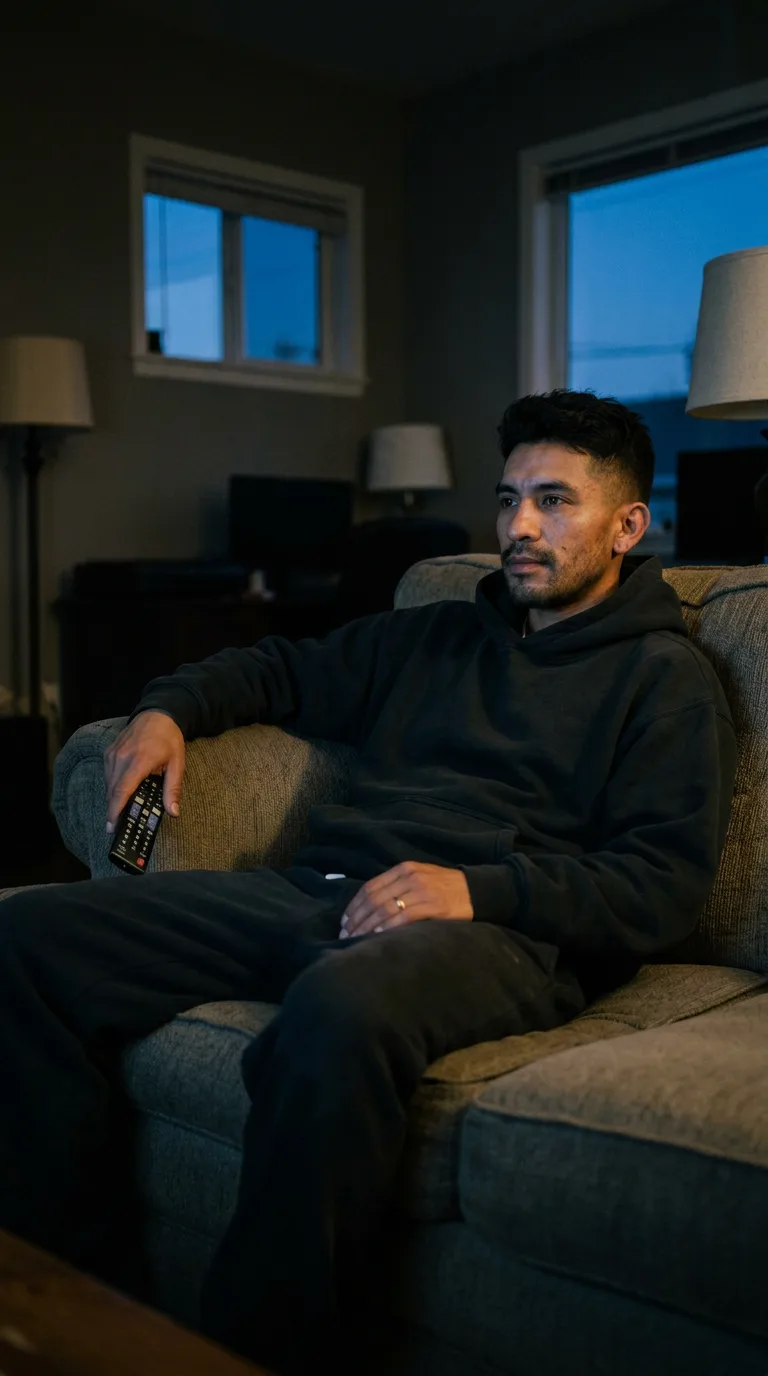
Rarest thing about him: Mail carrier — common, 1 in 400
Season 1seed 1205347612 · engine v11
Character card
lineage 2NZHHJ
His body-swap story
@colin.hasbrook, wearing Kyle Fenimore, rolled the wheel on and woke up as Marcus Delgado, spent under a minute in him, then spun the wheel and woke up as Roy Dietrich
The sawdust is still under Kyle Fenimore's nails when you make him do it. Less than a minute in this body and already you know its whole shape — the bald head sunburned at the crown, the dimples that come with a smile you haven't earned yet, the shoulders built from years of framing houses. He's good. That's the problem. A man like this, muscular and easy in his own skin, millionaire money you inherited along with the rest of him — there's nothing wrong with him, and after 828 men "nothing wrong" has started to feel like standing still. You want the drop in your stomach again, the not-knowing. You open the laptop on his kitchen counter, the one with sawdust in the keyboard seams, and you go back to the page with the wheel on it, and Kyle Fenimore's hand — broad, calloused, a stranger's hand you are already bored of — taps the screen to spin it.
The television cuts to a bright frame.
You are sitting up straight before you understand you are sitting. A remote is loose in your grip and you set it down on the couch arm without deciding to, the way a body does things it has already decided. The room is dim, lamps unlit, blue going purple in two windows, and the noise of a show is happening somewhere in front of you that you are no longer following. Your back is against a couch cushion that knows a heavier man than this. Your legs, when you notice them, are thin under gray sweatpants. There is a ring on your left hand and your thumb is already turning it, has apparently always been turning it, a habit installed before you arrived.
The shirt isn't on you — you're in the hoodie now, off shift — but your hand finds the couch's armrest and something comes anyway, delayed, like a radio catching a station: a denim-blue sleeve going up a thin forearm, buttons small under thick fingers, a cap settled low over a hairline still damp from a shower at five-forty in the morning. Marcus Delgado gets dressed the same way every day of his working life and the memory arrives now in pieces, unasked. The shirt smells like the equipment room at the post office on Forbes, like everyone else's laundry soap layered under his own. He likes the bag more than the shirt — the strap worn soft over eleven years, the weight of it settling into the same groove on his shoulder every morning like it's been waiting for him. Thirty years old and his knees already talk to him on the stairs. Skinny in a way his mother used to try to feed out of him. Strong in the hands, in the forearms, the particular strength of a body that carries weight in short bursts all day rather than lifting it once.
The couch under you gives up the rest. Renata — his wife — picked this couch, argued for the gray over the blue, and you get a flash of her laughing about it in a furniture showroom, pregnant with nothing but opinions, no kids ever came and that's its own quiet unspoken thing between them, not sad exactly, just a room in the house they don't go into. You get her voice from the next room, from a life, saying his name the way she does, flat Pittsburgh vowels, easy. And under that, further down, someone else — Theo, not long gone, the shape of him still warm in a part of Marcus that Renata doesn't have the key to and doesn't ask about, an ex-boyfriend from before the ring, or maybe not so long before, you can't tell how the timeline sits and Marcus's own feeling about it is complicated in a way that isn't yours to resolve, just yours to feel the edge of — a done thing that isn't fully done.
The ring itself, warm from your own thumb worrying at it, gives up a hot afternoon at a courthouse, her dress a color he still can't name right, laughing because neither of them cried when everyone said they would. Plain band. No stone. He never wanted a stone.
Your feet are bare against a rug that his memory says is new, Renata's choice again, and the room smells like whatever she cooked hours ago, garlic gone cold in the air, and a stubble that's two days old itches faintly along a jaw you haven't touched yet. Money he has and doesn't spend on this house, this couch, this life — the money's somewhere else, in accounts he thinks about the way other people think about weather, present but not pressing. He is, under all of it, a man watching television with the lights off because the day wrung him out walking up and down other people's stairs in wet leaves, a good tired, an ordinary Thursday tired, and some part of him that used to laugh at this exact scene on this exact show is simply not laughing now, and he'll never know why, and it will never bother him, because there is no him left to be bothered.
You lift your hand off the ring and look at it in the blue TV light — thin fingers, brown skin, a life's worth of paper cuts gone pale on the pads — and you turn it over once like you're checking it's real.
"Huh," you say, out loud, to no one, and it isn't Marcus's voice doing the wanting behind it.