Kyle Fenimore
Fictional. Generated by AI — not a real person, and no likeness of one is intended.
31, carpenter in Honolulu · rolled by @colin.hasbrook · card — no film
History
who has worn him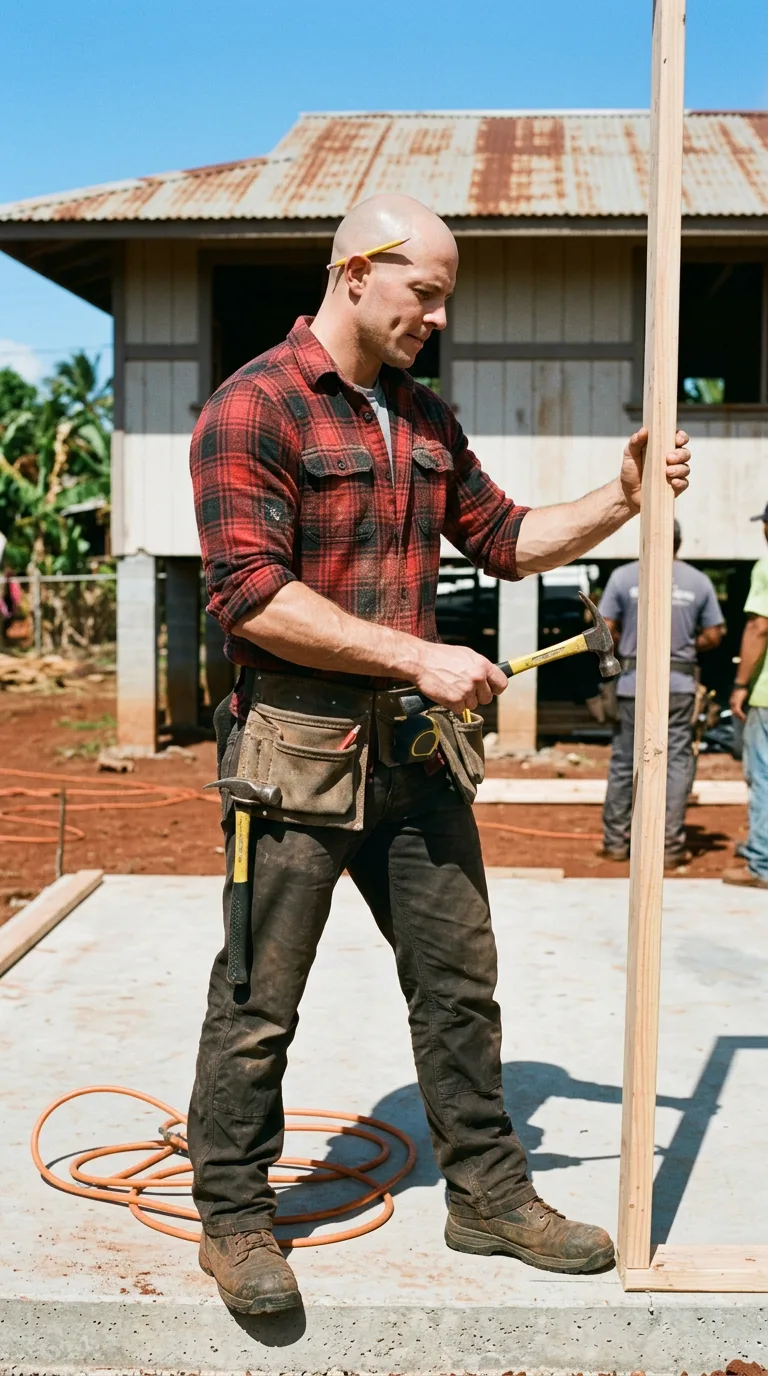
Rarest thing about him: Stutters under pressure — common, 1 in 79
Season 1seed 2081013100 · engine v11
Character card
lineage 2NZHHJ
His body-swap story
@colin.hasbrook, wearing Wade Kessling, rolled the wheel on and woke up as Kyle Fenimore, spent under a minute in him, then spun the wheel and woke up as Marcus Delgado
Wade Kessling's kitchen smells like burnt coffee and the goatee itch that never goes away no matter how much you scratch it, and you have been him for less than a minute when you already know you are done with him. Forty-three and a farmer's ache in the lower back that was never yours to earn. The scar through his eyebrow catches the ceiling light when you tilt his head, and it is not vanity, exactly, that turns you back to the laptop glowing on the counter — it is that this body came with debts already run up and a field outside that needs him at five a.m. whether you are in him or not. You didn't choose this one. You want to choose. That's the whole itch of it, eight hundred and twenty-seven times over: not tired of any one of them exactly, just hungry for the turn of the wheel itself, the half-second where you don't know yet. Wade's thick finger, not yours no matter how it feels, taps the mouse. The wheel spins its gaudy light. You feel the credit card charge go through in a man's memory that isn't even fully unpacked yet.
The hammer is already swinging when you land, and the swing doesn't stop, it just goes wrong — an inch off true, glancing, the nail bending sideways into wet lumber under an equatorial sun that lands on new skin like a hand pressing down. You correct. The next swing is careful, deliberate, wrong in a different way — too slow, watched, a motion that hasn't been watched in years suddenly under inspection. Ten more like that. A voice somewhere behind you, another man on the crew, says something about the heat getting to him already and laughs. You do not laugh. You are learning the weight of an arm mid-swing, hazel eyes tracking a nail head that seems, for a moment, like the first nail you have ever seen.
The shirt gives it up first — plaid gone soft at the elbows, a smear of old paint on the cuff that isn't paint, it's caulk, from a bathroom he redid for his ex before she was his ex, a Sunday with the radio on and her laughing at him for missing the stud twice. The memory comes in with the smell of the fabric against your back, sweat-damp and sun-hot, and underneath it another layer: the morning ritual, buttons done one-handed while the coffee brews, sleeves rolled to the exact fold his forearms have worn into the cotton over three years, the tool belt swung around his hips like a man buckling on something older than a job. His hands — thick-palmed, a callus map of ten thousand mornings — know the belt before he does, the hammer riding low on the right, the pouches worn soft on the left, and you feel that knowing arrive in your own borrowed grip, sudden and total, the specific comfort of leather gone the shape of your own hip.
The nail gun hose at his feet gives up the rest: the whir of the compressor, the particular curse he uses when the hose kinks under a stack of two-by-fours, the pride — quiet, not spoken to anyone — of a wall he framed square on a lot everyone said was out of level. He built this house's bones from a slab up, tin roof rattling in the trades, red dirt staining every boot he's owned since he moved here running from a mainland winter and a father who never once said the word carpenter without putting something ugly in front of it. He is thirty-one and single now, freshly, badly — she left in March and took the dog, and some nights the pack of cigarettes goes down to nothing by ten because there is nobody to tell him to stop. He is spiritual in the way men get who work outdoors and watch weather roll in off an ocean every day of their lives — he believes in something, he just doesn't call it church. His jaw, smooth from this morning's razor, remembers nothing of stubble because there never is any; it is one of the two things people notice about him, the second being the dimples that show even when he isn't smiling, even now, even under a hardhat, faint grooves that have gotten him out of trouble with foremen twice his age.
Under the shirt: shoulders built by lumber, not by a gym. Thirty-one years old and every one of them is in his lower back already, a stiffness he'll feel tonight and blame on the slab, and his hands — when nobody is watching him, when there's no boss close enough to make him nervous — move with a fluency that looks like nothing, like breathing. It's only under a stare that they stutter, some old shame from a trade school class where a teacher timed him and he choked, and that flinch is still in there, waiting, harmless, his.
You look down at the hammer like you've never held one, turn the hand it's in, feel calluses that took years you didn't spend to grow. You lift your eyes off it, into the glare, past the man on the crew still waiting for the joke to land.
"Wrong hand," you say, and set it down in the right one, and pick the gun back up.