Marcus Deleon
Fictional. Generated by AI — not a real person, and no likeness of one is intended.
31, cop in Philadelphia · rolled by @colin.hasbrook · card — no film
History
who has worn him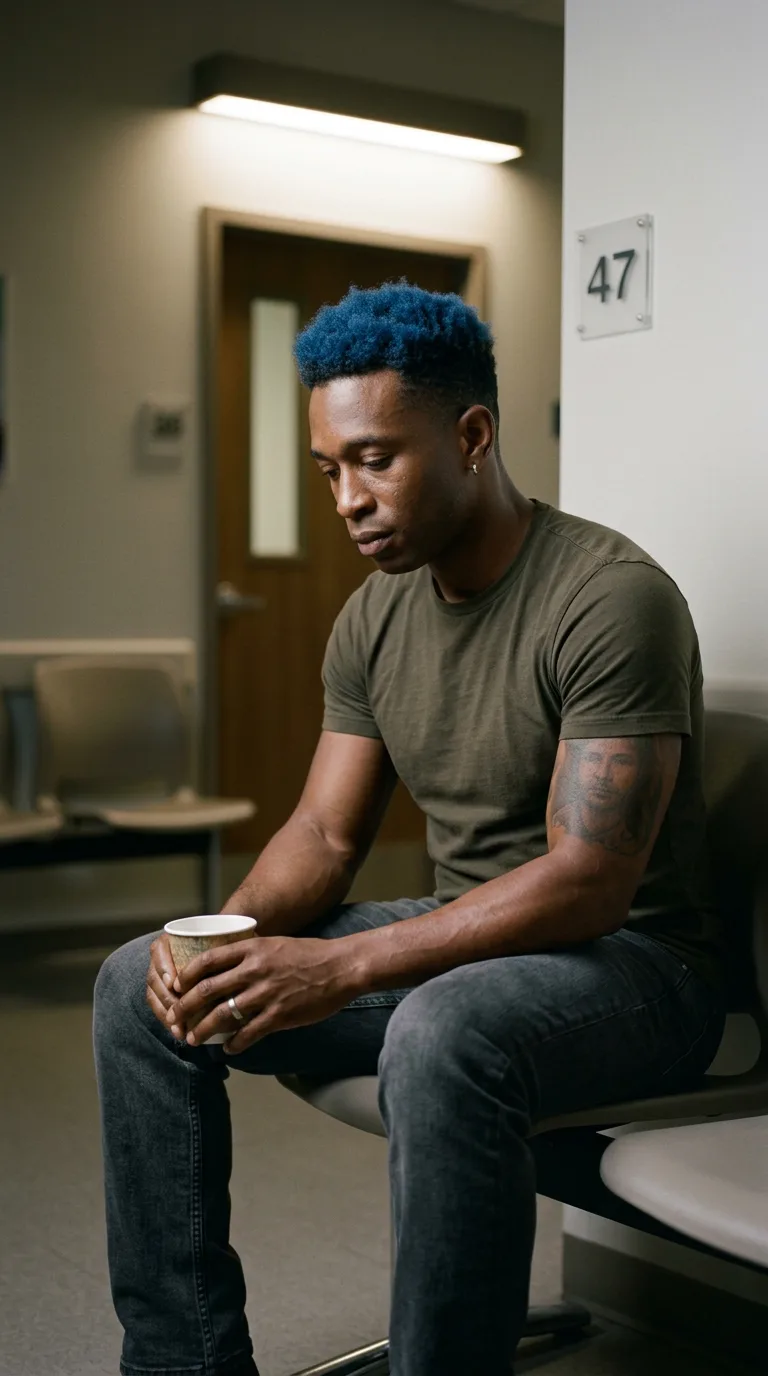
Rarest thing about him: Fashion color — epic, 1 in 56
Season 0seed 698629551 · engine v10
Character card
lineage 2NZHHJ
His body-swap story
@colin.hasbrook, wearing Walter Idris Cannon, rolled the wheel on and woke up as Marcus Deleon, spent under a minute in him, then spun the wheel and woke up as Daniel Kwon
Walter Idris Cannon's knuckles ache on the steering wheel of a truck that isn't moving. Sixty-five years old, gray hair he never bothers combing, a body that has hauled chains and jacked axles for forty years and is starting, lately, to say so back to him. Less than a minute ago you weren't even sure you wanted him. The dad bod, the bad knee, the loneliness of a man whose kids call twice a year — none of it was the problem. The problem is smaller than that and uglier: sitting in the cab outside a garage on a dead Friday, you realize you already know every ache this body has to offer. Four hundred and fifteen men before him, and Walter is only the freshest kind of the same tiredness — you spun expecting new and got old again, differently. So you open the site on your phone with his big, gray-haired hand, the one with the beauty mark at the wrist, and you spin, because the wanting doesn't wait for a better reason than that.
The wheel doesn't ask why. It gives you a waiting room.
You are sitting. That is the first thing — the weight distributed low and tight, a knee already going under you like it has somewhere else to be, a paper cup warm and damp between two hands that are not the hands you had a second ago. Younger hands. No ring on Walter's, a plain band on this one's left. The overhead light hums its strip-light hum. Across the room a board clicks from 47 to 48, and your knee — his knee — stops on the click like it was told to. You set the cup down. You fold your hands. Somewhere behind a door a nurse or a clerk calls a name that used to be his, and you do not look up.
The shirt is what gives him to you first — olive cotton, worn soft under the arms, and through it comes a version of a morning: him standing in a rowhouse bedroom with the blinds already letting in Philadelphia's white ordinary light, pulling this exact shirt over his head one-handed while the other hand fixed his daughter's collar, because she couldn't get the snap right and refused, at four, to be helped like a baby. Marcus. That's the name that comes with it, easy, the way his own name always is — Marcus Deleon, and it sits in the mouth of the body like it was always going to.
The jeans next — dark denim, broken in at the knee from years of getting down on it, cuffing suspects, checking on a stalled car on 95, kneeling once, badly, beside a boy who didn't make it, the memory arriving with no warning and no mercy and then receding just as fast, the way grief in another man's body always does, present tense and then gone. The earring is a small cold weight he forgets is there until his fingers find it, worrying it the way he's worried it since he was twenty-two and his mother told him a man in blue better look like himself somewhere.
The tattoo comes through skin, not cloth — half under the short sleeve of a shirt he isn't even wearing right now, but the ink remembers itself anyway, a black-and-gray face on his upper arm, a cousin gone nine years now, drawn from the one good photo the family had. Grief again, quieter this time, worn in like a callus.
The ring is the loudest thing. Plain, gold, ordinary, and behind it a wife's voice saying his name across a kitchen at seven a.m., not urgent, just his — Marcus — and a small boy's fist closed around one of his fingers in a hospital bed four years ago, and the specific fear of that first night home, and how it burned off by the second week into something so plain it barely felt like feeling at all, just weight, just good weight, the kind a man carries without noticing until somebody makes him put it down.
Under all of it: this body, thirty-one, tight through the shoulders in a way Walter's never was, a knee that bounces because it has bounced since he was a rookie standing post and bored, a heart that used to want a drink at the end of a bad shift and doesn't ask for one anymore, lungs that pull faintly at menthol vapor even now, phantom, wanting. He is here — a waiting room, some clinic, some appointment he doesn't want to think too hard about, the number board ticking toward him — because something ordinary and unglamorous is wrong that he has been putting off admitting is wrong. Nothing dramatic. Just a man his age, at a Friday hour that has nothing to do with a patrol shift, doing the unheroic thing of showing up for himself for once.
You look down. The hands in your lap are darker than Walter's, younger, a wedding band catching the strip light, the cup still sitting square where he set it, where you set it. You turn the left hand over slowly, like checking it's real, and something in the room's quiet makes the words come out low, not for anyone else in it.
"Not yet," you say, to no one, to the board, to the ring. "Not yet."